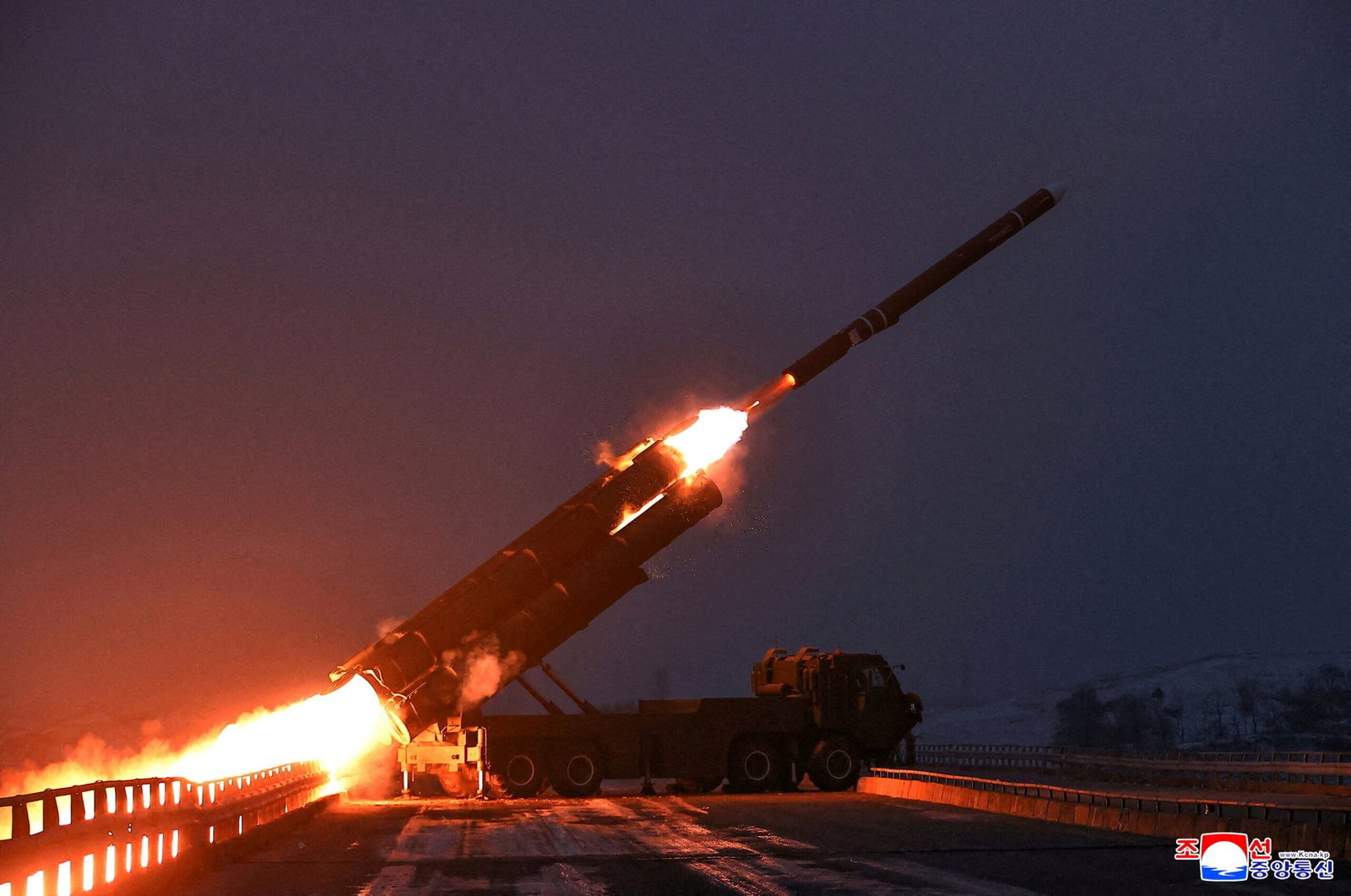
Regional tensions in East Asia escalated on Saturday after North Korea launched more than ten ballistic missiles toward waters near Japan in what analysts believe was a direct response to ongoing joint military exercises involving the United States and South Korea.
Military authorities in the region said the missiles were launched from areas near the North Korean capital, Pyongyang, at about 1:20 p.m. local time. The projectiles reportedly travelled roughly 350 kilometres before landing in the Sea of Japan, also known as the East Sea, outside Japan’s exclusive economic zone.
Officials confirmed that the launches did not cause damage or casualties, but the incident quickly prompted heightened monitoring by defence authorities across the region.

Authorities in Japan and South Korea said experts are still examining flight data and radar information to determine the specific types of missiles used and their technical capabilities. As of the time of reporting, North Korea has not provided details about the models involved or whether the missiles carried any special payloads.
The launches occurred during the annual joint military drills conducted by the United States and South Korea, exercises that North Korea has repeatedly condemned. The government in Pyongyang often describes the drills as preparations for a possible invasion of its territory, a claim rejected by Washington and Seoul, which insist the exercises are defensive in nature.
Following the missile tests, Japanese defence authorities issued precautionary alerts and stepped up surveillance of surrounding airspace and maritime zones. Regional governments also renewed calls for restraint and diplomatic engagement in an effort to prevent further escalation of tensions on the Korean Peninsula.
Read also:
- Tensions rise as North Korea launches Ballistic Missile in East Sea near Chinese border
- US Golden Dome risks turning outer space into nuclear war zone – North Korea
- Two South Koreans arrested for spying for North Korea
Security analysts say the latest missile launches reflect North Korea’s ongoing push to demonstrate its expanding weapons capabilities while signalling resistance to growing military pressure from the United States and its regional allies.
The incident once again underscores the fragile security climate across the Korean Peninsula and highlights the continuing challenge facing international efforts to restrain North Korea’s missile and nuclear development programmes.