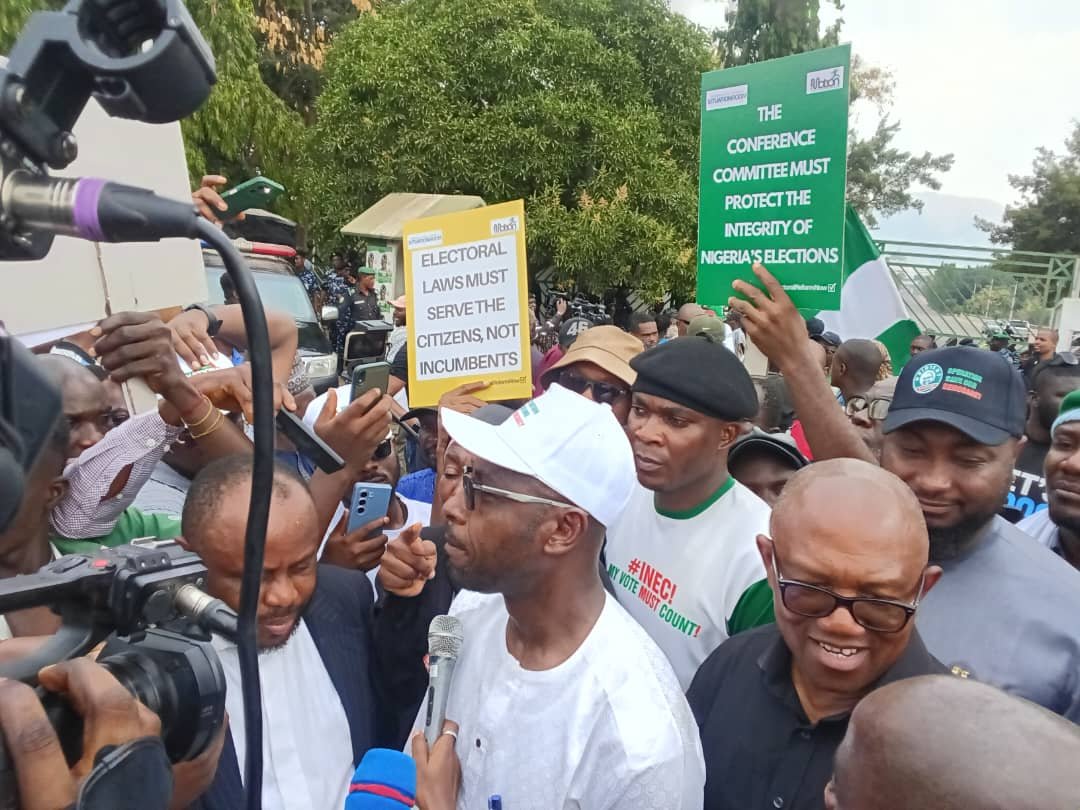
The streets of Abuja came alive with chants of defiance and resolve on February 9, 2026, as former Labour Party presidential candidate, Peter Obi, joined civil society activists, youth groups and pro-democracy advocates in a peaceful protest at the National Assembly, demanding urgent electoral reforms ahead of the 2027 general elections.
The protest, organised under the banner of the #OccupyNASS movement, focused squarely on the Senate’s rejection of mandatory real-time electronic transmission of election results in the ongoing amendment of the Electoral Act 2022. Demonstrators accused the Senate leadership, under Senate President Godswill Akpabio, of deliberately weakening a provision they believe is critical to curbing election manipulation and restoring confidence in Nigeria’s democratic process.

Addressing protesters, Obi said Nigerians were tired of electoral controversies and technological “glitches” that undermined the credibility of the 2023 general elections. He stressed that clear legal backing for real-time electronic transmission of results was no longer optional but essential for transparent and credible elections in 2027.
“We are here to protect the future of our democracy,” Obi told the crowd. “Nigerians do not want glitches again. Real-time electronic transmission of results is the minimum requirement to restore public trust in our electoral process.”
The protest drew national attention not only because of its message but also because of Obi’s visible presence on the ground, standing shoulder to shoulder with demonstrators alongside activist Aisha Yesufu and other civic leaders. As images and videos of the protest spread across social media, a question quickly began trending: “Where is Atiku?”
Read Also:
- 2027 Presidency: APC Chieftain dismisses claims of Amaechi having no plan for South-East
- Zamfara SSG’s brother dumps PDP for APC ahead of 2027 elections
- NNPP rejects call for Kano deputy governor’s resignation
Supporters of Obi, popularly known as Obidients, used the moment to contrast his street-level activism with the absence of other leading opposition figures widely tipped as 2027 contenders, including former Vice President Atiku Abubakar, Rabiu Kwankwaso and Rotimi Amaechi. Many pointed to Obi’s recent grassroots engagements, including his involvement in Federal Capital Territory council campaigns under the African Democratic Congress, ADC, as evidence of a hands-on political style.
Social media platforms were flooded with comments praising Obi’s visibility and questioning the silence or physical absence of other opposition heavyweights. Posts such as “Peter Obi is on the streets, Obidients are working” and “Where is Atiku and Kwankwaso?” reflected a growing perception among some Nigerians that Obi is emerging as the most consistent face of the electoral reform movement.
For context, Atiku Abubakar has publicly condemned the Senate’s decision to drop mandatory electronic transmission of results, describing it in earlier statements as a serious threat to electoral transparency and a setback for democracy. He has also criticised loopholes in the Electoral Act 2022, which he argued enabled alleged irregularities during the 2023 elections. However, his interventions have largely come through press statements and social media posts rather than physical participation in protests.
The Abuja demonstration highlighted widening fault lines within Nigeria’s opposition as the countdown to 2027 begins. With Obi increasingly projecting an image of direct action and people-driven politics, the repeated question of “Where is Atiku?” has evolved from a social media jab into a broader debate about leadership, presence and credibility within the opposition camp.
As the protest remained peaceful under heavy security presence, one message echoed clearly from the crowd: electoral reform is non-negotiable, and Nigerians are paying close attention to who is willing to stand in the open and demand it. On this day at the National Assembly, Peter Obi left little doubt that he was leading from the front.