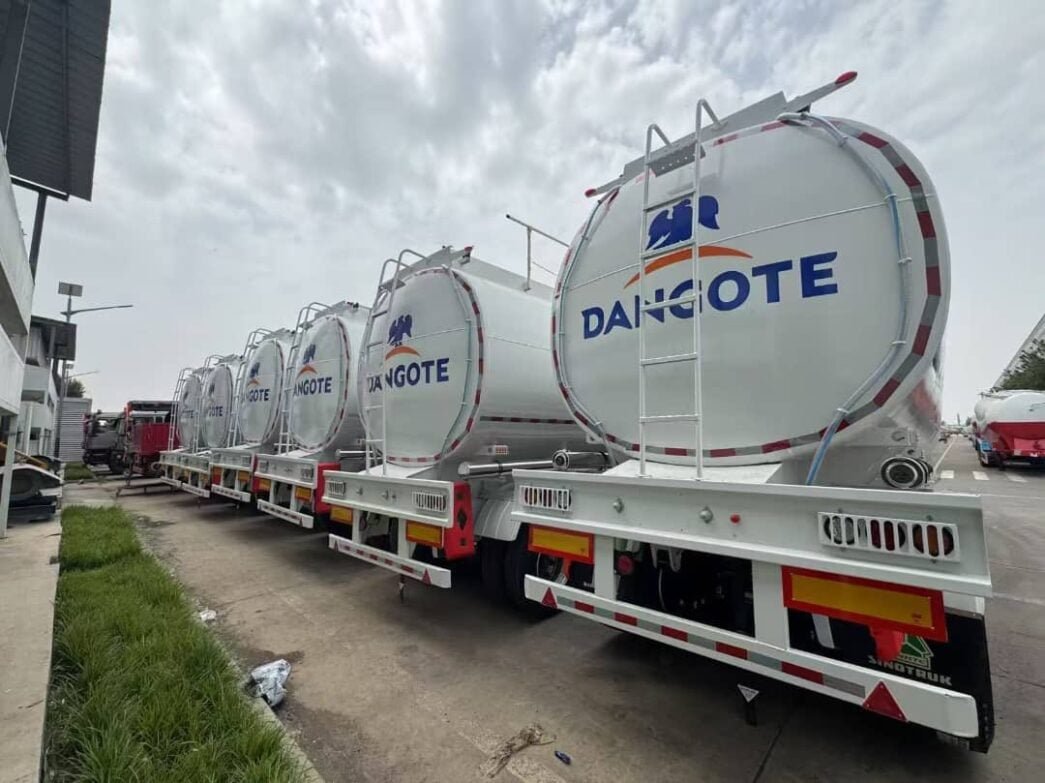
The Nigerian Midstream and Downstream Petroleum Regulatory Authority says that the Dangote Refinery provided 61.78% of Nigeria’s petrol in January 2026, marking the first time since January 2025 that domestic supply exceeded fuel imports.
In its January 2026 state of the midstream and downstream fact sheet, the regulator noted that the refinery produced an average of 40.1 million litres of petrol daily, while imports amounted to 24.8 million litres per day, accounting for 38.22%.

Although the refinery had aimed to supply 50 million litres daily, it fell short by 9.9 million litres, delivering only 40.1 million litres per day.
Nonetheless, the NMDPRA highlighted that this increase from 32 million litres to 40.1 million litres per day signifies significant progress in local refining capacity and has allowed domestic supply to surpass imports.
The regulator clarified that the domestic supply figures include amounts received at coastal depots and those transported from local refineries.
The report indicated that Nigeria’s total average daily petrol supply in January reached 64.9 million litres, with average daily consumption at 60.2 million litres.
Read Also:
- Dangote submits petitions against ex NMDPRA boss to EFCC
- Tinubu nominates Abe, Adeniji as chairmen of NUPRC, NMDPRA
- NMDPRA, NUPRC chief executives resign as Tinubu appoint replacements
Additionally, the authority reported that during the same period, Nigerians consumed an average of 19.2 million litres of diesel and 3.5 million litres of aviation fuel each day.
In terms of refinery contributions, Waltersmith refinery supplied 124,000 litres of diesel daily, Edo refinery provided 55,000 litres, and Aradel refinery delivered 118,000 litres.
Despite being shut down, the Port Harcourt refinery reportedly supplied 376,000 litres of diesel per day, while the Kaduna and Warri refineries remain closed.
The NMDPRA characterized this data as indicative of Nigeria’s ongoing transformation in the energy sector, highlighting reduced imports, increased domestic production, job creation, and enhanced economic stability.