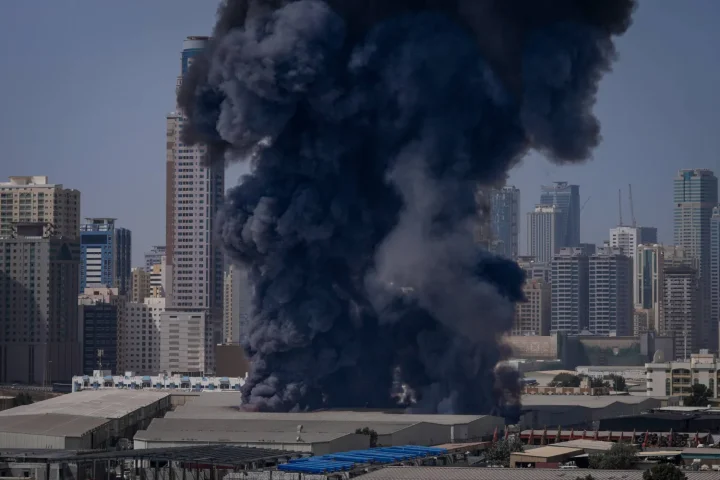
Nigerians were among more than 140 residents injured after Iran launched multiple ballistic missiles and unmanned aerial vehicles at the United Arab Emirates, raising fresh concerns for thousands of Nigerians living and working in the Gulf nation.
The attack, which authorities described as a serious escalation in regional tensions, occurred on March 14 and triggered emergency security responses across the country.

According to the UAE Ministry of Defence, the country’s air defence systems successfully intercepted several missiles and drones fired from Iran during the assault.
In a statement posted on its official X account, the ministry revealed that air defence units engaged nine ballistic missiles and 33 drones launched during the attack.
Read Also:
- Heavy civilian toll reported after strikes hit Iran’s Kurdistan Region
- US offers $10 Million reward for information on senior Iranian Officials linked to IRGC
- Trump says Iran’s new Supreme Leader Mojtaba Khamenei ‘Alive but Damaged’ as US-Israel war with Iran intensifies
Despite the interceptions, the strikes left at least six people dead and 141 others injured, including foreign nationals. The incident has heightened anxiety among expatriate communities, particularly Nigerians who make up a significant portion of the workforce in the Gulf state.
Authorities in the UAE described the attack as a major escalation that has further intensified the already fragile security situation in the Middle East.
The development comes amid growing regional tensions and fears that further hostilities could threaten the safety of civilians and expatriates living across the Gulf.
Meanwhile, Nigeria’s Chief of Defence Staff, Christopher Musa, has linked the recent surge in terrorist attacks in parts of Nigeria to extremist beliefs associated with the holy month of Ramadan.
Speaking on the security situation, Musa said some terrorist groups believe that dying during attacks carried out in Ramadan guarantees them spiritual rewards.
He noted that such beliefs often embolden extremist fighters to intensify attacks during the fasting period.
According to him, these militants often feel motivated to carry out violent operations because they believe their actions will earn them passage to paradise if they die during the attacks.
The renewed concerns over global and regional security also come as Nigeria faces increasing insurgent activity in the north-east.
Security analysts have warned that coordinated assaults by extremist groups such as Boko Haram and the Islamic State West Africa Province have intensified in recent weeks.
In the past three weeks alone, at least 65 Nigerian soldiers have reportedly been killed in a series of attacks on military bases and surrounding communities in Borno State and Katsina State.
Observers say the developments highlight the complex security challenges facing both the Middle East and parts of Africa, as governments continue efforts to counter insurgency, terrorism, and cross-border threats.