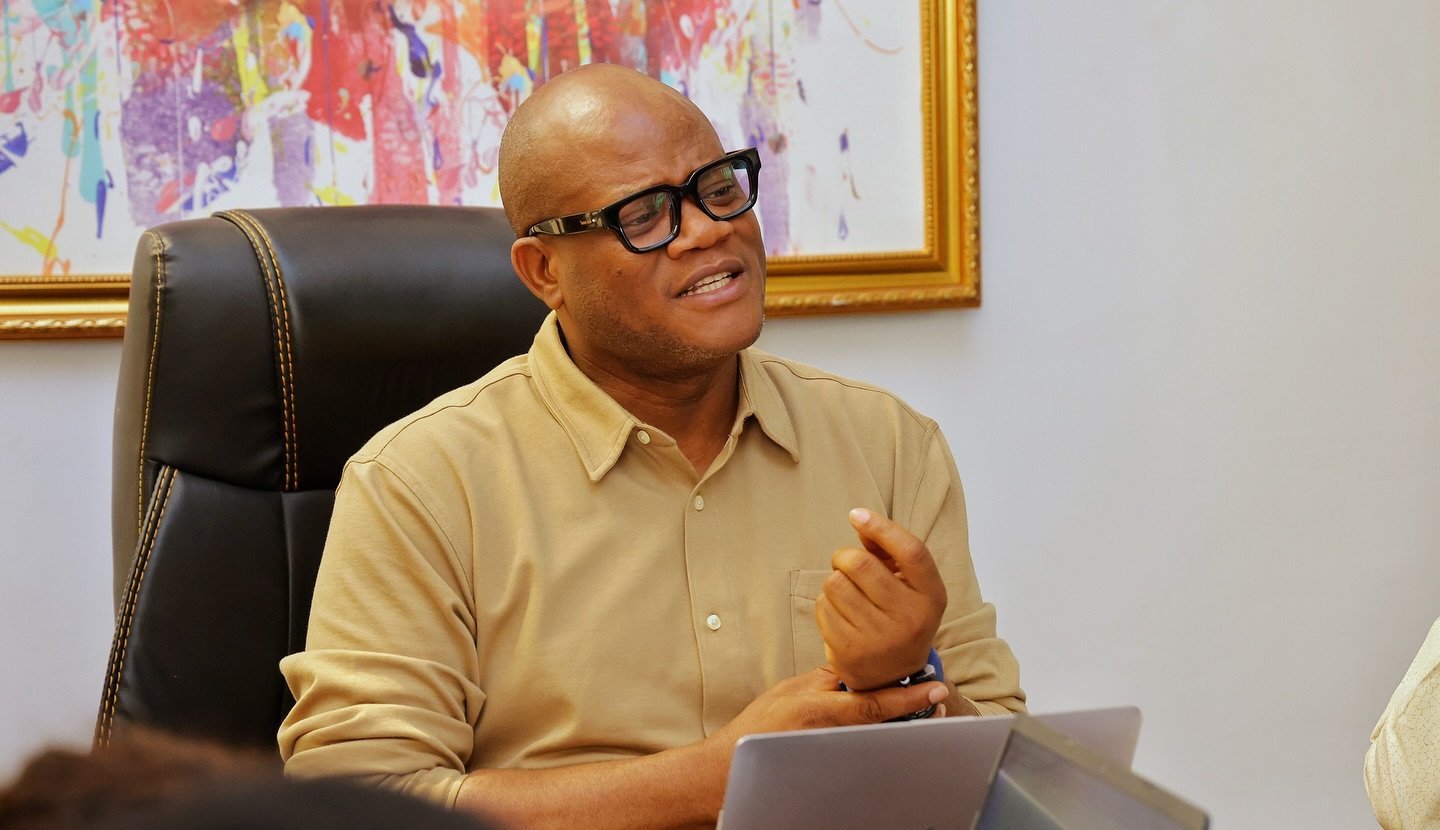
President and Chief Executive of the Africa Development Studies Centre and member of the Harvard Business Review Advisory Council, Sir Victor Oluwafemi, has said Nigeria is not yet ready for real-time electronic transmission of election results, citing poor connectivity and weak infrastructure in rural areas.
Oluwafemi stated this in a statement issued on Monday amid ongoing national debates on electoral reforms and the push for electronic voting and instant result transmission.
He said the intervention by ADSC was not political but institutional, describing it as an evidence-based advisory rooted in governance systems thinking and comparative public policy practice.

Oluwafemi explained that, Nigeria’s democratic ambitions must align with its infrastructural realities, warning that reform driven by rhetoric rather than readiness could undermine electoral integrity.
He argued that the current push for real-time transmission prioritises speed over credibility and visibility over verifiability, especially in a system still heavily dependent on manual voting and counting. He noted that election results in Nigeria originate from paper-based processes, human procedures and physical documentation, which technology alone cannot fix.
The ADSC president said the absence of stable electricity, universal telecom coverage, cyber-resilient systems, uniform training and clear legal frameworks makes nationwide real-time transmission aspirational rather than operational.
He warned that enforcing such a system under present conditions could lead to disenfranchisement in low-connectivity communities, heightened cyber vulnerability and increased post-election litigation.
Oluwafemi added that even advanced democracies do not prioritise instant result transmission over auditability, stressing that paper records remain the legal foundation of elections globally.
He said the real challenge was not technology but sequencing, insisting that electoral reform must be treated as national infrastructure rather than an election-season experiment.
Read also:
- Calls grow to bar politicians from INEC appointments as Abuja School pushes for electoral reform
- Only electoral reforms “ll guarantee Igbo presidency in 2027- Ohanaeze
- Implement Uwais’ electoral reform report abandoned for 17 years – Okechukwu, Ex- VON DG to Tinubu
From a governance perspective, he called for a phased and platform-based approach to electoral modernisation in Nigeria. He proposed the adoption of Policy as a Platform, which he said would establish minimum national readiness thresholds for power, connectivity and cybersecurity, while enabling gradual deployment across regions.
Oluwafemi explained that the approach would also align electoral laws, operations, technology and dispute resolution into a single coherent system, embedding transparency and auditability from the outset.
He further advocated Results as a Service, which he said would shift attention from how fast results are released to how credibly they are produced, prioritising reconciliation and traceability.
Oluwafemi asserted that treating each polling unit result as a verified service output would reduce disputes and strengthen public confidence in the electoral process. He concluded that Nigeria should not abandon electoral technology but must respect the order of reform, stressing that infrastructure, verification and trust must come before automation, speed and visibility.