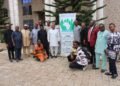
In Nigeria, stakeholders in the climate and weather sectors are advocating for greater investment in meteorological services and improved collaboration between the public and private sectors to tackle the escalating risks posed by extreme weather events.
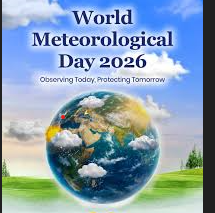
The central theme of the 2026 World Meteorological Day (WMD) is celebrated under the slogan: “Observing Today, Protecting Tomorrow.”

The event underscores the urgent need to enhance resilience against climate-related threats affecting Nigeria and the broader African region.
During the event, a message from Celeste Saulo, representing the Secretary-General of the World Meteorological Organization, encouraged participants to consider strategies for bolstering resilience against the impacts of extreme weather and climate change.
Read Also:
- WMO Warns: 50% countries lack access to vital life-saving systems
- 6.0 Magnitude Earthquake hits Japan’s Volcano Islands, no Tsunami warning issued
- NiMet partners with Adamawa State University to boost flood early warning systems after devastating floods
The statement pointed out that extreme weather is recognized as the leading long-term global risk in the World Economic Forum’s annual report.
It highlighted that Africa has experienced its hottest decade in the last ten years, with a rise in occurrences of heatwaves, heavy rainfall, flooding, prolonged droughts, and sand and dust storms.
“These challenges are not distant; they are the reality we face today,” the statement stressed, noting that Nigeria is already experiencing the direct effects of climate variability.
The report emphasized the vital role of global observation and prediction systems coordinated by the WMO, describing them as essential infrastructure that supports everything from daily weather forecasts to significant economic decisions in sectors like aviation, agriculture, health, energy, and disaster management.
It also highlighted that early warning systems, driven by meteorological data, have saved millions of lives and protected investments globally.
However, concerns were raised regarding the high costs associated with maintaining meteorological observation systems and the existing gaps in the earth system monitoring, despite advancements on a global scale.
Stakeholders called for increased funding for the Nigerian Meteorological Agency (NiMet), emphasizing that financial support should not rest solely with the government.
They urged the private sector and development partners to contribute, given their substantial dependence on climate services.
The statement praised NiMet for its efforts in fostering partnerships and promoting innovation in service delivery. Participants also called on both public and private sector entities to incorporate climate information into their planning processes across short, medium, and long-term timelines, highlighting the growing demand for weather and climate services, especially among vulnerable communities.
In conclusion, they called for enhanced and sustained investment in meteorological observations as a crucial measure to protect lives, livelihoods, and national development.