BudgIT Nigeria has unveiled the State of Women’s Economic Empowerment Report, the first comprehensive, data-driven assessment measuring how Nigeria’s 36 states are creating opportunities for women to succeed economically across key sectors of the economy.
The landmark report examines women’s access and participation in agriculture, entrepreneurship, labour markets, emerging industries, as well as education and skills acquisition, offering a clear picture of where progress is being made and where deep gaps persist. It provides a rare state-by-state analysis of policies and investments shaping women’s economic lives in Nigeria.
Anchored on the pillars of the National Women’s Economic Empowerment Policy and Action Plan, the report tracks how state governments are translating national commitments into concrete actions. It identifies reforms, programmes and budgetary choices that are expanding women’s economic inclusion, while also exposing areas where weak implementation continues to limit women’s potential.

Read also:
- Senate rejects Women empowerment bills
- Sen. Abbo urges political leaders to invest in youth empowerment
- CREDICORP Introduces ‘10,000 women in mobility’iInitiative to enhance economic inclusion
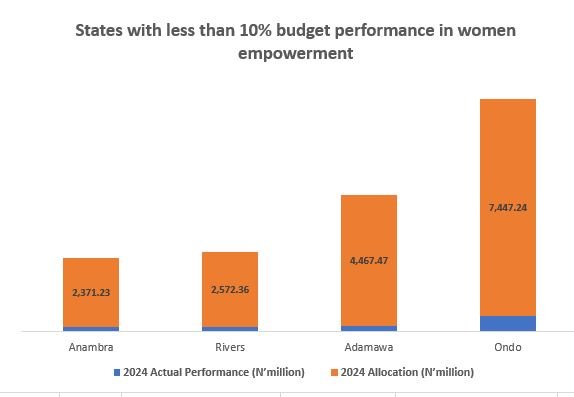
According to BudgIT, the findings highlight sharp disparities between states, with some making measurable strides in supporting women-led enterprises and workforce participation, while others lag behind due to limited investment, poor coordination and policy neglect. The report underscores the economic cost of these gaps, warning that exclusion of women from productive sectors undermines inclusive growth and national development.
Beyond diagnosis, the report offers practical, evidence-based recommendations designed to help state governments close gender gaps and strengthen women’s participation in the economy. BudgIT said the goal is to equip policymakers, civil society and development partners with reliable data to drive reforms that translate into real economic opportunities for women at the grassroots.
The organisation described the report as a critical tool for accountability, stressing that women’s economic empowerment remains central to poverty reduction, job creation and sustainable development in Nigeria.