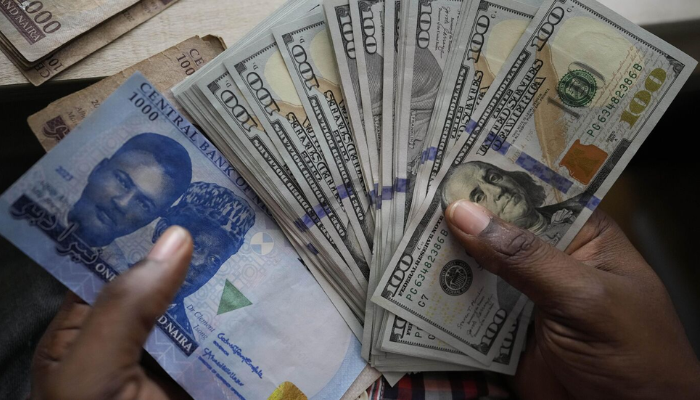
The Nigerian Naira traded steadily against the US Dollar on Thursday, March 19, 2026, closing at an average rate of N1,357.11/$1 at the official market.
Data from the Central Bank of Nigeria-regulated Nigerian Foreign Exchange Market (NFEM) showed the local currency remained largely unchanged from the previous session, reflecting improved market confidence.
The stability comes as Nigeria’s external reserves rose to a 13-year high of $50.03 billion, bolstering the country’s capacity to defend the currency against external shocks. Governor of the apex bank, Olayemi Cardoso, said the reserve level provides sufficient backing to manage volatility in the foreign exchange market.

Global oil prices also supported the Naira, with Brent crude oil climbing above $100 per barrel amid ongoing geopolitical tensions in the Middle East.
In the parallel market, the Naira traded within a narrow band across major centres. Bureau De Change operators in Ikeja and Lagos Island quoted the dollar at N1,410 for buying and N1,415 for selling, while similar rates were recorded in Wuse Zone 4.
Despite recent foreign exchange reforms, a gap persists between the official and parallel market rates, estimated at between N53 and N58. Analysts attribute the disparity to sustained demand for foreign currency by small importers and individuals funding overseas obligations such as school fees and travel.
Read also:
- Naira to Dollar Exchange Rate Today: Official, black market rates on Thursday, January 1, 2026
- Naira remains steady against the dollar as 2025 draws to a close
- Naira strengthens against Dollar despite Trump’s tariff threats
While the Naira’s stability has been welcomed by market participants, the apex bank cautioned against emerging risks of imported inflation. Rising global oil prices, though favourable for revenue generation, could drive up domestic energy and transportation costs.
Nigeria’s inflation rate recently moderated to 15.06%, but analysts warn that external cost pressures may challenge the downward trend.
Meanwhile, increased output from the Dangote Refinery, currently operating at about 700,000 barrels per day, is expected to reduce dependence on fuel imports. Experts say this could ease pressure on foreign exchange demand and further support the Naira in the months ahead.