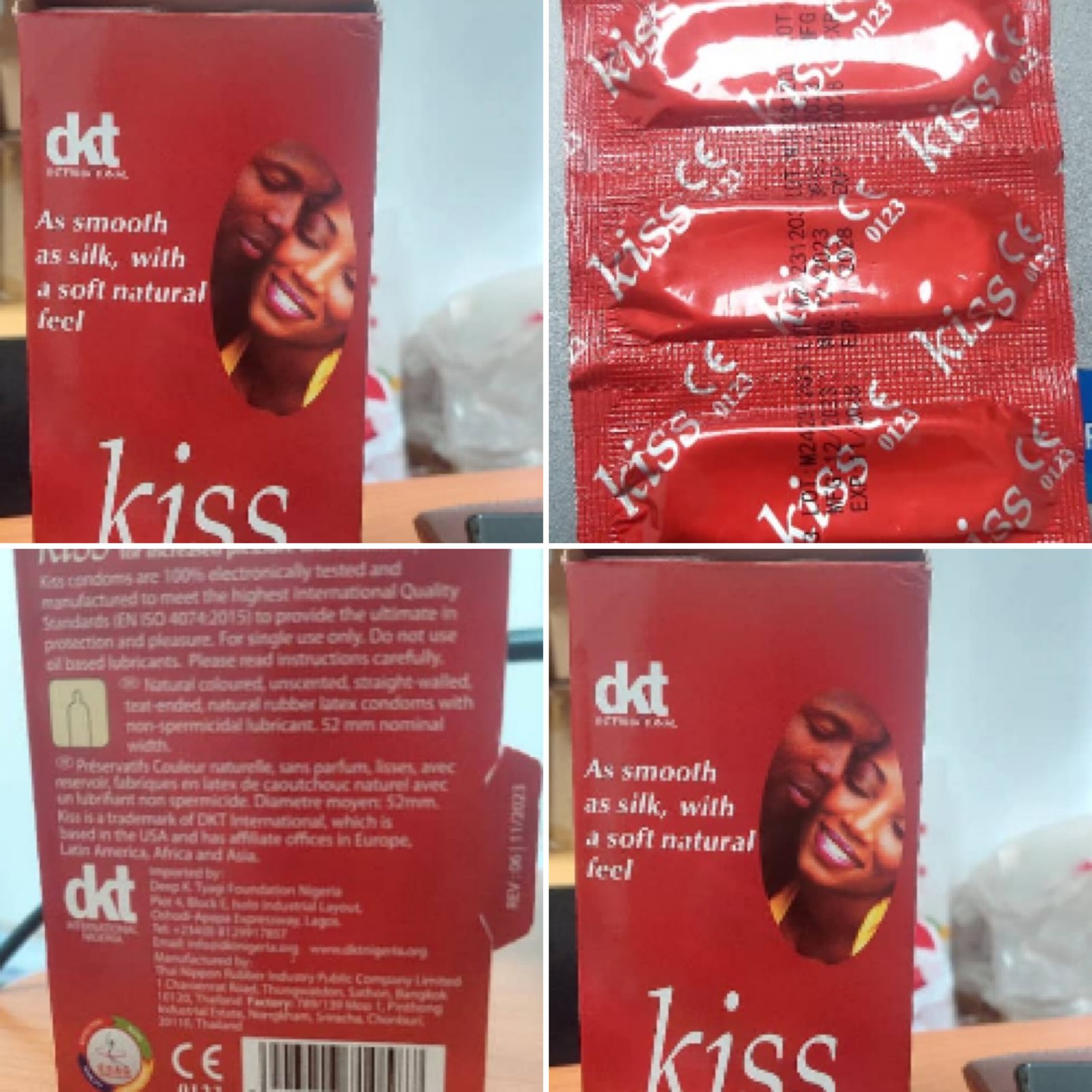
The National Agency for Food and Drug Administration and Control (NAFDAC) has issued a warning to Nigerians regarding the sale and use of fake K+ss Condoms, which are currently flooding markets across the country and pose serious public health risks.
In a public alert released on Monday (Public Alert No. 042/2025), the agency stated that the warning was prompted by information from DKT International Nigeria, the authorized distributor of Kiss Condoms. NAFDAC reported that counterfeit products have been found in various locations, including Onitsha, Idumota, Trade Fair markets, as well as in Kano, Abuja, Uyo, Gombe, Enugu, and other areas.
According to NAFDAC, Kiss Condoms are latex condoms designed to prevent unwanted pregnancies and sexually transmitted infections, such as HIV, gonorrhea, and syphilis. The agency cautioned that fake versions compromise this protection and pose health risks.

Read also:
- Edo pledges responsive health system, urges citizens’ ownership of reforms
- Lagos gov approves N750m for health insurance premiums of 10,000 vulnerable residents
- Senate probes N400b National Primary Health project
To assist consumers in recognizing authentic products, NAFDAC noted that genuine Kiss condom boxes include clear instructions, storage and caution information, complete manufacturer details, and lighter-colored packaging featuring a visible condom image. In contrast, counterfeit versions lack this information, have darker packaging, plain white inner boxes without condom images, incorrect or incomplete manufacturer addresses, and no storage or caution details.
The agency further explained that authentic condom packs are light red with the brand name written closely across six lines, while counterfeit packs are darker, have the name loosely written across five lines, and feature longer strips. Genuine condoms are also larger, oval-shaped, well-lubricated, and have bigger teat ends, unlike the thinner and less-lubricated fake versions.
NAFDAC warned that counterfeit condoms may break easily, leading to infections, allergic reactions, ineffective protection, and a false sense of security. The agency has instructed zonal directors and state coordinators to enhance surveillance and remove counterfeit products from markets nationwide.