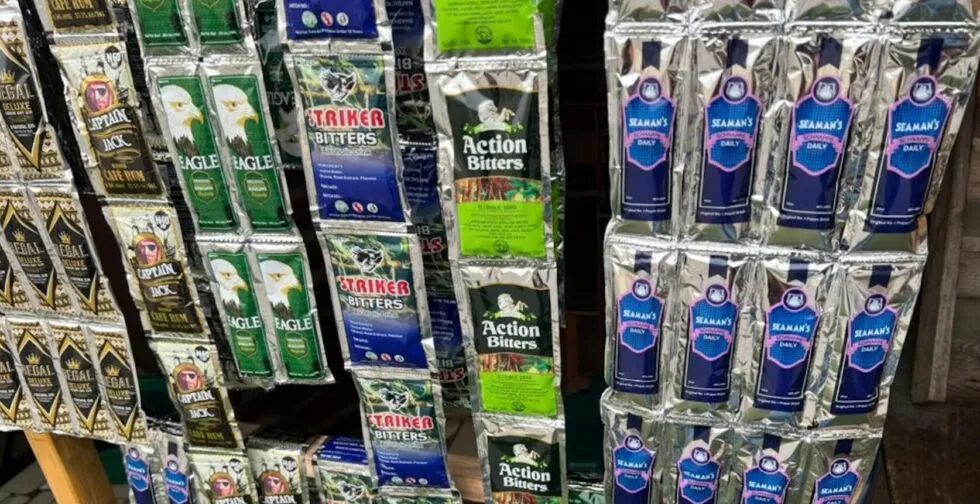
The National Agency for Food and Drug Administration and Control (NAFDAC) has raised fresh concerns over the growing rate of alcohol consumption among minors, warning that sachet and small PET bottle packaging is fuelling underage drinking across the country.
Director-General of NAFDAC, Prof. Mojisola Christianah Adeyeye, disclosed this during a joint press briefing with the National Orientation Agency (NOA) in Abuja, where she outlined findings from a 2021 national survey on underage drinking.

The survey, conducted by Research and Data Solutions Limited and sponsored by the Distillers and Blenders Association of Nigeria (DIBAN) in collaboration with NAFDAC, sampled 1,788 respondents across six states representing the six geo-political zones.
The findings noted that 54.3 percent of minors and underaged persons obtain alcohol by themselves from various sources.
Of this number, 49.9 percent patronise retailers selling alcoholic beverages in sachets and small PET bottles.
The report showed that 47.2 percent of minors and 48.8 percent of underaged persons who purchase alcohol for themselves buy sachet products, while 41.2 percent of minors and 47.2 percent of underaged persons purchase drinks in PET bottles.
Read Also:
- Community pharmacists back NAFDAC over ban on sachet alcohol
- NAFDAC warns of fake Kiss Condoms in circulation
- NAFDAC incinerates N10.19bn worth of counterfeit products in Kano
However, a smaller percentage procure alcohol in glass bottles.
The trend was most pronounced in Rivers, Lagos and Kaduna States, with higher prevalence recorded in rural areas and among males.
On consumption patterns, the survey revealed that 63.2 percent of minors and 54 percent of underaged respondents drink alcohol occasionally.
However, 9.3 percent of minors and 25.2 percent of underaged persons consume alcohol daily.
The findings also showed that 2.5 percent of minors and 11.7 percent of underaged children had engaged in binge drinking, particularly in Gombe State, the Federal Capital Territory and Anambra State.
Adeyeye attributed the rising incidence to peer pressure, parental influence, social media exposure and easy accessibility of alcohol outlets.
About 50.5 percent of respondents cited peer pressure as the primary reason for drinking, while others pointed to family influence and emotional distress.
She warned that underage drinking poses serious health and social risks, including brain damage, addiction, depression, increased risk of violence, road accidents, risky sexual behaviour and poor academic performance.
The NAFDAC boss referenced resolutions passed by the Senate on November 6, 2025, urging the agency not to extend the moratorium on the ban of sachet alcohol and small-volume (less than 200ml) PET bottles.
The Senate also called on the Federal Ministry of Health and Social Welfare to support strict enforcement of the ban and expedite the release of a comprehensive national alcohol policy prohibiting such packaging formats.
Prof. Adeyeye stressed that limiting access to easily concealable alcohol pack sizes would significantly reduce underage consumption.
“Ban on small pack sizes can reduce the menace of underage drinking. Consumption of alcohol by children should raise alarm among parents, teachers, religious leaders and the community at large,” she said.
She added that NAFDAC and the NOA would intensify nationwide sensitisation campaigns to curb the trend.
“NAFDAC remains committed to safeguarding the health of the nation,” she said.