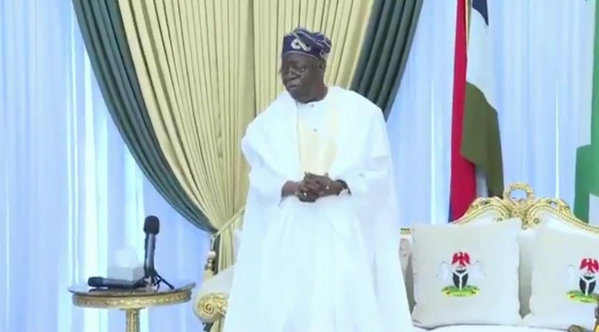
President Bola Ahmed Tinubu has donated his salary to the Armed Forces welfare fund igniting widespread reactions across Nigeria. This has ignited renewed scrutiny of the structure, effectiveness, and long-standing challenges within the country’s military system.
The announcement, initially viewed as a symbolic gesture of solidarity with troops, has since evolved into a broader national conversation about the state of military welfare, operational capacity, and institutional accountability.
Supporters of the president’s move have described it as a demonstration of leadership and empathy, particularly toward personnel engaged in high-risk operations across various parts of the country.

They argue that such a gesture could spotlight the pressing welfare needs of soldiers and potentially inspire further institutional and private-sector support.
However, critics remain unconvinced, questioning both the timing and the substance of the intervention.
Many point to years of unresolved grievances within the ranks, including complaints about inadequate compensation, poor living conditions, and insufficient support for families of fallen soldiers.
Some analysts also interpret the move within a political context, suggesting it may be aimed at strengthening public perception ahead of the 2027 general elections.
They insist that while symbolic actions have value, they cannot substitute for systemic reforms.
Nigeria’s military operations are coordinated through a well-defined hierarchy led by the President as Commander-in-Chief.
The Ministry of Defence is responsible for policy direction, defence planning, and procurement, while the Defence Headquarters (DHQ) oversees joint operational activities.
At the centre of operational command is the Chief of Defence Staff, who supervises the three service branches Nigerian, Army, Army, Nigerian Navy and Nigerian Air Force.
These institutions are collectively tasked with safeguarding Nigeria’s territorial integrity and responding to both conventional and emerging security threats.
Despite this structured framework and increased defence spending over the years, the performance of the Nigerian military especially in addressing internal security challenges has come under sustained criticism.
Experts frequently cite a disconnect between funding levels and operational outcomes, particularly in the prolonged fight against insurgency, banditry, and terrorism.
The evolving nature of these threats, often characterised by asymmetric tactics, has exposed gaps in strategy and adaptability.
Among the most cited challenges in Operational and equipment limitations are: Reports of outdated weapons, insufficient logistics, and inadequate battlefield technology continue to surface.
Low morale among personnel: Welfare concerns, delayed promotions, and limited incentives have affected motivation, particularly among lower-ranking officers.
Procurement inefficiencies and corruption risks: Allegations of mismanagement in defence spending have raised concerns about accountability and transparency.
Overextension of forces: The military’s involvement in internal security operations across multiple states has stretched resources thin, often diverting focus from its primary mandate.
Human rights concerns: Accusations of heavy-handed operations have, at times, undermined trust between the military and civilian populations, complicating intelligence gathering efforts.
In contrast, Nigeria’s military continues to enjoy a strong reputation in international peacekeeping.
The country has played leading roles in stabilisation missions across West Africa, including interventions in Liberia, Sierra Leone, and The Gambia.
These contributions have cemented Nigeria’s status as a key regional security actor and a major participant in global peacekeeping efforts, even as domestic security challenges persist.
Read also:
- Tinubu establishes Armed Forces Welfare Fund, donates salaries as seed capital
- Federal Government approves Armed Forces College of Medicine to strengthen military healthcare
- 2026 Armed Forces Remembrance Day: Nigerian Military holds free medical outreach for widows, residents in Cross River
The debate sparked by Tinubu’s donation has amplified calls for far-reaching reforms within the Armed Forces. Policy analysts and civil society groups argue that meaningful change must go beyond symbolic gestures to address systemic weaknesses.
Key recommendations include improved remuneration, timely promotions, modernisation of military equipment, enhanced training, and stronger oversight of defence spending.
As discussions continue, many stakeholders stress that rebuilding confidence in the military will require sustained commitment to reform, transparency, and accountability.
For a growing number of Nigerians, the consensus is clear: while gestures of support are welcome, the long-term welfare, dignity, and operational effectiveness of the Armed Forces must remain a national priority.