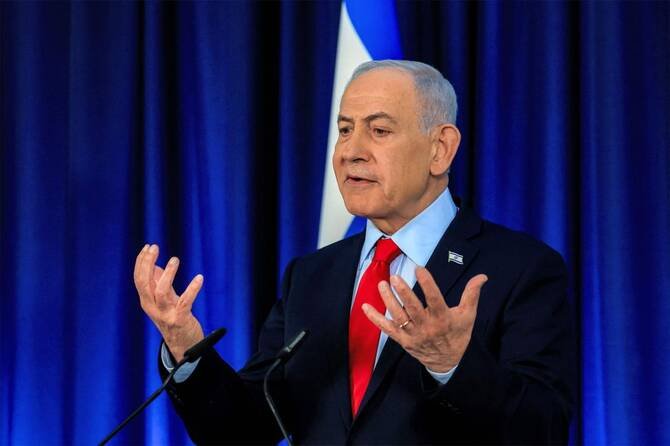
Tensions across the Middle East remain dangerously high as Israeli Prime Minister Benjamin Netanyahu has vowed to press ahead with military strikes on Iran, despite fresh claims of possible diplomatic engagement between Tehran and the United States.
On Monday, former U.S. President Donald Trump stated that his administration had held “very good” talks with a senior Iranian figure, sparking brief optimism about a potential breakthrough. However, Iranian authorities swiftly rejected the claim, accusing Trump of attempting to manipulate global oil and financial markets.

The disagreement unfolded just hours before a deadline issued by Trump for Iran to reopen the strategic Strait of Hormuz, a crucial route for global crude oil shipments. He had earlier warned that failure to restore access could lead to severe consequences, including attacks on Iran’s power infrastructure.
An Israeli source cited by Axios alleged that the supposed مذاکرات involved Iranian political figure Mohammad Bagher Ghalibaf. Ghalibaf, however, firmly denied the report, insisting that no such negotiations had taken place.
Iran’s foreign ministry also confirmed that while some intermediaries had relayed messages suggesting U.S. interest in talks, no direct communication had occurred.
Read Also:
- Trump unveils new U.S. Military strategy against Iran, signals ‘decisive phase’ in Middle East operations
- U.S. deploys 4,500 Marines, Sailors to Middle East as tensions escalate
- African Nations turn to Dangote Refinery as Middle East crisis disrupts global fuel supply
Despite renewed talk of diplomacy, Netanyahu maintained a hardline stance, declaring that Israel would not scale back its military campaign. He acknowledged that Washington believes a deal may still be possible but emphasized that Israeli forces will continue striking targets in Iran and Lebanon to safeguard national security.
The escalating crisis has already rattled global markets. Oil prices, which recently surged above $100 per barrel, dropped sharply following Trump’s remarks hinting at a diplomatic resolution.
The conflict has significantly disrupted shipments through the Strait of Hormuz, which handles roughly one-fifth of the world’s oil supply. Iran has also retaliated by targeting energy facilities and sites linked to U.S. interests across the region.
Energy analysts warn that a prolongedمة
could trigger a global economic shock surpassing previous oil crises.
In Lebanon, Israeli ground operations against Hezbollah, an Iran-backed militant group, have intensified. The fighting has reportedly claimed over 1,000 lives and displaced more than one million people.
Since the conflict escalated on February 28, thousands have reportedly been killed in Iran, including many civilians, though the full scale of casualties remains unclear due to limited access and verification challenges.