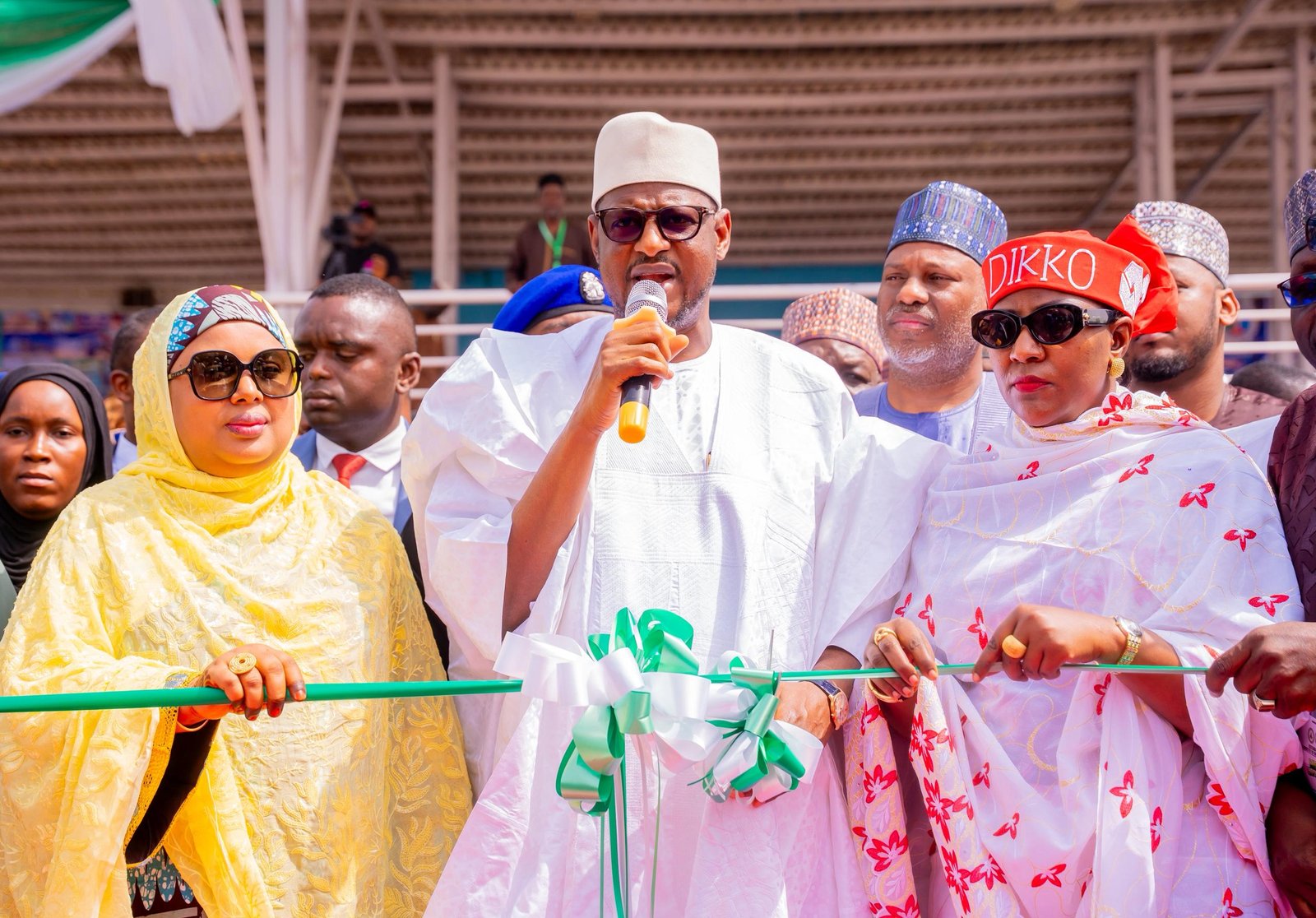
The Katsina State government has launched a comprehensive empowerment initiative aimed at supporting 14,450 women and girls throughout the state’s 34 local government areas.
Governor Dikko Radda introduced the program at the Government House, Katsina, emphasizing it as a strategic investment in inclusive growth, economic dignity, and sustainable development.

The initiative aims to provide tools, equipment, consumables, livestock inputs, and cash assistance to women engaged in various trades and small businesses.
The beneficiaries represent a wide range of occupations, including food processing, trading, fashion, agriculture, and creative industries.
Additionally, the program has reached 1,020 widows and individuals with disabilities, who received direct financial assistance.
During the event, Gov. Radda stated that the empowerment effort goes beyond merely distributing items, but aims to enhance the role of women in the state’s economy.
“These women are the backbone of our local economy. They support households, stimulate markets, and uphold our cultural heritage,” he remarked.
He clarified that the initiative was thoughtfully targeted and executed transparently under the Building Your Future Agenda, intended to provide seed capital to help beneficiaries expand their businesses.
Read Also:
- Fire at power substation plunges Katsina into blackout
- Katsina Police deny hostage-swap claims between Safana villagers, Bandits
- Katsina approves N897.8 Billion budget for 2026, prioritises education
The governor also announced plans to continue the program through training, mentorship, cooperative development, and the establishment of women’s enterprise hubs in all 34 local government areas.
He noted that these hubs will offer training in record keeping, digital skills, product quality, and market access.
Gov. Radda encouraged the beneficiaries to utilize the support effectively, grow their businesses, educate their children, and act as role models in their communities.
Commissioner for Women Affairs, Aisha Malunfashi, stated that the program resulted from the collaboration between the state government, development partners, and local councils.
She explained that the support is based on a needs assessment conducted across the state, with items specifically tailored to each group.