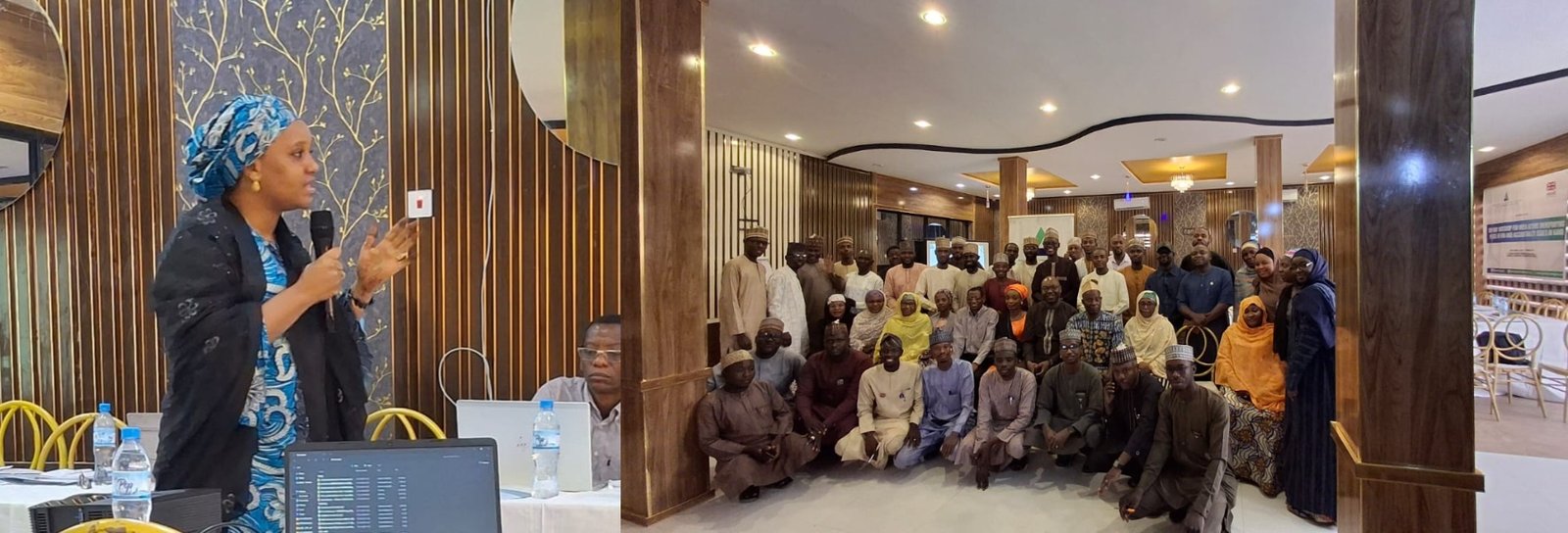
Journalists in Kano State have been urged to intensify public sensitisation on the provisions and key innovations in the Police Act, 2020, to strengthen accountability, human rights protection and improved policing across Nigeria.
The call was made during a one-day media workshop organised by the Rule of Law and Empowerment Initiative, also known as Partners West Africa Nigeria (PWAN), with support from the Foreign, Commonwealth and Development Office (FCDO).

Speaking during the training, PWAN acting Programme Manager, Aisha Isa Yusuf, said the workshop was designed to deepen journalists’ understanding of the new Police Act and equip them to drive police reform through informed reporting.
She described journalists as “the mouthpiece of the masses” and the bridge between security agencies, government institutions and communities.
According to her, the Police Act, 2020, contains critical reforms aimed at promoting a violence-free society, respect for suspects’ dignity and stronger protection of lives and property.
Read Also:
- Press freedom advocate condemns intimidation, harassment of journalists
- FCT polls: NUJ urges Journalists to prioritise accuracy, safety as misinformation threatens peace
- Journalists issue 2-week ultimatum to police to probe attack on Arise TV crew in Rivers
She highlighted key provisions such as the prohibition of arrest in lieu, stressing that police officers are no longer permitted to arrest relatives, including wives, in place of suspects.
Also, she noted that the Act discourages police interference in civil and contractual matters and affirms women’s right to bail, provided legal conditions are met.
“The media is the only bridge between victimised citizens and the security apparatus. You are our voices,” she told participants.
Yusuf urged journalists to monitor police conduct at the grassroots, expose misconduct, verify facts through forensic journalism, and sustain pressure by following cases until court verdicts are delivered.
Facilitator, Odoh Okenyodo, charged journalists to embrace developmental reporting and solutions journalism, urging them to highlight reforms that work while also pointing out gaps requiring attention.
Another facilitator, Aro Leonard, described journalists as having “superpowers” capable of shaping accountability and reform outcomes through consistent and responsible reporting.