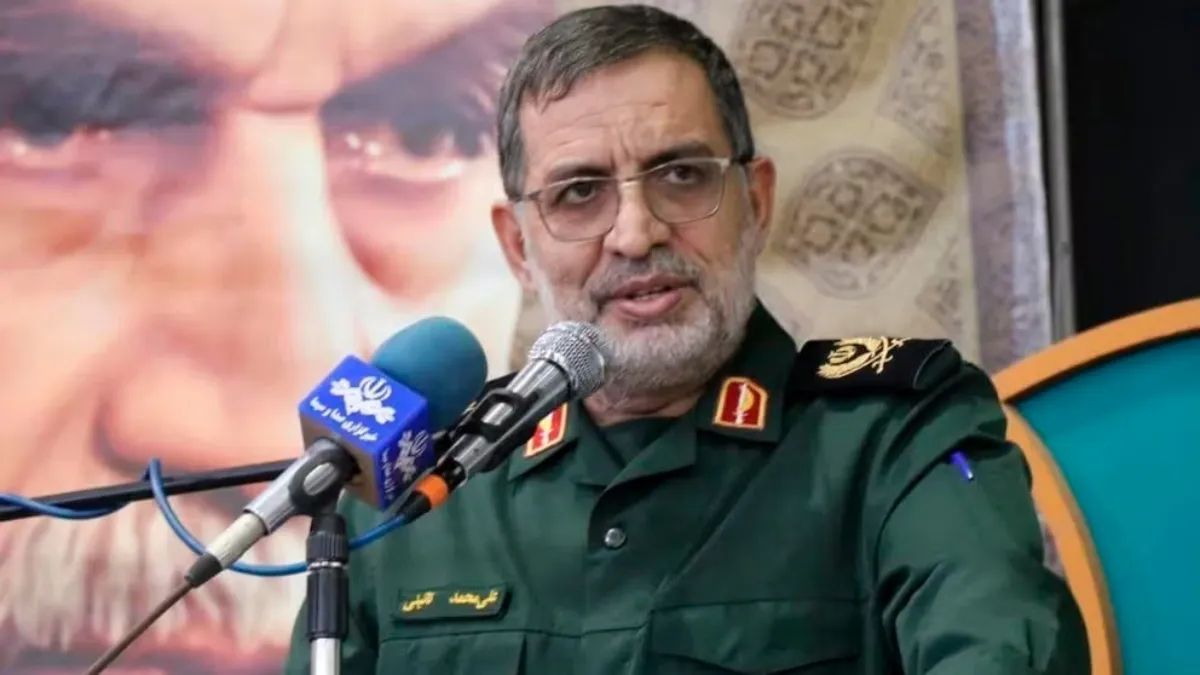
A senior Iranian military leader, Ali Mohammad Naini, has been killed in a fresh wave of coordinated strikes, escalating tensions in the volatile Middle East conflict. State media confirmed his death on Friday, attributing it to joint operations by the United States and Israel.
Naini, a brigadier general and spokesperson for Iran’s powerful Revolutionary Guard, had just issued a defiant statement challenging US claims about Iran’s naval capabilities. He warned Washington against deploying warships into the Persian Gulf and insisted that Iran’s missile production remained uninterrupted despite ongoing bombardments.
Iranian authorities condemned the strike as a deliberate attack by “American-Zionist forces.” Naini’s death follows a series of high-profile targeted killings of Iranian officials, including intelligence chief Esmaeil Khatib, political figure Ali Larijani, and paramilitary leader Gholamreza Soleimani. These incidents, along with the recent reported death of Supreme Leader Ali Khamenei in late February, have further destabilized Iran’s power structure.

Despite these losses, Iranian leadership has signaled resilience. President Masoud Pezeshkian pledged continued resistance, while Foreign Minister Abbas Araghchi assured that the political system remains intact.
The conflict, now entering its third week, has expanded beyond military targets to critical energy infrastructure. Recent strikes on Iran’s South Pars gas field triggered retaliatory drone attacks on oil facilities in Kuwait, including fires at major refining sites, raising concerns over global oil supply. The strategic Strait of Hormuz, a key route for global energy shipments, has become a flashpoint, affecting international markets.
Read also:
- Kuwait Refinery on fire after Drone attack as Iran strikes escalate, Oil prices surge
- Iran executes teen Wrestler, 2 others over killing of Police Officers
- Israel intensifies Tehran strikes as Iran retaliates, raising global energy fears
Missile interceptions and air defense responses were reported across the United Arab Emirates, Bahrain, and Saudi Arabia, with debris causing civilian damage. The strikes coincided with cultural observances, including Nowruz and Eid al-Fitr, amplifying regional uncertainty.
Analysts warn the ongoing escalation could spiral into a broader regional conflict with significant global economic repercussions. The killing of Naini highlights the intensifying nature of the war and its impact on Iran’s leadership, signaling a precarious phase for the Middle East and international energy security.