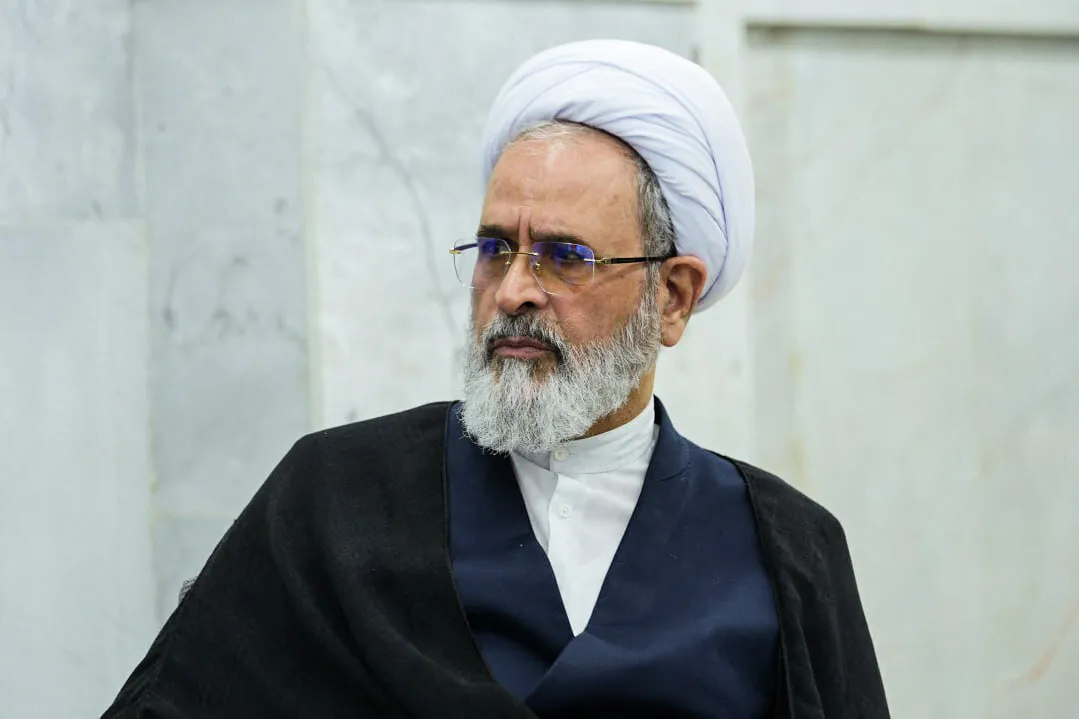
Iran’s newly declared Supreme Leader, Alireza Arafa, has issued a stern warning to the United States and Israel, pledging retaliation after what Tehran described as an unprovoked military assault on its territory.
In a statement released Tuesday morning and circulated across several social media platforms, Arafa declared that diplomacy with Washington had reached its limit, accusing the United States of crossing what he called a “red line.”

“The time for negotiations is over. The United States has chosen to cross the red line, the line of irreparable harm,” he said.
“By launching this war, they have signed their own death warrant. They do not know when or how the axe will fall, but we hold the reins.”
The remarks followed reports of coordinated airstrikes by the United States and Israel targeting Iranian military facilities and strategic infrastructure. The strikes mark a sharp escalation in tensions between Tehran, Washington and Tel Aviv, deepening fears of a wider Middle East conflict.
Read Also:
- US war secretary warns against threats to American interests over Iran strikes
- Iranian drone slams into UK military base in Cyprus as EU pledges support
- Israeli attacks kill 31 in Lebanon as Iranian attacks escalate around Middle East
The confrontation comes after months of mounting strain over Iran’s regional influence, ballistic missile programme and alleged nuclear activities. Washington has repeatedly accused Tehran of backing armed groups across the Middle East and destabilising the region. Iranian officials have consistently rejected those claims.
Iranian authorities described the recent military action as unprovoked, maintaining that Tehran did not initiate hostilities. Arafa dismissed Western assertions that the strikes were preventive measures aimed at stopping a potential nuclear threat.
“They brandish the nuclear specter like a scarecrow, blinded by their arrogance,” he said. “They have no idea of the true extent of our power or what we are prepared to unleash.”
Arafa directed particularly strong language at Israel, warning of sustained retaliation.
“As for Israel, its fate is sealed. Every strike, every crime, every act of suffering they have inflicted will come back to haunt them,” he declared. “They will remain in our sights, exposed, vulnerable, hunted.”
Security analysts warn that continued escalation could ignite a broader regional war, potentially drawing in armed groups aligned with Tehran across Lebanon, Syria, Iraq and Yemen. Any prolonged confrontation, they caution, may disrupt global energy markets and inflame sectarian tensions across the Middle East.
In his closing remarks, Arafa framed the standoff as existential and beyond negotiation.
“We walk in the shadow of the Leader, and every step is a lightning bolt,” he said, ending with the slogan, “Iran does not bend. Iran wins. Always.”
As rhetoric hardens and military movements intensify, international pressure is mounting for urgent diplomatic intervention to prevent what could become one of the most consequential Middle East conflicts in decades.