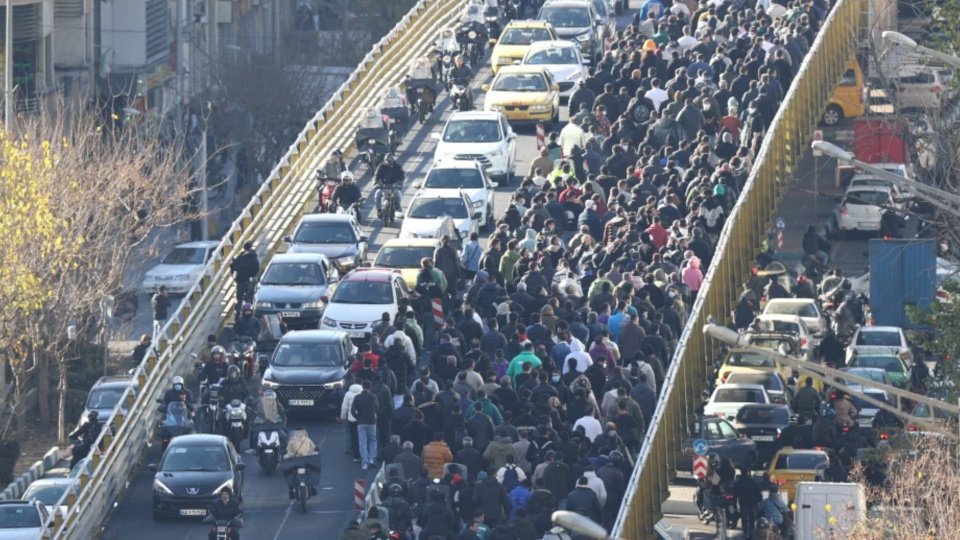
Iran was thrown into a nationwide internet shutdown on Thursday as protests over worsening economic conditions spread across all 31 provinces, intensifying one of the most serious waves of unrest in the country in recent years.
Demonstrators took to the streets to vent anger over soaring food prices, the rapid collapse of the national currency, and what they described as persistent government mismanagement. Authorities responded with a heavy security presence, using force in an effort to contain the protests.

Eyewitness accounts and local reports say at least 45 protesters have been killed since late December, including eight children, while hundreds of others have been injured or arrested. In several cities, protesters were seen pulling down statues of prominent figures, including that of former Revolutionary Guards commander Qassem Suleimani, highlighting the depth of public anger.
The unrest has also triggered widespread economic disruption. Shopkeepers in Kurdish regions and other major cities reportedly shut their businesses in response to calls for a general strike in solidarity with the protesters. Videos circulating before the internet blackout showed deserted streets and rows of locked shops, underscoring the scale of participation.
Reports from multiple locations indicate that security forces opened fire on demonstrators in some areas, leaving many wounded. The protest movement appears largely decentralized, differing from the more coordinated demonstrations that followed the death of Mahsa Amini in 2022.
Read Also:
- Army chief warns Trump, Netanyahu against interfering in Iran’s affairs
- Iran’s foreign minister describes Trump’s comments as reckless, dangerous
- Trump warns Iran against harming peaceful protesters, says US “will come to their re
Exiled crown prince Reza Pahlavi has urged Iranians to express unity by standing at their windows in protest, though the extent of public response remains unclear. Iranian authorities have issued warnings against participation in any form of protest, threatening severe consequences.
The crisis has drawn international attention, with the United States and Germany condemning what they described as excessive use of force against civilians. Tehran, however, dismissed the protests as the work of foreign-backed saboteurs and violent rioters, accusing external actors of attempting to destabilize the country and cautioning against foreign interference.
As the internet blackout continues, access to verified information remains limited, deepening concerns over human rights, transparency, and the government’s handling of the escalating economic and social crisis.