The International Institute of Tropical Agriculture has called on the Federal Government to prioritise reforms in Nigeria’s seed yam value chain as part of efforts to unlock the country’s vast export potential and strengthen food security.
The appeal was made in Abuja by the institute’s Deputy Director-General for Partnerships for Delivery and Scaling, Dr Tahirou Abdoulaye, during the National Yam Advocacy Summit themed Catalysing a National Agenda for Yam Value Chain Transformation through Improved Seed Technologies.
The summit convened policymakers, researchers, private sector players and farmer groups to chart a coordinated path for modernising yam production through innovation, regulatory support and investment.

Abdoulaye described yam as Nigeria’s most valuable food crop and stressed that reforming the seed system remains central to increasing productivity, improving quality standards and expanding access to international markets. He said a functional and efficient seed system would enable improved yam varieties to reach farmers at scale while opening up new opportunities in processing and export.
He pointed to rising demand among Nigerians in the diaspora and in Caribbean markets as evidence of strong global appetite for high-quality Nigerian yam. According to him, meeting export standards and improving yield performance could translate into significant foreign exchange earnings.
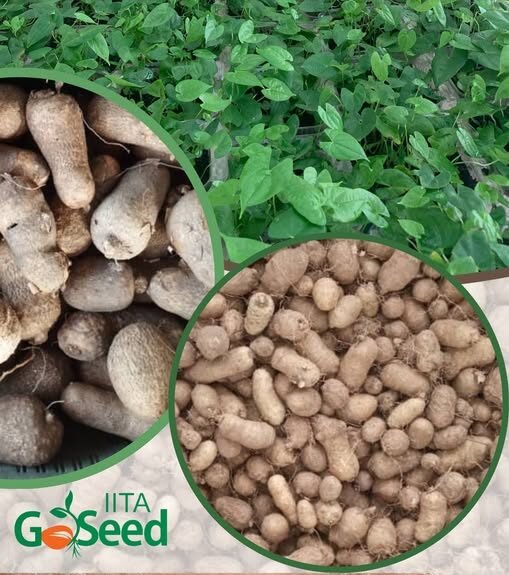
Abdoulaye noted that research breakthroughs have overturned the long-standing belief that yam has a low multiplication rate. He cited innovations such as Single-Node Cutting, also known as leaf-bud cuttings, as transformative technologies capable of accelerating seed yam production. He explained that the method allows for rapid multiplication of clean planting materials with minimal inputs and adaptability across diverse environments.
The IITA executive said scaling such technologies nationwide would help bridge existing yield gaps, reduce production losses and enhance Nigeria’s competitiveness in global agricultural markets. He added that the institute is working closely with the Federal Ministry of Agriculture and Food Security to provide technical expertise and support innovation-driven reforms in the yam sector.
Head of Station at IITA Abuja, Prof. Beatrice Aighewi, highlighted the Seed System Innovation for Vegetatively Propagated Crops in Africa initiative, which promotes the multiplication of yam using leaf cuttings. She explained that the approach enables farmers to produce large volumes of quality seed from a small quantity of mother plants, thereby improving availability and lowering long-term costs.
Aighewi identified poor-quality seed as a major constraint in yam production, noting that average yields currently stand at between eight and 10 tonnes per hectare, far below the potential of 30 tonnes. She observed that seed accounts for up to 60 percent of total production costs, making it the single most expensive input for farmers.
Read also:
- IITA celebrates Mercy Diebiru-Ojo as 2025 Africa Food Prize Laureate for breakthrough in Cassava, Yam research
- IITA, IFAD unveil plan to lift 30,000 Nigerian youths into agribusiness
- IITA releases over 200 improved Crop varieties to boost food security in Nigeria
She emphasised the need for clear policy regulation, certification systems and quality assurance frameworks to speed up the adoption of improved varieties and formalise the seed yam market. According to her, strengthening the seed ecosystem could significantly raise productivity and stimulate agribusiness opportunities across the value chain.
A senior programme officer at the Bill & Melinda Gates Foundation, Mr Audu Grema, described yam as one of Nigeria’s most profitable crops but said its economic value remains largely underutilised. He urged stakeholders to treat yam as a strategic export commodity capable of generating income for smallholder farmers and boosting rural economies.
President of the National Association of Yam Farmers, Processors and Marketers, Dr Simon Irtwange, reaffirmed the association’s commitment to deepening reforms in the sector. He commended President Bola Tinubu for signing into law the repeal of the 1986 yam export prohibition, describing the move as a turning point for Nigeria’s participation in international markets.
Irtwange recalled that Nigeria recorded its first formal yam export to the United Kingdom in 2017, marking a significant milestone in efforts to position yam as a globally traded commodity.
Stakeholders at the summit agreed that coordinated policy action, investment in improved seed technologies and stronger regulatory frameworks are critical to transforming Nigeria’s yam industry into a major driver of export revenue and agricultural growth.