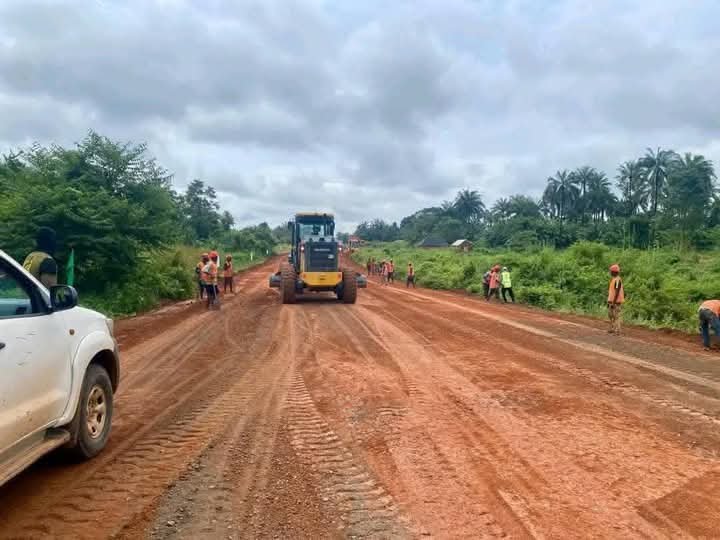
In what many observers are calling a defining moment for infrastructure development in Taraba State, governor Agbu Kefas is drawing attention for visible progress on the long-awaited Mararaba–Baissa road project in Kurmi local government council.
Once notorious for its difficult terrain and near impassable conditions, the Mararaba–Baissa corridor is now undergoing a significant transformation. At the time of filing this report, construction work is advancing steadily, marking a shift toward a more execution driven and results-oriented governance style.

Field assessments show simultaneous construction across major segments of the road, including Mararaba–Didan, Didan–Baissa, and Ashuku–Abong. This multi-pronged progress stands in contrast to previous efforts that were often plagued by delays and stalled timelines.
According to findings, the current administration has adopted a multi contractor model, assigning three separate construction firms to different sections of the project.
Read Also:
- Taraba launches ‘Big Sisters’ initiative to strengthen adolescent sexual, reproductive health services
- Taraba judicial reform gains momentum as CJ receives court rules
- Gov. Fintiri’s supporter trekking from Taraba arrives Yola
Residents who spoke with our correspondent said this strategy has minimized downtime and ensured continuous activity across all fronts, accelerating overall delivery.
Communities along the corridor are already reporting early signs of impact. Farmers anticipate smoother transport of agricultural produce, traders are preparing for increased commercial activity, and families expect improved access to healthcare, education, and other essential services.
A recent on site inspection confirmed substantial progress, with heavy machinery in operation and key construction milestones being met.
Officials remain optimistic that the Mararaba–Didan stretch will soon connect seamlessly with the Didan–Baissa section, while work between Ashuku and Abong continues at a steady pace.
Beyond its physical scope, the project is increasingly being viewed as a symbol of renewed administrative intent—focused on reconnecting rural communities, stimulating economic growth, and strengthening government presence at the grassroots.
For many residents, the Mararaba–Baissa road now represents more than just infrastructure. It reflects a broader shift in leadership philosophy under Governor Kefas—one characterized by coordination, urgency, and measurable results.
As construction progresses, expectations continue to rise, as community leader Adasu Joshua expressed optimism that once completed, the road will not only ease movement but also unlock new economic opportunities across the region, reinforcing a growing narrative of development in Taraba State.