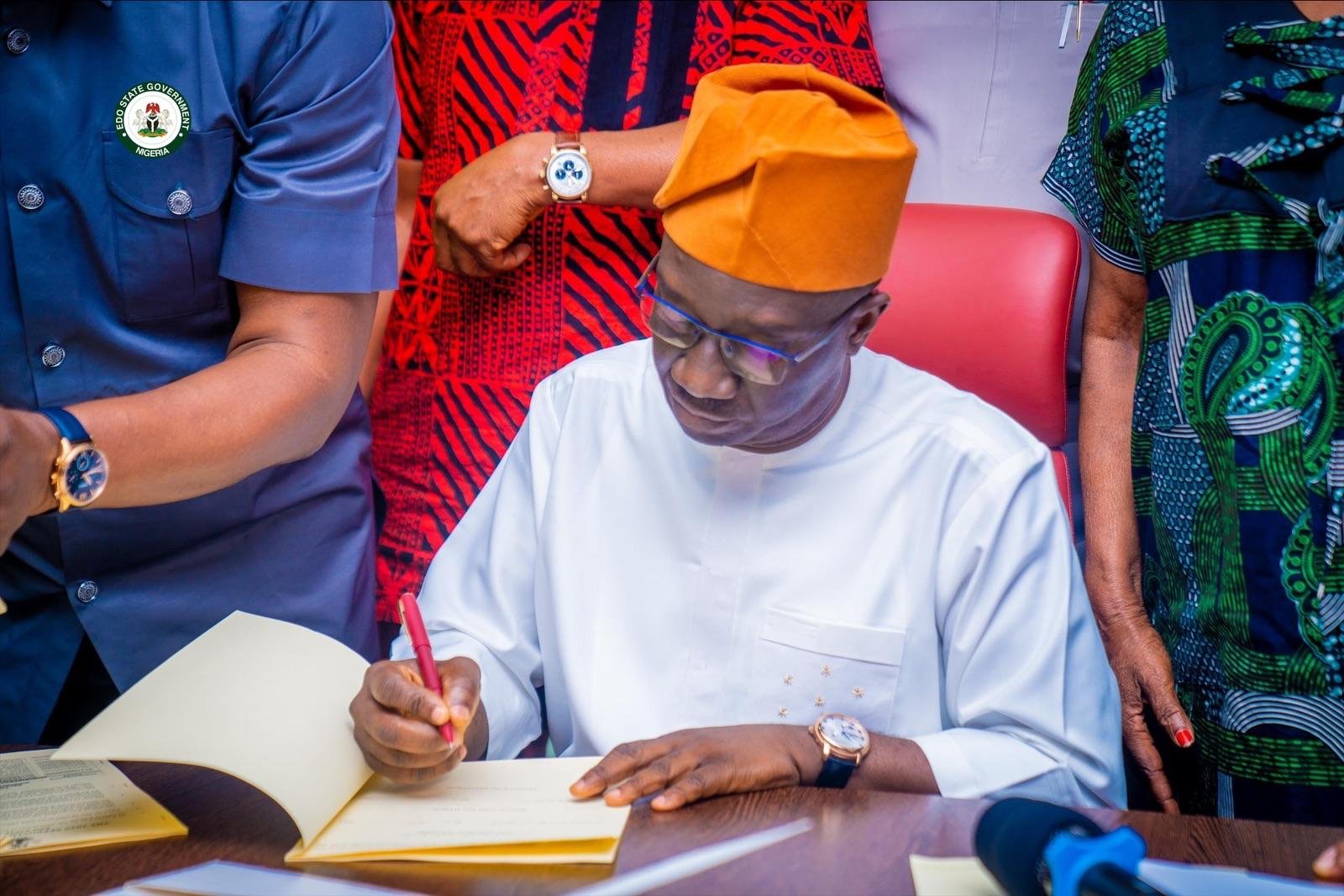
When Governor Monday Okpebholo unveiled a ₦1 billion interest-free loan scheme in June 2025, it was more than a policy announcement. It was a statement of intent. At a time when small businesses across Nigeria are grappling with high operating costs and limited access to affordable credit, Edo State chose a different path, one that places trust, opportunity, and economic power directly in the hands of its people.
The result is a quiet but far-reaching economic intervention that is reshaping livelihoods, strengthening local commerce, and laying the foundation for inclusive growth across the state. Unlike conventional loan programmes that often favour a few, the Okpebholo administration adopted a uniform and transparent model.

Under the scheme, ₦200,000 was disbursed to each of 5,000 beneficiaries spread across the three senatorial districts (Edo Central Edo South, and Edo North), ensuring balanced development and statewide impact.
Implemented through the Edo State Skills Development Agency (EdoJobs), the programme deliberately targeted those who keep the grassroots economy alive: traders, market women, farmers (including Fadama and other organised farming groups), artisans, and entrepreneurs. These are the people whose daily enterprise feeds households, supplies markets, and sustains communities.
For many beneficiaries, the ₦200,000 interest-free loan became the difference between stagnation and growth. Traders were able to restock and diversify their goods. Market women expanded their inventory and improved turnover. Farmers invested in inputs that boosted production, while artisans and entrepreneurs acquired tools and materials that increased productivity.
Because the loans are interest-free with flexible repayment terms, beneficiaries are not burdened by the pressure that often comes with commercial lending. Instead, they are empowered to grow steadily, reinvest profits, and, in many cases, engage additional hands, contributing to job creation and improved household income.
The loan scheme fulfils a key campaign promise made by Governor Okpebholo to support underserved businesses that are typically excluded from formal credit systems. Beyond Edo State, the initiative aligns with President Bola Tinubu’s Renewed Hope Agenda, which emphasises grassroots development, economic inclusion, and sustainable livelihoods.
Read also:
- Edo kick-starts activities to mark International Youth Day
- Reactions as Otedola names Seyi Tinubu his mentee in Dubai Christmas photo
- Ekpoma boils as Anti-Kidnapping protest turns violent, Palace attacked in Edo community
Through insisting that beneficiaries repay only the principal over time, the administration has also ensured that the fund remains revolving and sustainable, allowing future batches of entrepreneurs to benefit.
In a clear signal of confidence in the programme’s impact, another ₦1 billion has been captured in the 2026 Edo State budget to fund a second batch of beneficiaries, subject to the approval of the governor. If approved, the expansion will significantly deepen the programme’s reach and reinforce its role as a pillar of Edo State’s economic strategy.
What sets this initiative apart is not just the size of the fund, but its philosophy. Governor Okpebholo’s approach recognises that true economic growth begins at the grassroots, in markets, farms, workshops, and small businesses where ordinary people turn effort into enterprise.
As the ripple effects continue to spread through stronger businesses, rising incomes, and more vibrant local economies, the ₦1 billion interest-free loan scheme stands as a compelling example of people-centred governance in action. It is a reminder that when government policies meet the real needs of the people, development becomes not just visible, but deeply felt.