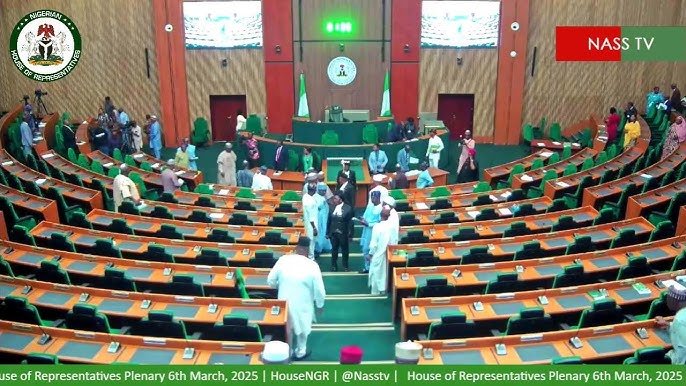
The House of Representatives on Tuesday adopted two far-reaching motions aimed at tackling youth unemployment in the health sector and averting further infrastructural decay, as lawmakers turned the spotlight on internship bottlenecks and a collapsed federal road.
The resolutions were taken during plenary on Tuesday, December 16, 2025, following motions sponsored by members and debated on the floor.
On educational empowerment, the House mandated relevant health regulatory bodies to urgently expand internship opportunities for graduates of Nursing and Midwifery, Medical Laboratory Science, Pharmacy, Optometry, Physiology, Radiography and other allied medical disciplines.

Lawmakers noted that thousands of qualified graduates are left stranded every year due to limited internship slots, despite meeting all academic requirements.
According to the motion, an estimated 10,000 to 15,000 health graduates are affected annually, a situation members warned is fuelling unemployment, brain drain and frustration among young professionals.
The House stressed that expanding internship placements is critical to strengthening Nigeria’s healthcare workforce and preventing the loss of skilled manpower to other countries.
Read also:
- Reps urge IGP to increase police presence on Abuja–Lokoja Expressway
- Rep. Ukodhiko pays over ₦17m as tuition fees for scholarship beneficiaries in 2025
- Gov. Nwifuru presents N884.8bn 2026 budget to House of Assembly
In a separate motion on infrastructure rescue, the House called on the Federal Ministry of Works, the Federal Ministry of Environment, the Federal Roads Maintenance Agency (FERMA), the Ecological Fund Office and the Niger Delta Development Commission (NDDC) to immediately mobilise contractors for emergency remedial works on the collapsed Umuma Isiaku–Nkwerre Road.
Lawmakers described the road’s condition as a major safety risk, noting that its collapse has disrupted economic activities, cut off communities and worsened transportation challenges in the affected area.
They warned that failure to act swiftly could lead to loss of lives, further environmental damage and prolonged hardship for residents.
With the adoption of the motions, the House reaffirmed its commitment to addressing systemic challenges in education, healthcare and infrastructure, urging the relevant agencies to treat the resolutions as matters of urgency in the public interest.