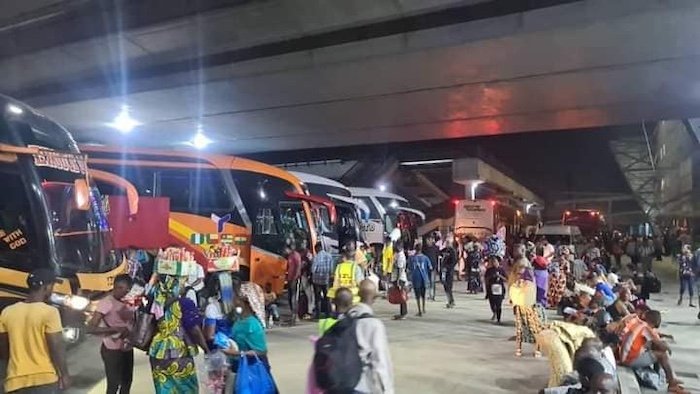
As Christmas lights begin to glimmer across city streets and festive melodies fill shopping malls, millions of Nigerians are preparing to travel home for the Yuletide celebrations. For many, the festive season is a time to reunite with loved ones, share meals, and partake in age-old traditions. Yet this year, for ordinary Nigerians, the anticipation of holiday cheer has been overshadowed by a grim reality: a transportation system that seems to cater only to the wealthy, leaving the majority to grapple with soaring fares, unsafe roads, and the looming threat of insecurity.
Across the country, both road and air travel have reached unprecedented cost levels. Ordinary citizens, whose monthly incomes barely stretch to cover rent, food, and school fees, now face the harsh prospect of paying sums that can equal months of earnings just to return home.
Seasonal demand alone does not explain the magnitude of the problem. Experts and travellers alike argue that poor infrastructure, opportunistic pricing, weak regulatory oversight, and worsening security conditions have combined to create what many are calling a “holiday travel nightmare” in Nigeria.

Road Travel: Risky, Expensive, and Unsafe
For most Nigerians, the road remains the primary mode of transportation. Buses, vans, and shared taxis connect towns and cities, ferrying millions during the festive period. But this year, the cost of traversing the nation by road has skyrocketed to alarming levels.
On the busy Abuja–Lagos corridor, one of the nation’s most heavily trafficked routes, fares have more than doubled compared to previous years. Findings by The Trumpets show that a one-way ticket on a Toyota Hiace from Utako, Abuja, to Berger, Lagos, now costs ₦75,050 for adults and ₦71,100 for children. Premium operators such as God Is Good Motors (GIGM) list the same route at ₦93,250 per adult for travel on December 22.
For the average civil servant earning the national minimum wage of ₦70,000 per month, these fares are completely unaffordable. “This is daylight robbery,” said Ibrahim Musa, a public servant based in Abuja. “One ticket is more than my entire salary. How are we expected to travel and survive?”
Beyond the cost, road travel this festive season has become a gamble with safety. The Lokoja–Abuja highway, a critical north-south artery, has been plagued with congestion due to frequent accidents, fallen trucks, and poor road maintenance. In recent days, travellers have reported being stranded for up to 12 hours near Koton Karfe, navigating long queues of broken-down vehicles.
Some, desperate to reach their destinations, have resorted to hiring motorcycles at ₦5,000 to ₦6,000 to circumvent blocked highways—risking accidents, harassment, and theft. “I had no choice but to pay for a bike to cross the last stretch,” said Fatima Usman, a mother of three travelling to Lagos. “The road was terrible, and my children were scared. It shouldn’t be like this.”
The economic implications are equally severe. Traders and small business owners, who rely on the timely movement of goods, report losses running into tens of thousands of naira. Perishable goods spoil as vehicles sit in gridlocks, and informal markets see reduced foot traffic as potential buyers struggle with travel delays.
Despite government interventions, such as temporary traffic control measures launched by the Kogi State Government, congestion persists. “Planning only goes so far when infrastructure is neglected, accidents are frequent, and there is little enforcement of traffic laws,” said Adeola Ayeni, a transport analyst based in Abuja. “It’s a systemic failure, not a seasonal glitch.”
Air Travel: A Luxury Reserved for the Wealthy
Faced with unsafe and expensive road travel, many Nigerians turn to air travel. But here, too, the festive season has exposed a stark divide between the privileged and the majority. Domestic airline tickets have reached prices that are simply unattainable for low- and middle-income earners.
Earlier this month, the Senate summoned the Minister of Aviation, Festus Keyamo, along with the heads of the Federal Airports Authority of Nigeria (FAAN) and the Nigerian Civil Aviation Authority (NCAA), to explain the sharp increase in ticket prices. Senate President Godswill Akpabio accused airlines of exploiting citizens’ fears over road insecurity. “People are taking advantage of the situation,” he said during plenary.
The figures are staggering. A one-way ticket on Air Peace or Ibom Air from Abuja to eastern destinations can cost between ₦460,000 and ₦500,000. For a civil servant on the national minimum wage, this equates to roughly five to six months of earnings for a single flight.
Following the Senate’s intervention, airline booking platforms show some reduction, with one-way flights from Abuja to Lagos ranging between ₦173,700 and higher depending on timing and airline. Round-trip tickets on certain routes exceed ₦190,000, still an enormous sum for the average Nigerian. The interventions, critics argue, highlight a troubling trend: while regulators appear quick to act when elites are affected, ordinary citizens are left to bear the brunt of market exploitation.
Regulatory Oversight: Warnings Without Teeth
The Federal Competition and Consumer Protection Commission (FCCPC) had issued warnings to transport operators against arbitrary fare hikes. Tunji Bello, FCCPC’s Executive Vice Chairman, acknowledged that operational pressures and seasonal demand could justify some increases. However, he stressed that consumers are entitled to transparent fare disclosures.
“Price increases are not unlawful in themselves,” Mr Bello said. “But conduct that exploits consumers or takes unfair advantage of heightened demand will attract regulatory attention under the Federal Competition and Consumer Protection Act (FCCPA) 2018.”
Yet despite these pronouncements, fares remain high. Road users and travellers report feeling abandoned, left to negotiate dangerous roads and unaffordable flights while airlines and transport companies profit from the season. “It feels like the government is more concerned with protecting commercial interests than ordinary citizens,” said Ibrahim Musa.
Read also:
- Commissioner brings Yuletide joy to Isoko South residents
- Coca-Cola’s Caravan Campaign spreads Yuletide cheer across Nigeria
- Yuletide: Uzodimma to install night landing facilities at SMICA
The Human Cost of Soaring Fares
The spike in travel costs is more than a numerical inconvenience; it carries tangible human consequences. Many Nigerians, particularly in rural areas, are forced to choose between family reunions and personal safety. Students returning home from universities face similar dilemmas. Do they risk a potentially dangerous road trip or save for an airline ticket they may never afford?
Chinedu Okafor, a recent university graduate, said he had to borrow money to buy a bus ticket from Abuja to Lagos. “Some of my classmates are postponing their trips because tickets are unaffordable. It is depressing. The festive period should be a time of joy, but for many of us, it’s a struggle for survival.”
Women and children are particularly vulnerable. Parents reported paying more for safer transportation options, while some young women expressed fears about harassment on congested highways. “I was afraid to travel at night because the road is poorly supervised,” said Aisha Bello, a student from Bauchi. “Some roads are dark, and accidents happen frequently. You feel like you’re risking your life just to get home.”
Beyond the immediate dangers, the economic ripple effects are profound. Traders transporting perishable goods like vegetables, fish, and meat face losses when delays prevent timely delivery. Rural communities, already suffering from limited access to markets, bear the brunt of systemic inefficiencies.
Elite Access vs. Ordinary Citizens
The contrast between road and air travel underscores a disturbing reality: Nigeria’s transport system increasingly favors the wealthy. While the federal government intervened to cap airfare prices following Senate scrutiny, road transport—the lifeline for millions of Nigerians—remains largely unregulated.
Critics argue that seasonal interventions for airline fares highlight a broader policy bias. While regulators occasionally step in to protect urban elites from market exploitation, millions of ordinary citizens navigating treacherous roads are left to fend for themselves.
“This is a classic example of systemic inequity,” said Bola Akinyemi, a transport economist. “If you have money, you get government attention and protection. If you don’t, you are on your own, exposed to risk and exploitation.”
The Bigger Picture: Infrastructure, Security, and Policy Failures
Experts note that the fare surge is symptomatic of deeper structural problems. Nigeria’s road infrastructure is failing, highways are poorly maintained, and traffic management is reactive rather than proactive. Seasonal demand merely exposes pre-existing weaknesses.
Highway insecurity, particularly in the north-central and south-east regions, exacerbates the problem. Frequent accidents, armed robbery, and poor traffic enforcement contribute to congestion and delays. In turn, transport operators cite these risks as justification for higher fares, creating a vicious cycle of rising costs and worsening safety.
Meanwhile, regulatory frameworks are inadequate. While bodies like FCCPC and NCAA exist to ensure fair pricing, enforcement is weak, and compliance by operators is often inconsistent. Seasonal interventions are reactive and temporary, offering little long-term relief for travellers.
Stories from the Ground
At Utako Motor Park in Abuja, a scene of frustration and anxiety unfolds daily. Families clutching tickets, often borrowed money in hand, face long queues of buses with dwindling seats. Vendors sell snacks at inflated prices, aware that passengers have no alternative but to spend.
“I’ve been here since 6 a.m. trying to secure a seat to Lagos,” said Emeka Nwosu, a father of four. “The bus fare is ₦80,000, and that’s without food for the journey. We just pray nothing happens on the road.”
On the Lagos–Ibadan Expressway, travellers recount stories of overnight delays, breakdowns, and armed robberies. “I saw a bus overturned near Shagamu,” said Ngozi Okeke, who was en route to Lagos. “Passengers were injured, but there was no emergency response for hours. It is terrifying.”
Even air travel, though safer, is no guarantee of a stress-free journey. Long queues at check-in counters, fluctuating ticket prices, and last-minute cancellations create additional burdens for those who manage to scrape together the money.
A Call for Systemic Reform
Transport experts argue that short-term interventions, such as fare caps, do little to address the root causes of Nigeria’s seasonal travel crisis. Instead, they advocate for long-term policy reforms, including: Massive investment in road infrastructure, particularly on major intercity highways; Improved traffic management and highway patrols to ensure safety and reduce congestion; Transparent pricing regulations for both road and air travel, enforced year-round rather than seasonally; Subsidies or targeted support for low-income travellers during peak periods; Integrated planning between federal and state governments to anticipate and manage festive travel demand.
“Travel should not be a privilege,” said Bola Akinyemi. “It is a necessity, and the government has a duty to make it safe and affordable for all citizens.”
The Cost of Neglect
For millions of Nigerians this festive season, the journey home is more than a physical movement—it is a test of endurance, resourcefulness, and resilience. While wealthier citizens may benefit from regulatory interventions and air travel options, ordinary Nigerians face a stark choice: risk unsafe roads, pay exorbitant fares, or forgo family reunions altogether.
As the season unfolds, the growing inequality in Nigeria’s transport system becomes painfully clear. The festive period, traditionally a time of togetherness, has become a reminder of the systemic neglect faced by the poor, the underpaid, and the vulnerable. Without sustained reforms, this pattern is likely to repeat every year, turning what should be a season of joy into an annual trial of survival.
For Nigerians, the question remains: when will the government act to ensure that safe and affordable travel is a right for all, not a luxury for the privileged few?