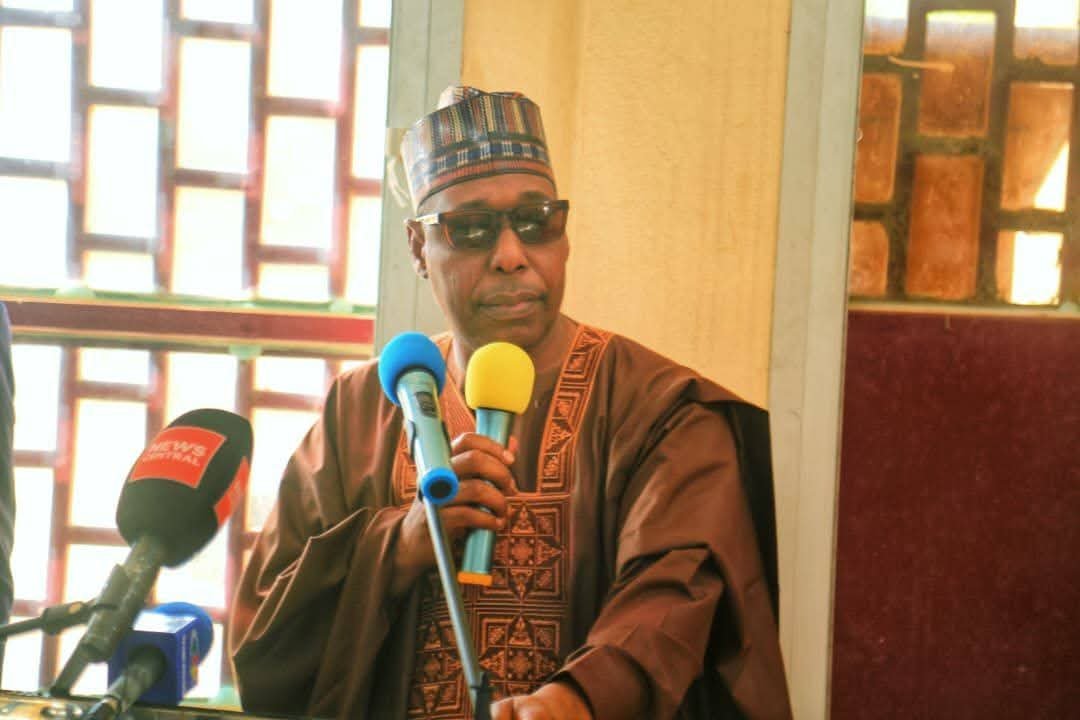
Borno State Governor, Babagana Zulum, has reaffirmed his administration’s commitment to boosting educational access for indigent students from the state and for Nigerian refugees studying in Cameroon.
Gov. Zulum gave the assurance during a visit to the University of Maroua in Cameroon, as part of a two-day official tour.
The governor inspected a 500-seat lecture theatre being constructed by the Borno State government to support both Nigerian students and refugee learners displaced by Boko Haram insurgency.

Earlier, the governor visited the Minawao refugee camp, which hosts more than 12,000 Nigerians from Kirawa, Ngoshe, Ashigashiya, and surrounding communities in Gwoza Local Government Area.
Many have lived in the settlement for over a decade. His visit formed part of efforts to facilitate their voluntary repatriation.
The lecture theatre, now nearing completion, has been widely hailed as a symbol of cross-border educational cooperation and regional solidarity.
Gov. Zulum, who has made education central to the state’s post-conflict recovery, also announced plans to expand scholarship opportunities for indigenes of the state, and for refugees whose studies were disrupted by violence.
“No young person should be forced to abandon his/her education simply because insurgency pushed them across international borders,” the governor said.
Read also:
- Zulum reaffirms support for troops during visit to Damboa, consoles families in Chibok
- Gov. Zulum launches scholarship scheme for Borno youths in piloting, aeronautical engineering
- Zulum vows to strengthen access to justice for Borno residents
He stressed that his administration’s responsibility to Borno citizens extends beyond its geographic boundaries.
Gov. Zulum added that the state was considering increasing the number of students enrolled at the University of Maroua, praising the institution’s commitment to supporting learners affected by the insurgency.
The university’s Vice-Chancellor, Prof. Idrissou Alloum, commended Gov. Zulum for what he described as an “unprecedented gesture” that strengthens educational access and deepens historic ties between border communities.
He noted that the ongoing construction and scholarship initiatives reflect a “forward-thinking approach to humanitarian governance.”
Students at the institution welcomed the governor’s visit, saying his engagement and willingness to hear their concerns demonstrated strong leadership and a recognition of their continued aspirations despite displacement.