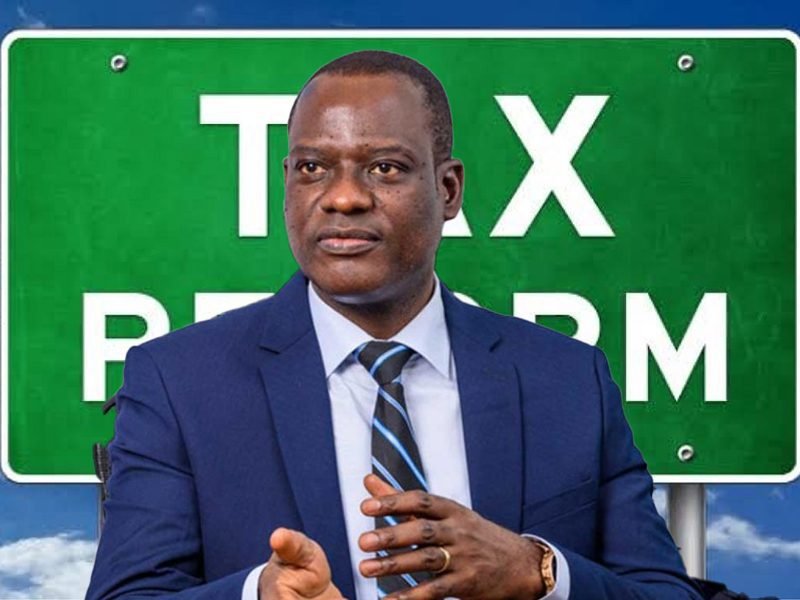
Taiwo Oyedele’s elevation from Chairman of the Presidential Committee on Fiscal Policy and Tax Reforms to Minister of State for Finance marks a significant transition, from designing tax policy to shaping Nigeria’s broader economic strategy.
President Bola Ahmed Tinubu nominated him on March 3, 2026, to replace Doris Uzoka-Anite. The Senate confirmed the appointment shortly thereafter, and he was sworn in on March 16, 2026.

This development places a seasoned tax technocrat at the centre of Nigeria’s fiscal framework at a critical moment, characterised by a low tax-to-GDP ratio (approximately 10.8%), heavy reliance on borrowing, and the urgent need to translate recent reforms into measurable economic growth.
Who Is Taiwo Oyedele?
A 50-year-old economist, accountant, and public policy expert from Ikaram in Ondo State, Oyedele, possesses an impressive academic and professional background. He holds a Higher National Diploma from Yaba College of Technology and a BSc in Applied Accounting from Oxford Brookes University. He has also completed executive programmes at leading global institutions, including the London School of Economics, Yale University, and the Harvard Kennedy School.
He spent over two decades at PwC, rising to the positions of Fiscal Policy Partner and Africa Tax Leader. In academia, he serves as a professor at Babcock University and as a visiting scholar at Lagos Business School.
Read Also:
- Exclusive: Why Nigeria’s 2030 N1 Trillion economy target remains a mirage
- Exclusive: Tinubu’s Executive Order 9 – A bold move to flood FAAC with Trillions, at what cost?
- Exclusive: What Tinubu’s Executive Order 9 means for NNPC, Nigerians
In 2023, President Tinubu appointed him to lead the Presidential Committee on Fiscal Policy and Tax Reforms, which produced Nigeria’s landmark 2025 Tax Reform Acts, widely regarded as the most comprehensive overhaul of the tax system in decades.
Key outcomes of the reforms include:
Streamlining and reducing multiple taxes (from over 60 to fewer than 10)
Lowering the burden on low-income earners, small businesses, and the informal sector
Introducing digital compliance systems to enhance transparency and efficiency
Shifting from punitive taxation to growth-driven revenue mobilisation
These reforms aim to significantly increase Nigeria’s tax-to-GDP ratio—with some analysts projecting up to 25% within two to three years—without imposing additional burdens on vulnerable populations.
From Policy Design to National Execution
As Minister of State for Finance, Oyedele transitioned from advisory responsibilities to direct implementation and coordination.
He will work closely with the Minister of Finance and Coordinating Minister of the Economy, influencing key areas such as budgeting, debt management, and oversight of revenue-generating agencies like the Federal Inland Revenue Service (FIRS) and the Nigeria Customs Service.
In his swearing-in remarks, Oyedele outlined his priorities:
“In my new role, I will focus on strengthening revenue mobilisation, promoting fiscal discipline, and ensuring that public resources translate into tangible improvements in the lives of Nigerians… financing Nigeria for sustainable development.”
President Tinubu commended his expertise in tax policy, describing him as committed to fostering a more business-friendly economic environment.
Potential Impact on Nigeria’s Economy
Revenue Growth and Fiscal Sustainability
Nigeria’s low tax-to-GDP ratio has long driven dependence on oil revenues and borrowing. Oyedele’s reforms have simplified compliance, and in his new role, he can accelerate digitalisation, plug leakages, and expand the tax base efficiently. Increased non-oil revenue could reduce fiscal deficits, ease debt pressures, and create room for infrastructure and social investments.
Improved Business Environment
Simplified tax structures, clearer regulations, and targeted relief for MSMEs and informal operators are expected to reduce compliance costs and improve Nigeria’s ease of doing business. This could attract foreign direct investment and support industrialisation and job creation.
Inclusive Economic Growth
The reforms prioritise protection for low-income earners and small businesses through higher exemption thresholds and targeted relief measures. Effective implementation could broaden economic participation, reduce inequality, and rebuild public trust in the tax system—despite past resistance and implementation challenges.
Macroeconomic Stability
Enhanced revenue mobilisation can strengthen fiscal-monetary coordination, helping to manage inflation, stabilise the naira, and fund key development initiatives under the administration’s economic agenda. It also signals policy continuity and credibility to investors and development partners.
Realistic Outlook and Challenges
While Oyedele’s track record inspires confidence, several challenges remain. These include entrenched interests, low public trust in government institutions, capacity constraints within tax administration, and exposure to external shocks such as oil price volatility and exchange rate pressures.
Ultimately, success will depend on effective implementation, stakeholder engagement, and the ability to deliver measurable outcomes—aligning with Oyedele’s stated goal of moving from policy formulation to execution.
This appointment represents more than a routine cabinet reshuffle—it elevates tax expertise to the centre of Nigeria’s economic strategy.
If effectively executed, Oyedele’s reforms could position Nigeria toward a more resilient and self-sustaining economy—one that rewards productivity, protects vulnerable groups, and drives long-term prosperity.