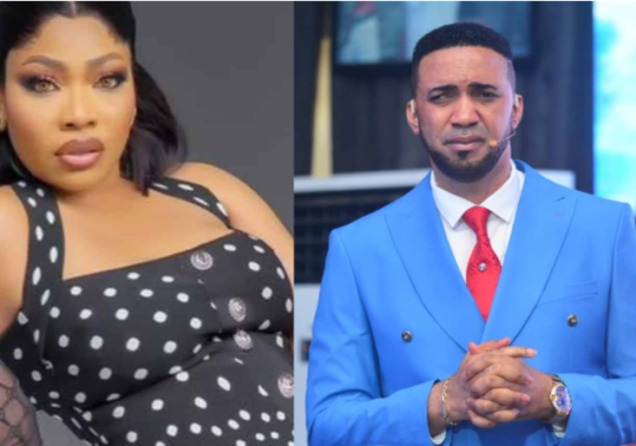
In the heart of Nigeria’s crowded religious space, where charismatic pastors command loyal followings and miracle claims draw national attention, a scandal has erupted that now threatens the standing of one of its best-known figures. Pastor Chris Okafor, founder of the Mountain of Liberation and Miracle Ministry (MLMM), has been thrust into the spotlight following explosive allegations by Nollywood actress Doris Ogala. What began as quiet rumours of a hidden relationship has grown into a public drama marked by accusations, counterclaims, apologies, and calls for accountability.

Over several weeks, Ogala’s claim of a nine-year romantic involvement with the pastor has dominated social media conversations, forcing difficult questions about moral authority, power imbalance in churches, and the gap between pulpit image and private conduct. The controversy has not only unsettled Okafor’s ministry but has also reignited a wider debate about oversight and ethics in Nigeria’s Pentecostal movement.
The Spark: How the Feud Ignited
The controversy surfaced publicly in mid-December 2025 when Doris Ogala took to social media to share what she described as years of emotional pain and betrayal. In a series of live videos on Instagram and Facebook, the actress alleged that her relationship with Pastor Okafor began around 2016 or 2017, while she was still married. She claimed the pastor pursued her persistently and persuaded her to leave her husband with promises of marriage and a future together.
The situation escalated when Ogala released screenshots of what she said were private WhatsApp conversations from 2022, showing intimate exchanges and discussions about their relationship. The messages spread rapidly across blogs and gossip platforms, drawing commentary from influencers and activists, including social media figure Verydarkman, who shared additional videos said to contain confessions and supporting claims.
Ogala framed her decision to go public as an act of desperation after, according to her, the pastor cut ties and moved on without addressing the personal cost she bore. She spoke of emotional trauma, the collapse of her marriage, and the death of her brother, which she linked to the strain of the alleged relationship. She also accused Okafor of attempting to silence her through financial inducements, including an alleged offer of ten thousand dollars to withdraw her claims and shift blame to blackmailers.
The timing intensified the impact. As churches prepared for end-of-year services, social media feeds filled with hashtags tied to the scandal, turning what might have remained a private dispute into a national spectacle. For many observers, the story quickly grew beyond a lovers’ quarrel and became a test of integrity for religious leadership.
The Allegations: A Web of Betrayal, Fetish Practices, and Moral Lapses
Ogala’s accusations did not stop at claims of a long-term affair. She painted a disturbing picture of a ministry she alleged was built on deception and moral compromise. Central to her claims was the assertion that Pastor Okafor encouraged her to divorce her husband, only to keep her in a prolonged state of uncertainty without fulfilling promises of marriage.
Read also:
- Pastor Chris Okafor apologizes to Doris Ogala in church
- Pastor for trial over alleged swindling of UK-based woman
- CAN politicisation: can new leadership rescue body?
More controversially, she accused the pastor of engaging in fetish practices, alleging that spiritual objects or juju were buried beneath the church altar to enhance supernatural power. She publicly called on the Department of State Services to investigate the church premises, including digging beneath the altar and a pool pit, which she linked to a past construction incident that reportedly claimed a life.
Ogala also alleged staged miracles and a pattern of immoral conduct involving other women in the church, including claims that one woman underwent multiple abortions linked to the pastor. The scandal widened further when Okafor’s former wife reportedly spoke out, lending weight to assertions that the actress’s experience was not an isolated case.
Adding to the controversy were videos circulated online in which individuals presented as the pastor’s daughters spoke emotionally about family issues. Some viewers interpreted these clips as confessions of serious abuse, although these claims remain unverified and deeply contested. Amid the uproar, Ogala herself was briefly arrested on December 22, 2025, an incident she described as an attempt to intimidate her. She was later released following interventions by activists, including Omoyele Sowore.
The Uncomfortable Question: Complicity, Motive, and Selective Outrage
Beyond the pastor’s moral failures, the controversy has also raised difficult questions about Doris Ogala’s own role in the long-running relationship and the timing of her public outcry. Critics argue that Ogala’s narrative, while exposing alleged abuses of power, leaves unresolved concerns about agency, complicity, and motive.
For nearly nine years, Ogala admits she remained in a relationship with a powerful cleric she now describes as morally corrupt, manipulative, and spiritually dangerous. If the allegations of fetish practices, staged miracles, serial infidelity, and exploitation of women are accurate, observers ask why she continued the relationship for almost a decade without speaking out, and why her denunciation came only after the relationship allegedly collapsed and marriage failed to materialise.
To some analysts, this raises the perception that Ogala was not merely a victim of deception, but an active participant who benefitted from proximity to power until personal expectations were unmet. Her silence during the years when the pastor’s influence allegedly harmed others has been cited as troubling, particularly in light of her claim that she was aware of systemic wrongdoing within the ministry.
“This is where public sympathy becomes complicated,” said one Lagos-based media ethicist. “Whistleblowing loses moral force when it appears selective or retaliatory. The public is entitled to ask whether this is a principled stand or a grievance-driven exposure.”
Social media commentators have gone further, describing Ogala as an accomplice who tolerated and possibly enabled alleged misconduct while hoping for legitimacy through marriage. In this framing, her emotional distress, though real, does not fully absolve her of responsibility for remaining silent while congregants continued to place trust in a leader she now portrays as dangerous.
At the same time, gender and power dynamics cannot be ignored. Religious institutions often create environments where spiritual authority blurs consent and fosters emotional dependence. Critics of the backlash against Ogala warns that focusing solely on her motives risks deflecting from the central issue: the abuse of clerical power and the lack of accountability structures that allow such relationships to flourish unchecked.
Still, the case underscores a broader lesson that moral credibility is weakened when truth-telling appears conditional. In the court of public opinion, timing matters, and outrage that coincides with personal rejection inevitably invites scepticism.
As the scandal continues to unfold, Nigerians are left weighing two uncomfortable realities at once: a powerful pastor accused of grave moral failings, and a former confidante whose silence until romance turned to rejection complicates her claim to moral high ground.
The Confession: A Kneeling Apology and Lingering Doubts
The saga took a dramatic turn on December 28, 2025, when Pastor Okafor addressed his congregation during a church service. In a moment that quickly went viral, he knelt before worshippers and admitted to past fornication, describing his actions as mistakes made earlier in his ministry. He offered a public apology to Doris Ogala, his daughters, and other women he said he had hurt, acknowledging that he was not without fault and promising restitution.
However, the pastor rejected the more extreme allegations, dismissing claims of fetish practices, fake miracles, and criminal conduct as falsehoods. His response split public opinion. While some praised the act of kneeling and confession as a sign of humility and repentance, others viewed it as calculated damage control amid mounting evidence and public pressure.
Ogala accepted the apology in part but maintained that her allegations were true, insisting that the confession did not go far enough. Commentators and religious critics, including life coach Solomon Buchi, openly called for Okafor to step aside from leadership, arguing that moral failure at such a level demands more than words.
The Aftermath: A Ministry in Turmoil
As reactions continue to pour in, the Mountain of Liberation and Miracle Ministry faces its most serious crisis since its founding. Reports suggest declining attendance and growing unease among members who now question the credibility of the church’s teachings, prophecies, and miracle claims. Beyond one ministry, the scandal has again exposed the fragile accountability structures within Nigeria’s charismatic church culture, where influence often operates unchecked.
For Doris Ogala, the public exposure has brought both validation and risk. While many applaud her for speaking out, she now faces threats, legal uncertainty, and intense scrutiny of her own life and choices. Whether Pastor Chris Okafor emerges from this storm diminished or finds a path to redemption remains uncertain. What is undeniable is that the episode has left a lasting mark on Nigeria’s religious conversation, proving that in the age of social media, even the most powerful pulpits are subject to public judgment.