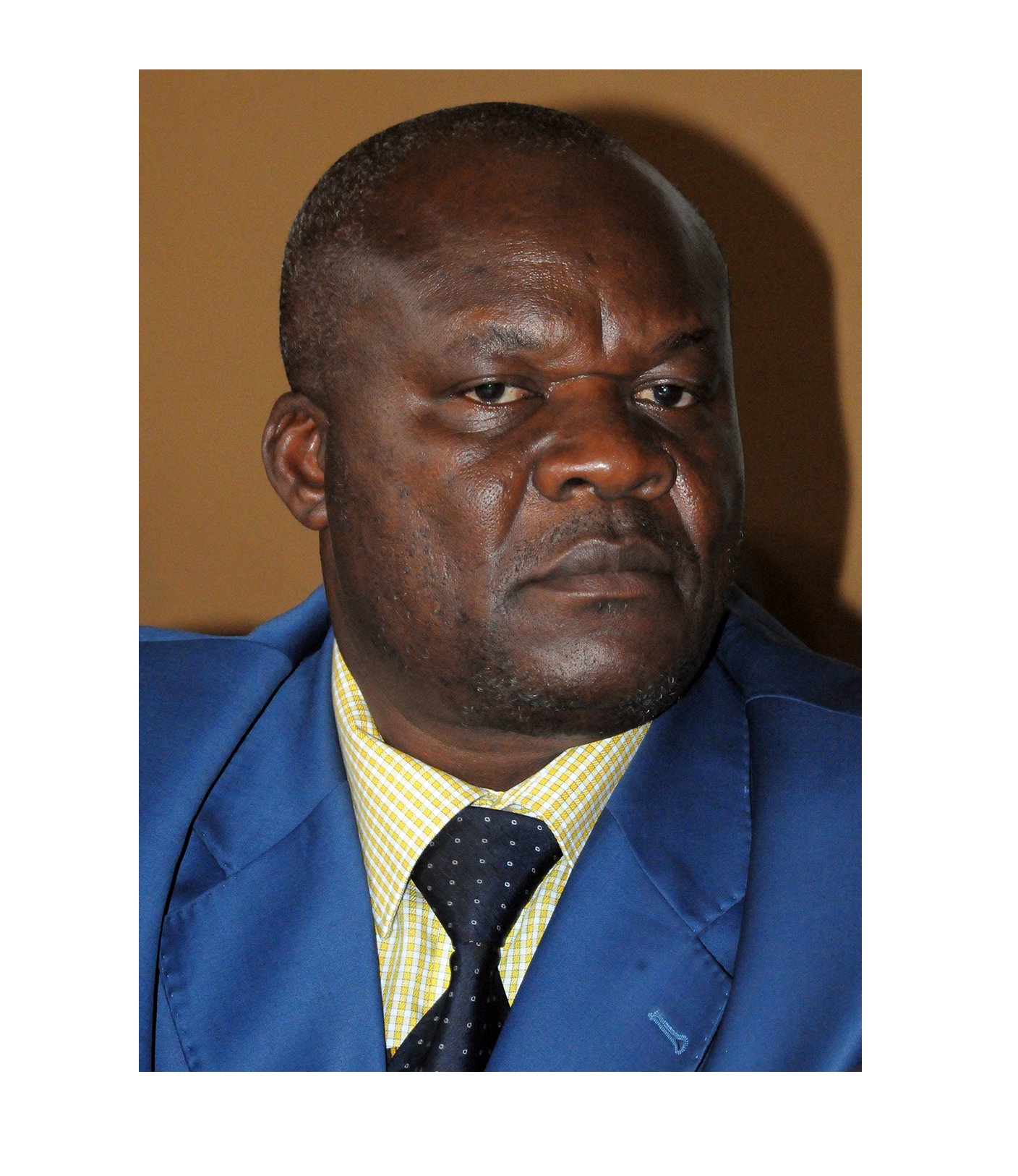
A French court has sentenced a former rebel leader and politician from the Democratic Republic of Congo to 30 years in jail after finding him guilty of complicity in crimes against humanity more than two decades ago.
Roger Lumbala headed a rebel movement backed by neighbouring Uganda, accused of committing atrocities during a period known as the Second Congo War.

The judge said the 67-year-old was found guilty of ordering or aiding and abetting torture and inhumane crimes, summary executions, rape constituting torture, sexual slavery, forced labour, and theft.
Lumbala, who was living in France when he was arrested nearly five years ago, has refused to accept the legitimacy of the court in Paris.
He did not attend the trial, which began last month, though he was in the dock to hear the verdict on Monday.
Lumbala also served as a minister in DR Congo’s transitional government from 2003 to 2005 and later as a member of parliament.
Several years later, the Congolese government issued an arrest warrant for him over his alleged support for the M23, a rebel group currently active in the eastern DR Congo, prompting him to flee to France.
The Second Congo War, which raged from 1998-2003, involved nine countries, numerous rebel groups, and led to the estimated deaths of between two and five million people.
Read Also:
- Supreme Court backs Tinubu’s authority to declare emergency rule, suspend elected officials
- NCDMB concludes media tour of oil facilities in Port Harcourt, applauds Marconi.NG drive for reduction in cost of production, competitiveness
- Supreme court overrules Tinubu’s pardon, reinstates death sentence for Abuja Housewife
At the time, Lumbala led the Rally of Congolese Democrats and Nationalists (RCD-N), which allegedly carried out atrocities during a campaign between 2002 and 2003 called ‘Erase the Slate’.
The operation targeted members of the Nande and Bambuti ethnic groups in the north-eastern provinces of Ituri and North Kivu who were accused of supporting a rival militia.
A UN team that investigated in its aftermath said it was characterised by “premeditated operations using looting, rape and summary execution as tools of warfare”.
Lumbala’s case was prosecuted under the principle of “universal jurisdiction,” which allows French courts to seek justice related to crimes against humanity committed abroad.
Five non-governmental organisations, including Trial International and the Clooney Foundation for Justice, pooled their expertise to participate in the trial, helping support survivors to testify and requesting expert analyses.
Trial International, a Geneva-based justice campaign group, said 65 survivors, witnesses, and experts testified before the court about the Erase the Slate operation.
After the verdict, it stated two of the survivors – David Karamay Kasereka and Pisco Sirikivuya Paluku.
“We were scared but came all the way here because the truth matters. For years, no one heard us,” they said
“We would have preferred to face Roger Lumbala, to look him in the eyes. But this verdict marks a first step toward reclaiming pieces of ourselves that were taken from us.”
During the trial, Mr. Kasereka described how his father and neighbours were tortured and killed by Lumbala’s men, the AP news agency reports.