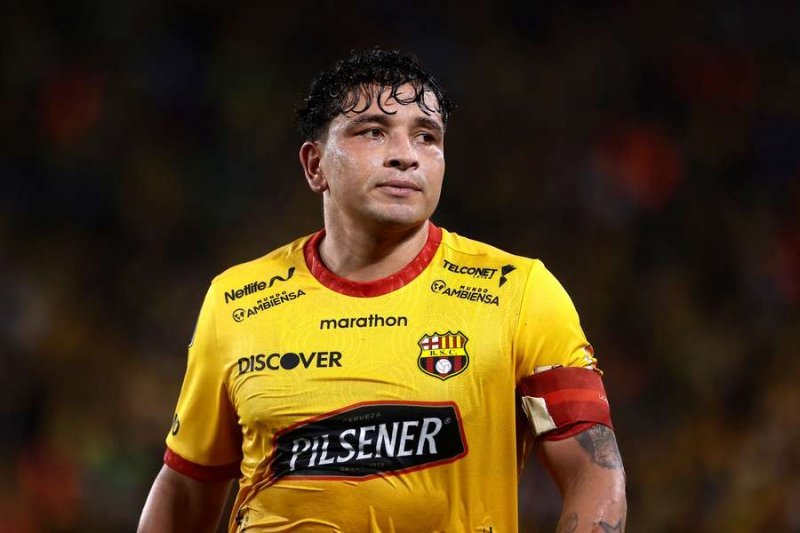
Mario Pineida, 33, a former star defender for Fluminense and Barcelona de Guayaquil, was fatally shot on Wednesday in Guayaquil, Ecuador, amid a surge in violence that has made 2025 the deadliest year in the country’s history.
Ecuadorian police confirmed Pineida’s death, noting that another individual was also killed and a third person injured in the attack. The interior ministry provided limited details on the incident.

Barcelona de Guayaquil expressed condolences, mourning the loss of the player and noting the grief felt by fans.
Pineida earned eight caps for the Ecuadorian national team, participating in qualifiers for the 2018 and 2022 World Cups. His final international appearance came in the 2021 Copa America as a late substitute against Brazil. He also played in the 2017 tournament.
He began his professional career with Independiente del Valle (2010–2015) before joining Barcelona de Guayaquil in 2016, where he won two league titles. In 2022, he briefly played for Fluminense in Brazil.
Read also:
- ‘We’ll make Nigeria proud with World Cup ticket’
- PSG defeat Flamengo in penalty shootout to claim FIFA Intercontinental Cup
- FIFA W/Cup Qualifiers: NFF moves to rebuild ties with Watford’s Emmanuel Dennis
According to local reports, the attack took place in the Samanes neighborhood in northern Guayaquil. Two assailants on motorcycles reportedly opened fire on Pineida, his mother, and another woman.
Once considered one of Latin America’s safest countries, Ecuador has seen a dramatic rise in organized crime, fueled by its role as a cocaine transit hub between Colombia and Peru and international markets. Guayaquil has become a hotspot for gang-related violence, with shootings, extortion, and car bombings on the rise.
From January to September 2025, Ecuador recorded 1,900 murders, the highest ever for that period, placing the country on track to surpass 9,000 violent deaths for the year. This exceeds last year’s 7,063 fatalities and the previous record of 8,248 in 2023, according to the Ecuadorian Observatory of Organized Crime.
President Daniel Noboa has pledged to dismantle criminal networks connected to international drug cartels. Recent attacks on footballers underscore the growing risks: in November, a 16-year-old Independiente del Valle player was killed by a stray bullet, and earlier this year, three second-division players, Maicol Valencia, Leandro Yepez, and Jonathan Gonzalez, were murdered.