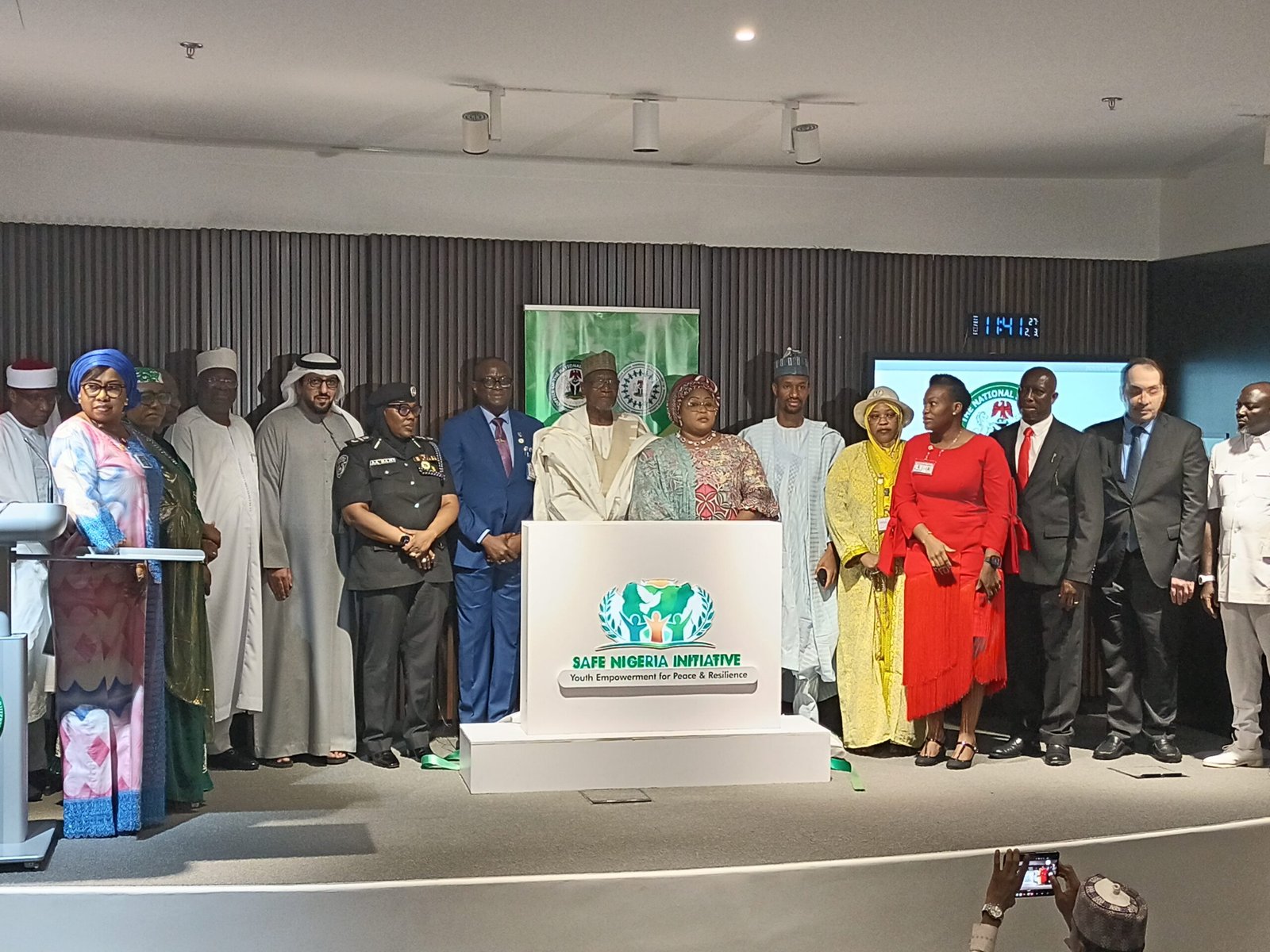
The Federal Government has unveiled the Safe Nigeria Initiative, a nationwide youth empowerment programme designed to address the root causes of insecurity through skills development, economic inclusion, and social resilience.
The initiative, officially known as Youth Empowerment for Peace and Resilience, was unveiled on Tuesday at the National Counter Terrorism Centre under the Office of the National Security Adviser in Abuja. The programme is being coordinated by the NCTC in collaboration with the Office of the Senior Special Assistant to the President on Humanitarian Affairs and Poverty Reduction.

Speaking at the launch, the National Coordinator of the NCTC, Major General Adamu Laka, said the initiative represents a strategic shift in Nigeria’s security approach, placing prevention, opportunity, and inclusion at the centre of counterterrorism efforts. He disclosed that the programme targets no fewer than 11,000 vulnerable youths across the 36 states of the federation and the Federal Capital Territory.
Read Also:
- FG begins accreditation for appointment of new permanent secretaries
- FG dismisses ‘Living History’ textbook, says it lacks official approval
- FG to charge suspects in Yelwata massacre on Monday
Laka stressed that military force alone cannot deliver lasting peace, noting that violent extremism, banditry, kidnapping, and organised crime often stem from deeper social and economic challenges such as poverty, unemployment, trauma, and exclusion. He explained that the Safe Nigeria Initiative seeks to bridge humanitarian response and national security by equipping at-risk youths with vocational skills, livelihood support, psychosocial services, and civic education.
According to him, young people who are economically productive and socially integrated are far less likely to be drawn into crime or extremist activities, adding that strengthening community resilience is a critical pillar of national security.
Also speaking, the Senior Special Assistant to the President on Humanitarian Affairs and Poverty Reduction, Mrs. Delu Yakubu, described the initiative as a practical expression of President Bola Ahmed Tinubu’s Renewed Hope Agenda. She said the programme signals a decisive move towards people-centred, non-violent security strategies that prioritise skills acquisition, economic empowerment, and social cohesion.
Yakubu revealed that beneficiaries will receive vocational training, entrepreneurial support, peace-building education, and psychosocial care, with particular focus on youths in vulnerable and conflict-affected communities.
The Minister of Budget and Economic Planning, Senator Atiku Bagudu, said Nigeria’s youthful population remains one of its strongest assets, but warned that the advantage can only be sustained through deliberate and continuous investment in skills development. He noted that skills acquisition is vital for reducing unemployment, curbing insecurity, and improving national economic competitiveness.
Bagudu added that a skilled and empowered youth population is not only an economic driver but also a strategic resource for inclusion, resilience, and long-term national stability, in line with the administration’s Renewed Hope vision.