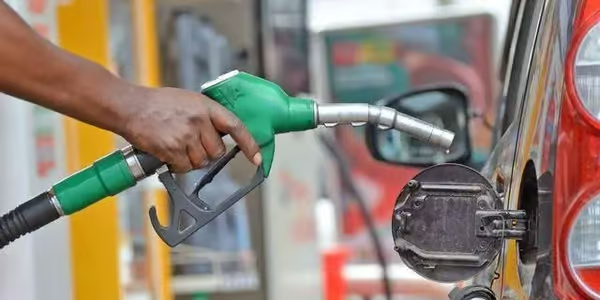
The Federal Government is preparing to resume the issuance of import permits for petrol and diesel by mid-February 2026, a move aimed at preventing fuel shortages amid tightening domestic supply and reduced crude deliveries to local refineries.
Industry sources say the Nigerian Midstream and Downstream Petroleum Regulatory Authority is expected to begin approving new import licences later this month or by early March, following a temporary suspension that halted fresh permits at the start of the year. The regulator had paused approvals to ensure imports were limited strictly to shortfalls in local refinery output, a decision also shaped by recent leadership changes within the agency.

Import permits are typically issued on a quarterly basis and remain valid for three months, a structure that has raised questions within the industry about how approvals will be handled halfway into the first quarter of the year. Despite these concerns, growing supply pressures appear to have forced a policy rethink.
Crude oil supply to the Dangote Refinery dropped sharply to about 250,000 barrels per day in January from 350,000 barrels per day in December, the lowest level recorded in 16 months. The decline, alongside ongoing maintenance on key processing units, has intensified fears of petrol and diesel shortages, pushing marketers to consider renewed imports.
Read Also:
- FG unveils ‘Safe Nigeria Initiative’ to tackle insecurity, train 11,000 youths across 36 states
- FG begins accreditation for appointment of new permanent secretaries
- FG dismisses ‘Living History’ textbook, says it lacks official approval
Although fuel consumption dipped slightly during the festive period, rising domestic prices have made foreign shipments increasingly attractive. Petrol prices climbed by roughly 14 per cent to N799 per litre in late January, compared with N699 per litre in December, fuelling concerns over affordability and availability.
The Dangote Refinery has warned that petrol prices could approach N1,000 per litre if marketers rely heavily on coastal transportation rather than gantry loading. According to the refinery, coastal shipping could add as much as N75 per litre in logistics costs, potentially imposing an additional N1.75 trillion burden on the Nigerian economy each year.
The company stressed that gantry loading remains the most cost-effective evacuation option, as it eliminates port charges and maritime handling fees. While marketers retain the freedom to choose their preferred distribution method, the refinery cautioned that widespread dependence on coastal shipping could reverse the recent price gains achieved through increased local refining.