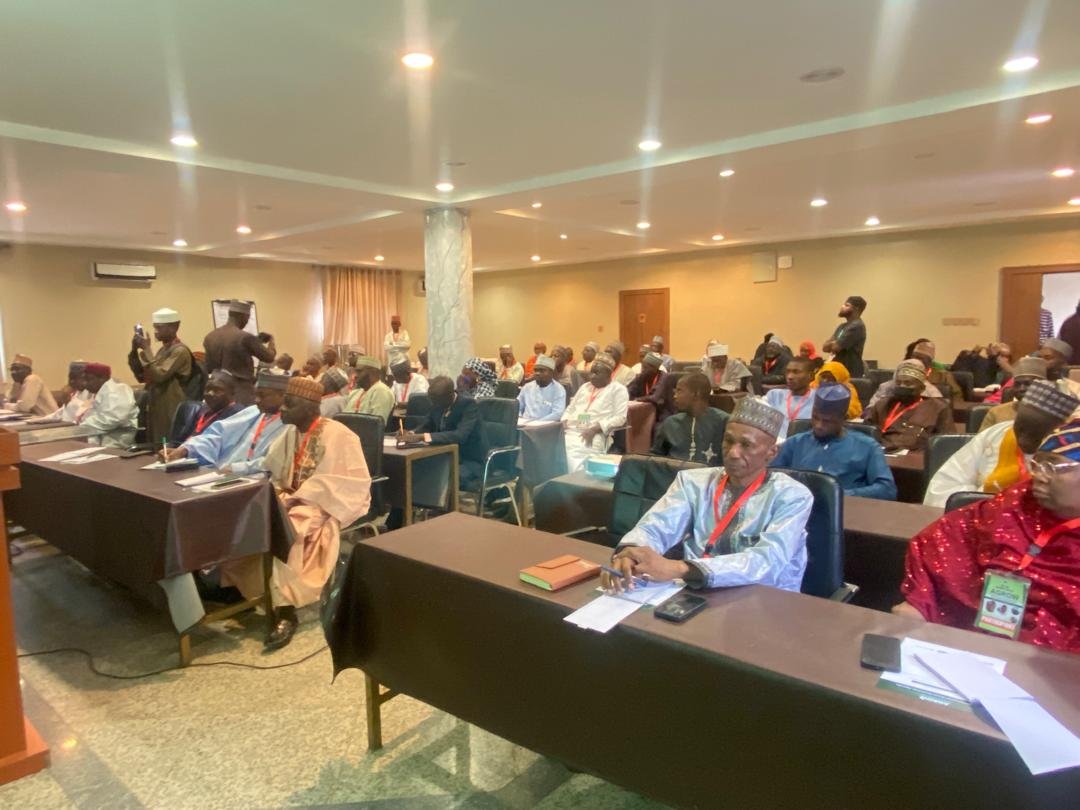
The Federal Government has begun a coordinated push to strengthen food production across Nigeria’s Sudan–Savannah belt, bringing together key stakeholders to jointly design intervention models aimed at reversing food insecurity in the region.
The engagement was led by the Presidential Food Systems Coordinating Unit under the Office of the Vice President and held in Kano during a one day agroecological zonal workshop. The session formed part of the design phase of the Nigeria Sustainable Agricultural Value Chains for Growth programme, known as AGROW, which targets states sharing similar climate, soil and water conditions.
Speaking at the workshop, the PFSCU Manager for Research, Data and Impact Assessment, Mr. Eniola Akindele, said the programme was built around a full value chain strategy that links production, processing, marketing and consumption. He warned that isolated interventions often fail to deliver lasting results, stressing that food security can only be achieved through coordinated action across all stages of agriculture.

Akindele said discussions at the Kano workshop mirrored concerns raised in other zones, particularly policy inconsistency, rising production costs and climate related risks that continue to undermine agribusiness growth. He explained that the co-design process was meant to ensure that solutions are driven by farmers, adapted to state level realities and jointly owned by both national and subnational actors.
According to him, participants were drawn from Katsina, Kano, Kebbi, Sokoto, Zamfara, Bauchi and Gombe states, all of which fall within the Sudan–Savannah agroecological zone. The goal, he said, was to move beyond broad national templates and develop practical interventions that reflect local conditions and can be implemented without delays.
“This process is about setting the context and listening carefully to what stakeholders are saying,” Akindele noted. “The challenges are well known across the zones. What matters now is taking deliberate action to address the food security pressures facing the country.”
In his contribution, the Kebbi State Commissioner for Agriculture, Alhaji Shehu Ma’azu, described policy inconsistency as the most damaging obstacle to agricultural value chain development in Nigeria. He said frequent changes in government direction discourage investment and weaken long term planning, while the high cost of production continues to strain farmers.
Ma’azu disclosed that Kebbi State had adopted measures to reduce input costs, including the use of solar and LPG powered irrigation pumps and improved climate adaptation practices. He called for stronger federal intervention in the fertiliser sector, arguing that affordable inputs remain critical to improving yields and stabilising food prices.
Read also:
- Ekiti Federal Teaching Hospital appoints Dr. Olagoke Erinomo as acting CMD
- MD hails FG’s 3-year unprecedented development at Federal Neuropsychiatric Hospital, Enugu
- Npower beneficiaries insist “no going back” on February 4 protest
Also speaking, the Permanent Secretary of the Kano State Ministry of Agriculture and Natural Resources, Dr. Bashir Sunusi, said the workshop aligned with Kano’s renewed focus on agriculture as a driver of economic growth and food security.
Sunusi revealed that the state government had increased its agriculture budget by about 300 percent for the 2025 to 2026 period. He added that Kano had recruited more than 1,000 extension workers, established new mechanisation centres and begun constructing 11 dams to expand irrigation and support year round farming.
He said the state viewed collaboration with federal programmes such as AGROW as essential to translating increased spending into measurable gains in food production and farmer income.