The Federal Government has commenced a strategic review of Nigeria’s tariff policies as part of efforts to encourage local production, protect domestic industries, and reduce the cost of doing business across key sectors of the economy.
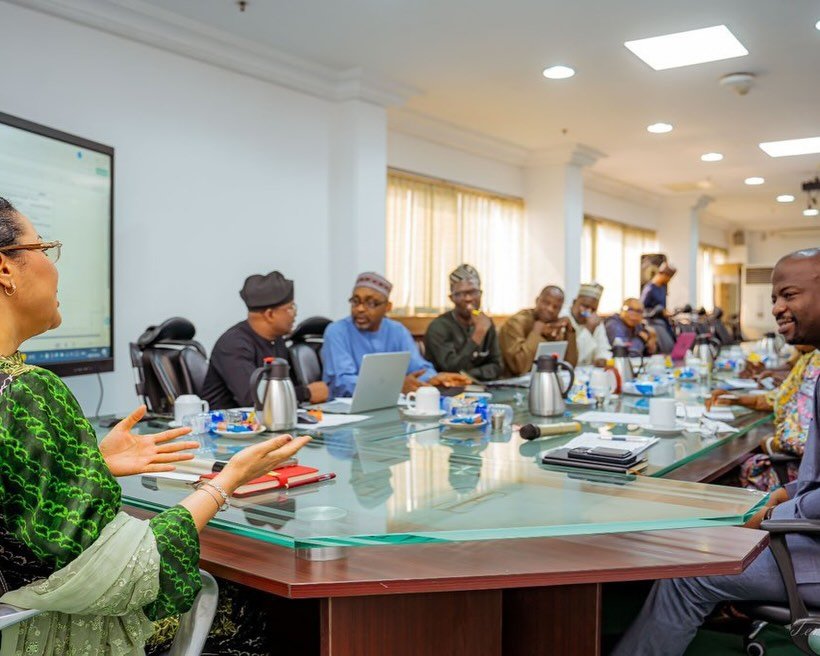
The move followed a high-level meeting between the Tariffs Review Board and the Minister of State for Finance, Dr Doris Uzoka-Anite, where existing tariff regimes were examined against the backdrop of rising production costs, foreign exchange pressures, and global trade volatility.

Discussions at the meeting centred on advancing the Federal Government’s industrialisation agenda, addressing long-standing challenges faced by local manufacturers, and adopting a balanced tariff framework that allows essential imports while strengthening Nigeria’s domestic value chains.
Uzoka-Anite said the review forms a core part of the government’s strategy to stimulate industrial growth and improve economic competitiveness. She stressed that the administration remains committed to data-driven policymaking and targeted reforms aimed at building a more resilient, inclusive, and competitive Nigerian economy.
According to the minister, the exercise is designed to reposition tariffs as instruments for economic development rather than obstacles to productivity. She said the focus is on encouraging local manufacturing, shielding home-grown industries from unfair competition, and easing operational costs across critical manufacturing value chains.
Read Also:
- FG unveils 2026 military budget amid questions over 2025 defence spending
- FG fast-tracks acquisition of 12 AH-1Z attack helicopters to strengthen Air Force
- FG dismisses claims of abandoning Nigerian students on scholarship in Morocco
“Our objective is to create a tariff regime that supports local manufacturers, strengthens value chains, and promotes sustainable industrial expansion,” Uzoka-Anite said. “This requires a careful balance between meeting essential import needs and protecting domestic industries.”
A statement issued after the meeting noted that the government is pursuing a more responsive and flexible tariff structure aligned with its broader industrialisation goals, while also ensuring market stability in an increasingly uncertain global trade environment.
Key concerns raised included tariff-related bottlenecks affecting manufacturers, especially industries reliant on imported raw materials and intermediate inputs. Participants also explored options for providing fiscal relief to domestic producers facing high input costs, with the aim of boosting output, preserving jobs, and improving competitiveness.
The meeting emphasised the importance of evidence-based policy decisions, with broad agreement that any tariff adjustments must be guided by empirical data on their impact on production costs, consumer prices, employment, and overall economic performance.
She added that by fine-tuning these fiscal tools, the Federal Government hopes to unlock idle industrial capacity, attract new investment, and deepen local value addition in line with Nigeria’s long-term economic development objectives.