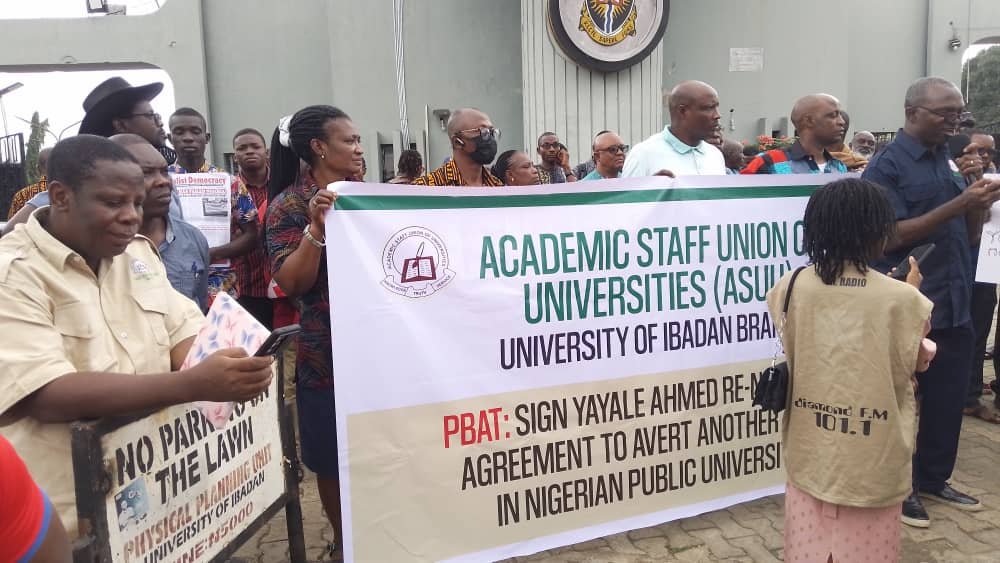
In a landmark development that could reshape Nigeria’s tertiary education landscape, the Federal Government (FG) and the Academic Staff Union of Universities (ASUU) have finally sealed a renegotiated agreement after 16 years of protracted negotiations. Unveiled in Abuja on January 14, 2026, the 2025 FG-ASUU Agreement replaces the outdated 2009 pact and promises sweeping reforms aimed at improving lecturer welfare, enhancing university funding, and fostering industrial harmony. Effective from January 1, 2026, this deal arrives amid cautious optimism from ASUU, who hope it will usher in at least three years of strike-free academic calendars—if fully implemented.

But as Nigeria’s universities grapple with decades of underfunding and disruptions, the question looms: Will this agreement truly meet ASUU’s long-standing demands and break the cycle of recurrent strikes?
The Road to Resolution: Breaking Down the 2025 Agreement
The renegotiation process, which began in 2017, has been fraught with delays, failed promises, and multiple industrial actions under previous administrations.
The new agreement, finalized on December 23, 2025, addresses core grievances that have plagued the sector, including remuneration, pension benefits, working conditions, and institutional autonomy.
Key highlights include:
- Salary and Allowance Upgrades: A 40% upward review of academic staff remuneration, comprising the Consolidated University Academic Staff Salary (CONUASS) and an enhanced Consolidated Academic Tools Allowance (CATA).
- Professors will receive a new professorial cadre allowance of up to ₦1.7 million annually (or approximately ₦140,000 monthly), while readers (associate professors) also benefit from tailored increments.
- This aims to boost morale, improve service delivery, and stem the brain drain of talented academics.
- Pension and Welfare Improvements: Retired professors are now entitled to pension benefits equivalent to 100% of their annual salary at retirement (typically at age 70).
Female lecturers gain six months of maternity leave, marking a significant step toward gender-sensitive policies.
guardian.ng
- Funding and Infrastructure Reforms: Dedicated allocations for research, libraries, laboratories, equipment, and staff development to reverse sectoral decay and enhance global competitiveness.
- The agreement emphasizes university autonomy and academic freedom, with provisions to curb government interference.
- Review Mechanism: The pact will be revisited after three years, providing a built-in framework for ongoing dialogue.
Education Minister Dr. Tunji Alausa hailed the agreement as a “renewed commitment” to uninterrupted academic calendars under President Bola Tinubu’s administration.
Read also:
- Canadian University produces all-Nigerian law programme graduands
- ASUU calls on Education Minister to update FEC on worsening economic hardship facing Nigerians
- Senate approves University of transportation in Kastina, amidst insecurity
ASUU President Prof. Chris Piwuna echoed this sentiment, stating that all future implementations will reference the 2025 document, expressing hope for stability if the government honors its commitments.
A History of Disruptions: ASUU Strikes from 2019 to 2025
To appreciate the potential impact of this agreement, it’s essential to examine ASUU’s strike record over the past seven years—a period marked by escalating tensions over the very issues now addressed. Drawing from historical data, ASUU initiated strikes three times between 2019 and 2025, resulting in over 18 months of cumulative academic shutdowns.
- 2019: No new strike initiated, though the tail end of the 2018-2019 action (which began in November 2018 and ended in February 2019) spilled over, lasting about three months in total. This period saw minimal disruptions compared to later years.
- 2020: A nine-month nationwide strike from March to December, the longest in ASUU’s history at the time. Triggered by unmet demands from the 2009 agreement, including funding shortfalls and salary arrears, it halted academic activities amid the COVID-19 pandemic, exacerbating learning losses.
- 2021: Strike-free, offering a brief respite, though underlying issues simmered without resolution.
- 2022: An eight-month strike from February to October, the second-longest on record. ASUU cited the government’s failure to implement prior memoranda, leading to widespread protests by students and parents. By year’s end, the union had lost nearly a full academic session.
- 2023: No strike, but tensions persisted with threats of action over unpaid salaries from previous disputes.
- 2024: Another quiet year, though negotiations dragged on without breakthroughs.
- 2025: A 14-day warning strike in response to delayed renegotiations, signaling ongoing frustrations but resolved without escalation into a full-blown shutdown.
These strikes, totaling three major initiations (2020, 2022, and 2025), highlight a pattern of biennial disruptions, often rooted in the stalled 2009 renegotiations. Cumulatively, they cost Nigeria billions in economic productivity, delayed graduations for millions of students, and deepened the brain drain, with many lecturers seeking opportunities abroad.
Since 1999, ASUU has struck at least 16-23 times (depending on counting minor actions), underscoring the systemic failures this new agreement seeks to address.
Does the Agreement Meet ASUU’s Demands—and Can It Prevent Future Strikes?
ASUU’s core requests, improved pay, better funding, pension reforms, and autonomy, have been central to every strike since 2009.
On paper, the 2025 agreement appears comprehensive, directly tackling these pain points with quantifiable gains like the 40% salary hike and enhanced allowances.
It aligns closely with ASUU’s demands for reversing “sectoral decay” and curbing emigration, as emphasized in union statements.
The inclusion of a three-year review clause adds accountability, potentially averting knee-jerk strikes. However, skepticism remains. Past agreements, like the 2009 pact, faltered due to poor implementation, leading to the very strikes that prompted this renegotiation.
ASUU’s hope for three strike-free years hinges on “full and timely” execution, as Prof. Piwuna noted.
Critics argue that without enforceable timelines and independent oversight, the deal risks becoming another unfulfilled promise, especially amid Nigeria’s fiscal challenges.That said, the agreement’s capability to prevent consistent strikes looks promising if backed by political will. By addressing root causes like welfare and funding, it could stabilize the sector, reduce brain drain, and ensure uninterrupted learning. Early signs are positive: No major strikes since the 2025 warning, and the deal’s unveiling has been met with widespread acclaim.
Yet, history teaches caution—only time will tell if this is the turning point Nigeria’s universities desperately need. As the 2025 agreement takes effect, stakeholders must monitor its rollout closely. For students, lecturers, and the nation, the stakes couldn’t be higher: A thriving education system or another chapter in a saga of broken promises?