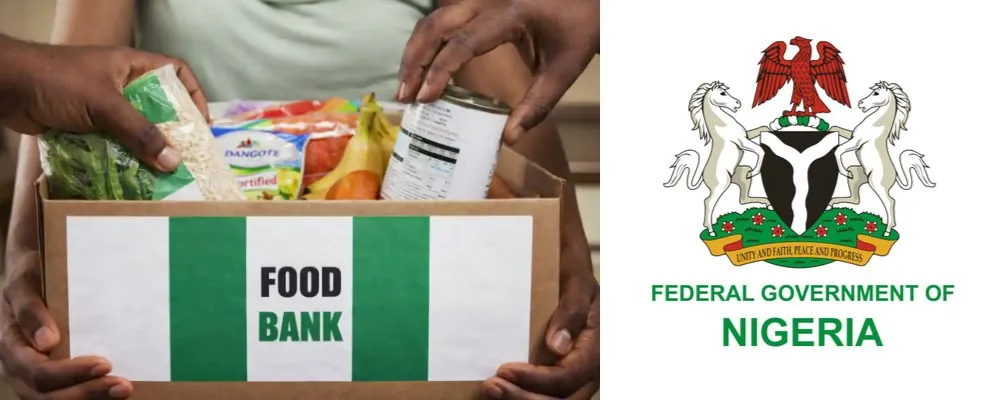
The Federal Government has officially launched a nationwide Community-Based National Food Bank Programme designed to improve food security and ensure access to nutritious meals for vulnerable Nigerians.
The initiative, championed by the Office of the First Lady, Oluremi Tinubu, focuses on at-risk households, especially women and children, through community-led food distribution and nutrition support.

Speaking at the launch in Abuja on Thursday, the Minister of Agriculture and Food Security, Abubakar Kyari, described the programme as a strategic shift from emergency interventions to a sustainable national food system. He highlighted that millions of Nigerians, particularly children under five, still face limited access to basic nutrition and stressed the importance of scalable, measurable solutions to address hunger and malnutrition.
The programme is structured around strong community networks and national coordination to ensure transparency, efficiency, and long-term sustainability. It also aims to improve the distribution of locally produced food, ensuring vulnerable populations receive adequate nutrition while reducing post-harvest losses.
Read Also:
- Federal Government considers age restrictions for social media use in Nigeria
- Federal Government reaffirms commitment to developing Nigeria’s Cassava Bioethanol Industry
- Federal Government approves Armed Forces College of Medicine to strengthen military healthcare
Mansur Muhtar, a member of the Scaling Up Nutrition Movement Lead Group, praised the initiative as a transformative step for national food security. He commended the First Lady’s leadership and called for enhanced collaboration between government agencies, civil society, private sector stakeholders, and international partners to maximize the programme’s impact.
The National Food Bank Programme integrates food production, aggregation, and distribution with active community participation, targeting a reduction in malnutrition, minimisation of waste, and consistent access to affordable, nutritious food. Officials describe the initiative as a milestone in Nigeria’s efforts to combat hunger and strengthen support systems for vulnerable households.