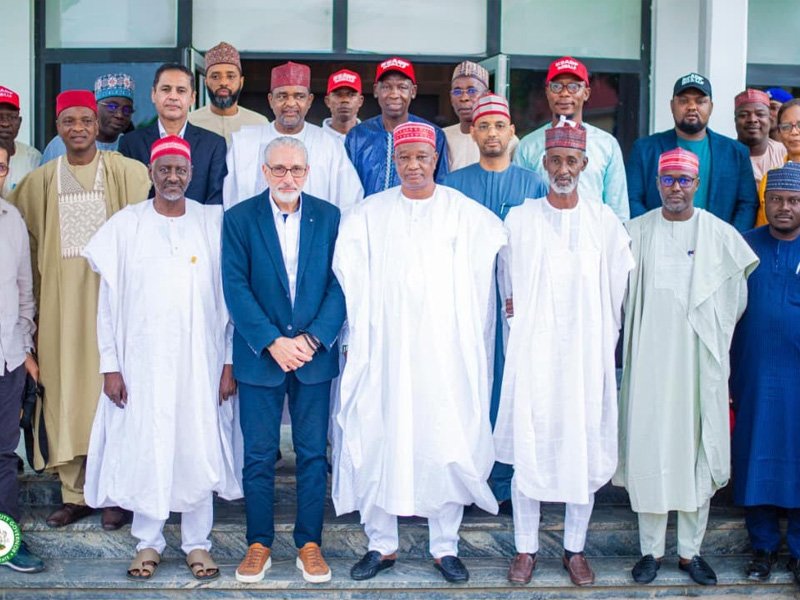
The Federal Government, in partnership with the Islamic Development Bank, has opened a landmark bilingual school in Kano State, marking a major step in expanding access to inclusive and modern education in northern Nigeria.
Speaking at the commissioning ceremony in Kiru Local Government Area, the Minister of State for Education, Professor Suwaiba Sa’id Ahmad, described the project as a direct investment in human capital development, social inclusion, and long term regional stability. She said the initiative aligns with President Bola Tinubu’s Renewed Hope Agenda, which places priority on quality education for communities that need targeted support.

Professor Ahmad explained that bilingual education plays a critical role in strengthening basic learning, improving communication skills, preserving cultural identity, and preparing students to compete globally. According to her, the new school will combine Islamic and conventional education, allowing students to access wider learning resources while remaining grounded in their cultural and religious environment.
The school is part of the 98 million dollar Bilingual Education Project funded by the Islamic Development Bank, which aims to establish 30 model schools across nine states, including Adamawa, Borno, Gombe, Kaduna, Kano, Kwara, Nasarawa, Niger, and Osun. Kano State is hosting four of the schools located in Doguwa, Ganduje, Ungoggo, and Kiru, all inaugurated on Tuesday.
Each of the model schools is designed to accommodate more than 1,000 students and comes with modern facilities such as academic and administrative blocks, hostels, a multipurpose dining hall, staff quarters, a vocational skills centre, a mosque, perimeter fencing, water supply systems, and other essential infrastructure.
Read also:
- Emir Sanusi demands swift justice as Kano mother, six children murder sparks outrage
- Nigeria Reports 599 COVID19 Cases, 3 Deaths
- NSE, COREN endorse Federal Government’s road infrastructure drive, highlight use of CRCP technology
The Minister thanked the Islamic Development Bank for its sustained commitment to education in Nigeria and across the Islamic world, while also commending the Universal Basic Education Commission for coordinating the project. She urged school managers, education authorities, and host communities to take full ownership of the facilities to ensure their sustainability and impact.
Professor Ahmad also called for proper classroom ventilation, functional laboratories, and learner focused teaching methods to maximise learning outcomes, stressing that the students remain the primary beneficiaries of the investment.
The Executive Secretary of the Universal Basic Education Commission, Hajiya Aisha Garba, said the bilingual schools were designed to integrate English and Arabic literacy with modern teaching techniques, technical and vocational education, ICT based learning, and safe boarding facilities. She noted that the initiative reflects a shared commitment to expanding access to quality basic education, particularly for vulnerable and out of school children.
Representing Governor Abba Yusuf at the event, the Secretary to the Kano State Government, Umar Farouk Ibrahim, expressed appreciation to the Federal Government, UBEC, and the Islamic Development Bank, saying the project would open new educational and economic opportunities for the state.