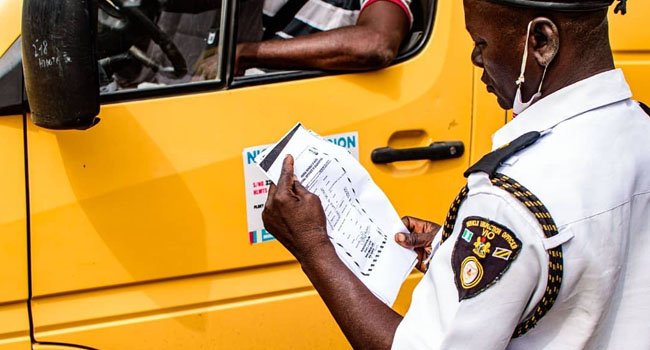
The Federal Capital Territory High Court has restrained the Abuja Municipal Area Council from arresting or impounding private vehicles not used for commercial purposes on roads within Abuja.
The ruling, delivered on Wednesday, February 4, 2026, is expected to reshape enforcement practices in the Federal Capital Territory and strengthen the rights of private motorists who have long complained about vehicle seizures linked to revenue drives by area councils.

The decision followed a suit filed by Abuja resident Salimon Abdulhakeem Abiodun against AMAC and its chairman. Represented by his counsel, Qousim Opakunle Esq., the claimant challenged what he described as the unlawful arrest and confiscation of his private vehicle, along with similar actions taken against other non-commercial vehicles operating within the council’s jurisdiction.
In Suit No. CV/1157/2025, Justice Y. Halilu ruled in favour of the claimant, issuing a clear order restraining the council, its agents and officials from further arresting or seizing private vehicles that are not used for commercial activities on Abuja roads.
The court held that the seizure of the claimant’s vehicle was unlawful and amounted to a violation of his constitutional right to own property. The judgment specifically declared that the arrest and confiscation of the vehicle, bearing chassis number 5TDZA23C75S264195 and registered under private plate number KWL-63CE, was oppressive and unconstitutional.
Read also:
- Federal Government reaffirms commitment to developing Nigeria’s Cassava Bioethanol Industry
- Tinubu decorates Disu as acting inspector General of Police
- FCT minister links Tinubu’s ‘Renewed Hope Agenda’ to health sector reforms
Justice Halilu further ruled that multiple payments collected from the claimant under the guise of Mobile Advert fees and Daily and Yearly Ticketing fees were illegal. The court declared that the sums of N50,000 paid on January 11, 2023, N50,000 paid on February 8, 2024, and N20,000 paid on March 3, 2025, were unlawfully imposed and amounted to extortion.
Legal analysts say the judgment could have far-reaching implications for revenue enforcement by area councils in Abuja, particularly in relation to private vehicle owners who are not engaged in commercial transport or advertising activities.
The ruling is already drawing strong reactions across the Federal Capital Territory, with many motorists describing it as a significant victory for property rights and due process. As enforcement agencies review their procedures, attention now turns to how AMAC will respond and whether the council will seek to appeal the decision.