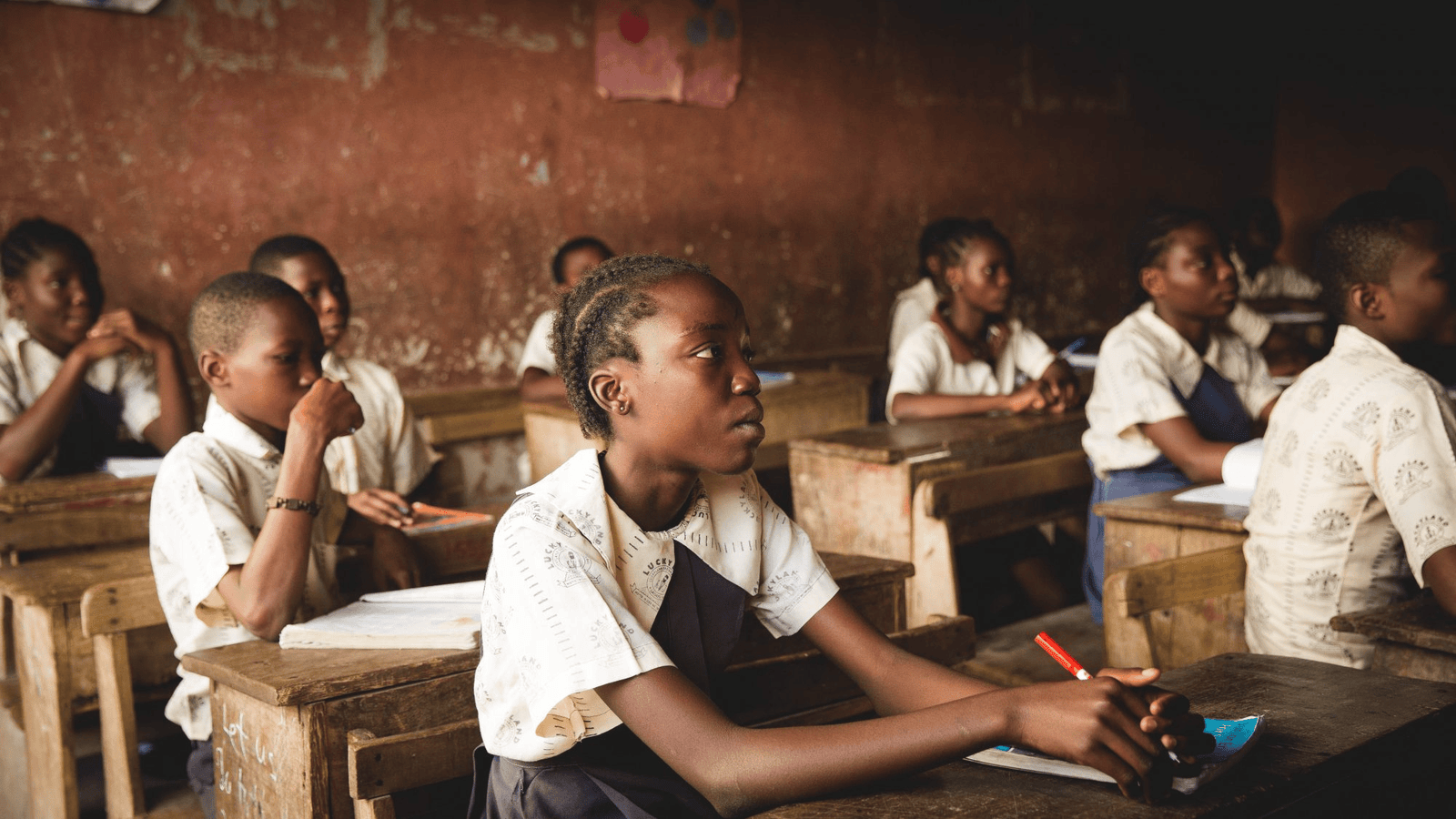
An education expert, Moses Ogunniran, has raised the alarm over the growing number of Nigerian children denied access to education as a result of persistent attacks by Boko Haram and bandits, particularly in the North-East.
He said more than 2.8 million children are currently out of school due to insecurity.
Ogunniran, an overseas research scholar in education, made this known while speaking with journalists in Uyo on his research titled: “From target to trust zones: How evidence-based education reform can secure Nigeria’s schools.”

He noted that schools in the North-East states such as Borno, Yobe, and Adamawa have become symbols of national vulnerability, increasingly transformed into theatres of violence with devastating consequences for learners and communities.
“As Nigeria confronts one of the most protracted internal security crises in its history, schools have become both symbols of national vulnerability and frontline casualties of violence,” he said.
Ogunniran explained that Boko Haram’s ideological opposition to Western education in the North-East, combined with the surge in banditry-driven mass kidnappings in the North-West, has turned classrooms into soft targets.
This has led to repeated school closures, mass displacement of learners, and widespread fear among parents.
Despite the grim reality, he stressed that education, if properly designed and implemented, can serve as a powerful tool to combat and reverse insecurity.
“Global evidence synthesized by UNESCO shows that education, when deliberately designed for conflict settings, can become one of the most effective tools for reversing insecurity,” he noted.
Ogunniran highlighted how education systems can either fuel violence or foster peace and social cohesion through effective policy design, governance, curriculum development, and community engagement.
Drawing from Nigeria’s experience, he decried the scale of disruption caused by years of insurgency.
Read also:
- Identify the root causes to tackle insecurity, Al-Mustapha to FG
- $6bn Mambila power project fraud: Witness says no evidence China was involved
- Burkina Faso boosts Airspace security as Russian S-300 systems arrive under Traoré’s watch
UNESCO-referenced data, he said, indicate that by 2019, about 802 schools remained closed across Borno, Yobe, and Adamawa States, with 497 classrooms destroyed and about 1,392 damaged.
“Since 2020, banditry-related mass kidnappings have further expanded the geography of fear, forcing schools to shut down in several states,” he lamented.
Ogunniran added that the damage extends far beyond immediate learning losses.
In conflict-affected northern states, girls account for a disproportionate number of out-of-school children, as families withdraw them from school due to fears of abduction and sexual violence.
“Prolonged disruption of education entrenches gender inequality, weakens human capital development and erodes public trust in government institutions,” he warned.