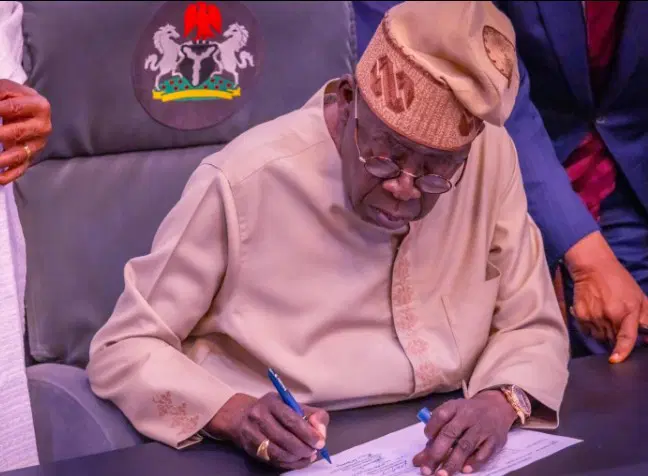
In a significant policy shift aimed at bolstering Nigeria’s economy, President Bola Ahmed Tinubu signed Executive Order 9 on February 13, 2026, mandating the Nigerian National Petroleum Company (NNPC) Limited to remit all oil and gas revenues directly to the Federation Account. This directive, announced via a State House press release, seeks to eliminate longstanding revenue leakages that have plagued the sector, redirecting billions of naira towards national priorities like security, education, and healthcare.

The Background: A Legacy of Deductions and Losses
Under the Petroleum Industry Act (PIA) of 2021, NNPC Limited was allowed to retain substantial portions of oil revenues before remitting the balance to the Federation Account. This included a 30% management fee on profit oil and gas from production sharing contracts, another 30% for the Frontier Exploration Fund, and additional retention for operational costs. These deductions, often exceeding global norms, resulted in over two-thirds of potential revenues being diverted, contributing to declining inflows into the Federation Account despite Nigeria’s status as Africa’s largest oil producer.
Experts have long criticized this framework for creating duplicative structures and enabling inefficiencies, leading to fiscal strain across federal, state, and local governments.
The Federation Account, managed by the Federation Account Allocation Committee (FAAC), distributes revenues among the three tiers of government. With oil accounting for over 80% of Nigeria’s export earnings, any leakage here directly impacts public services and infrastructure development.
Read Also:
- Gov. Lawal accuses Tinubu of distributing N500bn palliatives to only APC states
- Tinubu seeks Senate approval to confirm Jamila as INEC national commissioner
- Tinubu charges governors to prioritize welfare of their citizens
What the Executive Order Changes
Anchored on Section 44(3) of the Nigerian Constitution, which vests control of mineral resources in the federal government, the order introduces sweeping reforms:
● Direct Remittance: All royalty oil, tax oil, profit oil, profit gas, and related revenues must now be paid straight into the Federation Account, bypassing NNPC’s previous role as an intermediary.
● Scrapping Fees: NNPC loses its entitlement to the 30% management fee and the 30% Frontier Exploration Fund deduction. These funds, previously used for speculative exploration and operations, will now flow directly to the government.
● Gas Flare Penalties: Payments for gas flaring, once directed to the Midstream and Downstream Gas Infrastructure Fund (MDGIF), are suspended and rerouted to the Federation Account, with expenditures subject to public procurement laws.
● Implementation Oversight: A committee, including key ministers and officials, has been established to ensure compliance and review the PIA for further anomalies.
President Tinubu described the move as fulfilling his “Nigeria First” promise, emphasizing transparency and constitutional compliance in a personal statement on X.
Implications for Nigerians: Opportunities and Challenges
For ordinary Nigerians, this order could translate into tangible benefits. By reclaiming trillions in previously diverted funds, the government aims to boost allocations to states and local councils, potentially funding better roads, schools, hospitals, and security measures.
Economic analysts hail it as a step towards debt sustainability and stability, especially amid global oil price volatility.
Reactions on X have been largely positive, with users calling it a “big win” and “game-changer” for transparency.
However, not all views are unanimous. Critics argue that the executive order risks bypassing legislative scrutiny, potentially violating checks and balances.
Some stakeholders, including opposition voices, question whether this could undermine NNPC’s commercial autonomy, affecting its ability to invest in exploration and infrastructure.
There’s also concern that without broader PIA reforms, structural issues might persist.On the economic front, increased revenues could ease fiscal pressures, but success hinges on effective implementation. If leakages are truly curbed, Nigerians might see reduced borrowing and more investment in diversification away from oil dependency.
President Tinubu’s directive marks an aggressive push for fiscal reform in Nigeria’s oil sector, promising greater accountability and resource allocation for the people. While it addresses immediate leakages, the planned PIA review suggests more changes are on the horizon.
For Nigerians grappling with inflation and economic hardships, this could be a pivotal moment – provided the gains trickle down effectively. As one X user summarized, it’s about “safeguarding the Federation Account” for national interest.