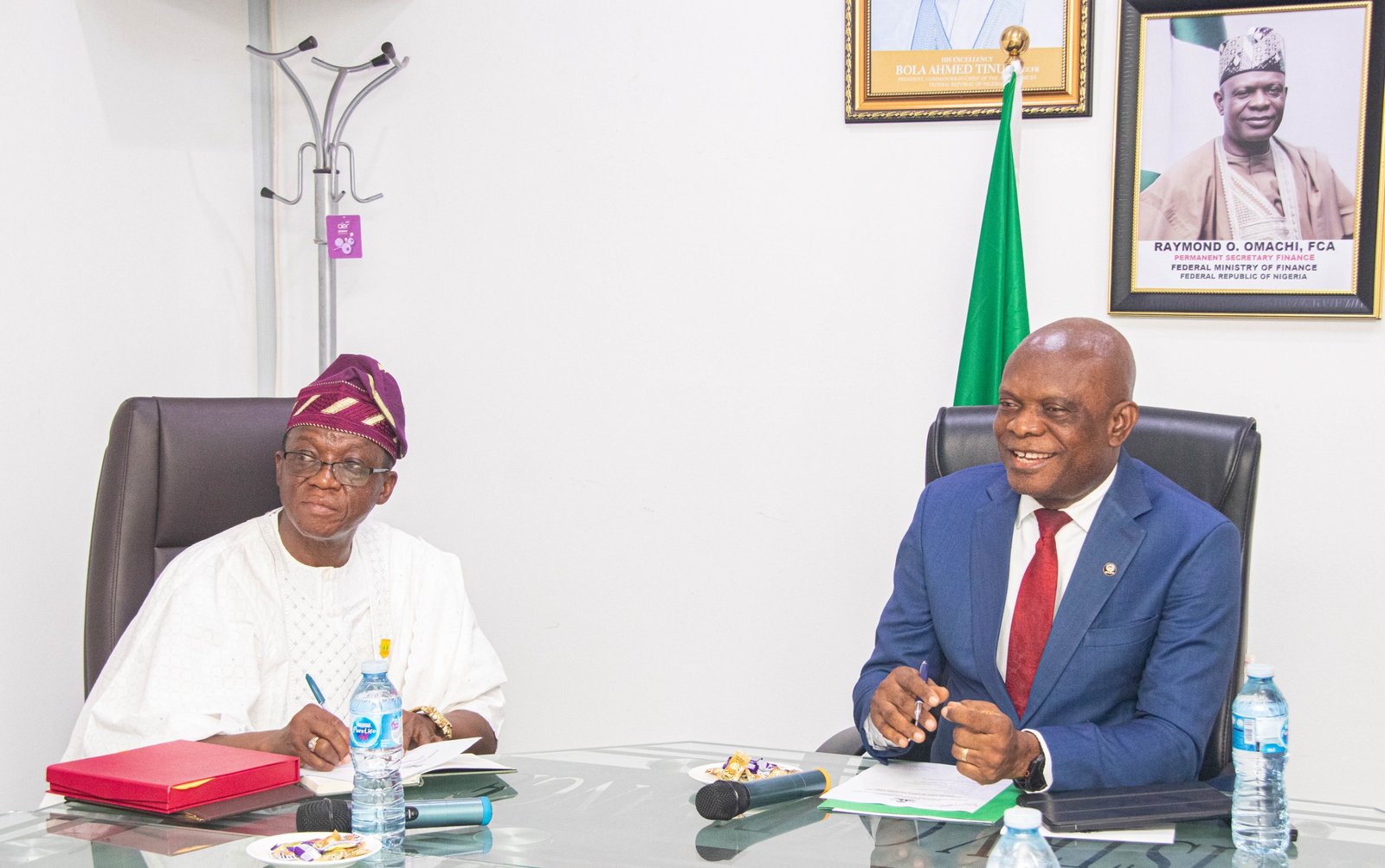
The Minister of Finance and Coordinating Minister of the Economy, Wale Edun, has tasked participants of the Senior Executive Course (SEC) 48, 2026 of the National Institute for Policy and Strategic Studies (NIPSS), Kuru, Jos, to develop implementable strategies capable of unlocking Nigeria’s vast but underutilised creative and entrepreneurial potential.
The minister gave the charge during an interactive session with the delegation at the Federal Ministry of Finance, describing the engagement as a critical moment for policy reflection.

He urged participants to interrogate not only ideas, but also the practical realities that shape their execution within Nigeria’s economic landscape.
The minister acknowledged NIPSS as a longstanding pillar within Nigeria’s policy ecosystem, noting that the Institute has consistently enriched national discourse through rigorous analysis and strategic insight.
According to him, the depth of engagement associated with the Institute places a responsibility on participants to produce outcomes that are both intellectually sound and practically applicable.
Commending the theme of this year’s course: “Economic Diversification and National Development: Leveraging the Orange Economy and Entrepreneurship for Sustainable Growth in Nigeria”, the minister described the focus as both timely and necessary, particularly as Nigeria continues to intensify efforts to recalibrate its economic structure.
He observed that Nigeria’s growth model has, over the years, been constrained by an overdependence on a narrow revenue base, a situation that has repeatedly exposed the economy to external shocks and internal fragilities.
This, he noted, has reinforced the urgency of building a more resilient and diversified economic framework capable of sustaining long-term development.
“The imperative before us is clear,” the minister stated. “We must deliberately broaden the base of our economic activity, deepen productivity, and create sustainable value across multiple sectors.”
Within this broader context, he highlighted the orange economy as a compelling, yet insufficiently harnessed, driver of growth, explaining that global economic momentum is increasingly shaped by creativity, innovation, and digital enterprise, areas in which Nigeria already demonstrates a natural comparative advantage.
He noted that from film and music to design and digital content, Nigerians continued to command global respect through ingenuity and resilience, often thriving despite structural constraints.
Edun cautioned, however, that talent alone cannot deliver systemic transformation.
“Our challenge is not the absence of creativity,” he said. “It is how to design policies that can convert that creativity into scalable economic outcomes like job creation, enterprises, and measurable contributions to GDP.”
The minister also emphasised that meaningful diversification must be anchored on deliberate policy alignment and strong institutional frameworks.
He outlined key enablers to include coherent regulation, sustainable financing mechanisms, skills development, improved market access, and a stable macroeconomic environment that incentivises investment and innovation.
He further linked these priorities to the ongoing economic reforms under the administration of President Bola Tinubu, noting that recent policy measures are directed at restoring macroeconomic stability and repositioning the economy for sustainable growth.
“Macroeconomic stability is not an abstract goal,” he explained. “It is the foundation upon which enterprise can flourish, investments can grow, and livelihoods can improve.”
On the issue on entrepreneurship, the Minister described it as the engine that translates ideas into tangible economic value.
He stressed that fostering entrepreneurship extends beyond supporting small businesses to building a dynamic ecosystem where innovation can thrive and scale.
He reaffirmed the Ministry’s commitment to prudent fiscal management, enhanced efficiency in public finance, and reforms aimed at removing barriers to productive activity.
According to him, sustainable economic transformation depends on coherence across fiscal, monetary, trade, investment, and human capital policies.
Read also:
- FG disburses N2.25bn grant to boost student-led innovations
- Police launch 2026 National Police Day with sanitation drive, free medical outreach in FCT
- Isoko Monitoring Group hails Prof. Aghalino’s appointment as vice chancellor of DDU, Asaba
The minister also underscored the importance of disciplined execution, noting that Nigeria’s policy landscape is not constrained by a shortage of ideas, but often by gaps in coordination and implementation.
“This engagement must go beyond conversation,” he urged. “It should produce clear, prioritised, and implementable recommendations that can make a measurable difference.”
He encouraged participants to adopt a pragmatic approach in their deliberations, focusing on realistic pathways for integrating the Orange Economy and entrepreneurship into Nigeria’s broader development strategy.
The minister used the occasion to reiterate the Ministry’s commitment to fostering an enabling environment that supports enterprise, encourages innovation, and drives inclusive economic growth.
The engagement forms part of the SEC 48 study tour, through which participants are expected to generate policy recommendations for a comprehensive report to be presented to the president later in the year, an outcome the minister expressed confidence would reflect both intellectual depth and practical relevance.
Earlier, the Director-General of the National Institute for Policy and Strategic Studies (NIPSS) Prof. Ayo Omotayo, represented at the session by the Deputy Inspector- General of Police Adeleye Otebada (rtd), explained that the institute’s engagement with the ministry forms part of its statutory mandate to generate practical policy solutions to national challenges.
He noted that since its establishment over four decades ago, the Institute has remained a critical policy think tank, with its flagship senior executive course consistently producing research outputs that have shaped government decisions and reforms.