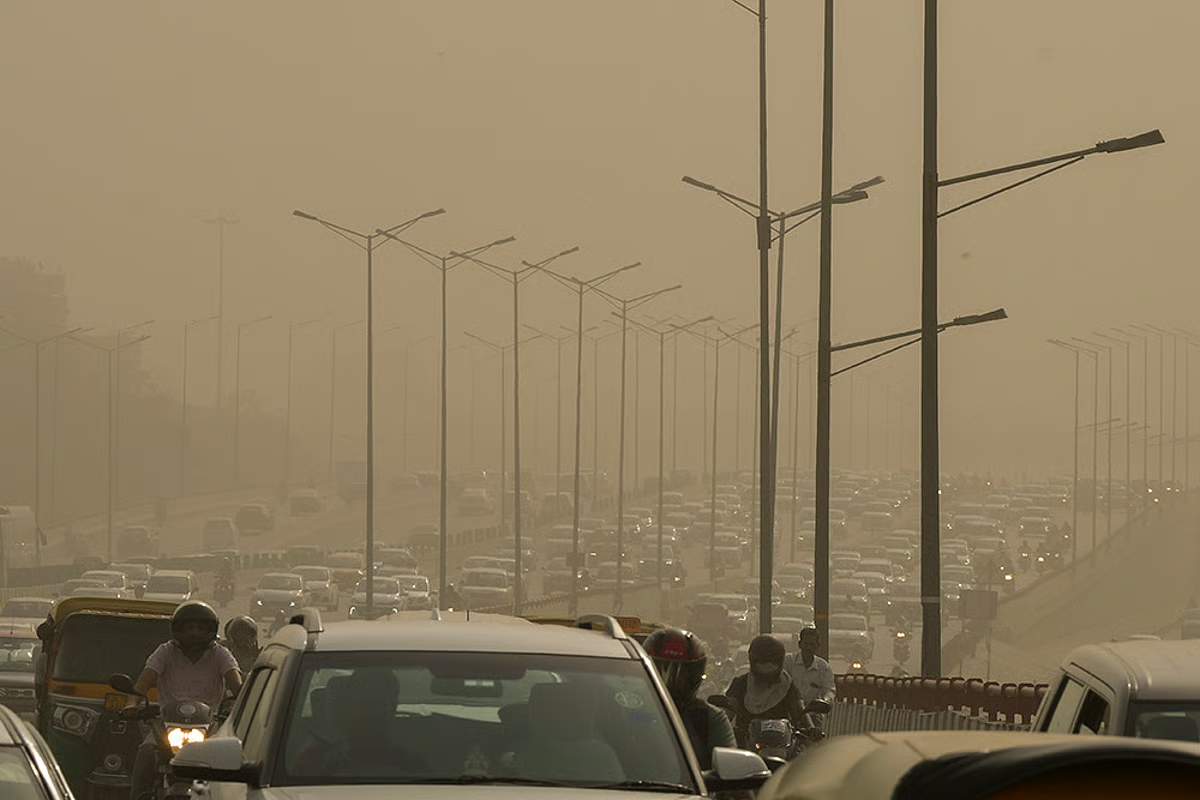
A respiratory medicine specialist at the University of Uyo (UNIUYO), Prof. Etete Peters, has raised serious concerns over the growing impact of air pollution on public health in Nigeria, describing it as a critical factor driving respiratory-related deaths across the country.
Delivering the institution’s 128th inaugural lecture, Prof. Peters stressed that while air is fundamental to human survival, contaminated air is increasingly endangering lives, particularly among society’s most vulnerable groups.
He warned that the country must begin to treat air pollution as a public health emergency requiring urgent and coordinated action.

“Air sustains life, yet polluted air is steadily shortening it. The paradox must end with deliberate action,” he declared, urging federal, state and local governments, alongside institutions and citizens, to confront the crisis through deliberate and unified policies.
Drawing from his research findings and global health statistics, the professor noted that air pollution is responsible for an estimated seven million premature deaths worldwide each year.
He explained that low- and middle-income countries such as Nigeria bear a significant portion of this burden.
In Nigeria, he said, exposure to fine particulate matter from vehicle exhaust fumes, generator emissions, industrial pollution, open waste burning and the use of solid fuels for cooking significantly heightens the risk of asthma, chronic obstructive pulmonary disease, lung cancer, stroke and cardiovascular diseases.
The don said children under five and older adults are especially at risk.
Respiratory infections linked to polluted air, he added, account for a large number of hospital visits in major urban centres, where particulate levels frequently exceed recommended standards set by global health authorities.
Prof. Peters further revealed that long-term exposure to polluted air can shorten life expectancy by several years.
He highlighted the economic toll of the crisis, citing billions of naira lost annually through reduced productivity, rising healthcare costs and premature deaths.
He identified the increasing number of vehicles, heavy reliance on petrol and diesel generators due to inconsistent electricity supply, and weak regulation of industrial emissions as major contributors to deteriorating air quality in Nigerian cities.
Read also:
- Nigerian inventor unveils clean Fuel from Trees, says it can power Cars, Generators, end black soot pollution
- NGOs launch solar power project to combat pollution in Niger Delta communities
- Activist bemoans pollution levels in N/Delta, advocates climate action
To address the crisis, the professor advocated stricter enforcement of environmental laws, a transition to cleaner energy alternatives, better urban planning, consistent air quality monitoring and intensified public awareness campaigns.
He also challenged universities and research institutions to expand local studies and generate reliable data to support evidence-based policymaking.
Without measurable indicators and sustained monitoring, he warned, policy interventions would remain ineffective.
Emphasising that clean air is both an environmental and health necessity, Prof. Peters cautioned that failure to act decisively would further overwhelm Nigeria’s already strained healthcare system.
“Our lungs are the frontline defenders. When the air is toxic, the damage is cumulative and often irreversible,” he said.