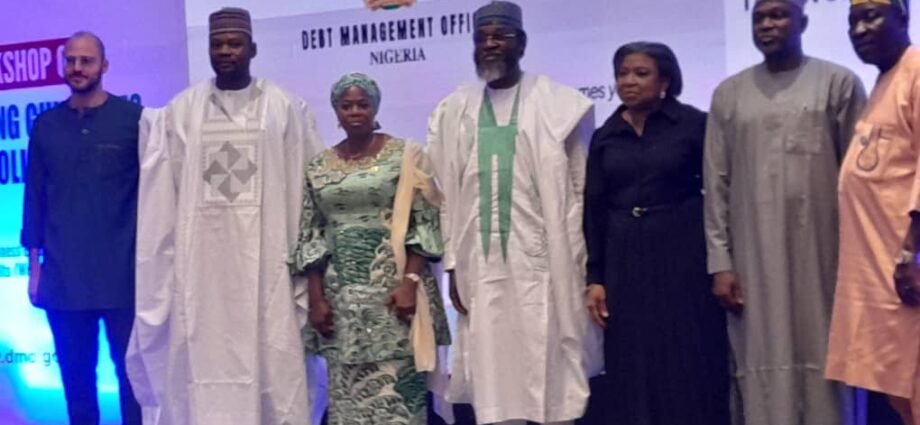
The Debt Management Office (DMO) announced that its workshop on borrowing guidelines, supported by the World Bank, aimed to inform subnational entities in Northern Nigeria about appropriate borrowing practices.
The DMO’s Director-General, Patience Oniha, made the statement during the workshop for senior policymakers held in Abuja on Tuesday.

She noted that the event was organized under the States Action on Business Enabling Reforms (SABER) initiative.
Oniha emphasized the importance of aligning borrowing practices at the state level with those of the federal government.
She explained that borrowing requires multiple layers of approval and that debt managers must understand the reasons behind these requirements.
“Debt is a crucial fiscal element that involves various stakeholders, which is why we have a diverse group present here.
“The goal is to strengthen collaboration among your states following this workshop. We need to empower individuals with the knowledge to ensure smooth operations,” she stated.
She further questioned how to make the borrowing process effective and how to help subnational governments grasp the borrowing procedures necessary for securing funds for development.
Read Also:
- Higher revenue crucial to budget balance, surplus, says DMO
- Journalists admonished to use Cybernetics, Robotics for news gathering
- Investment in FGN securities profitable, risk-free, says DMO
“If they do not understand the process, they cannot comply and will struggle to raise the funds,” she added.
Oniha highlighted the aim of equipping states with the necessary skills and knowledge so that they are prepared and the borrowing process is seamless whenever they need to borrow.
She praised the World Bank for its commitment to public debt management initiatives in Nigeria.
“Debt is a significant fiscal variable that we must continually address to ensure sustainability.
“The experiences of countries that have had to restructure their debts illustrate the challenges they faced, including downgrades by international debt rating agencies and difficulties in borrowing,” she stated.
Oniha stressed the importance of transparency in the borrowing process, stating that it should not be left to a single individual’s decision.
“The purpose of the loan must be clear; it should be well-documented, monitored, and reported to ensure it can be serviced. Failing to service debt leads to negative consequences.
“Therefore, we must discuss debt sustainability. How will you know what actions to take? How will you know when to stop?” she questioned.
Acting Head of Service for the Federal Capital Territory (FCT), Mrs. Nancy Nathan, described the workshop as a blend of opportunity and responsibility.
She noted that the workshop aimed to equip states and the FCT with the knowledge and tools needed to navigate the complexities of the borrowing process.