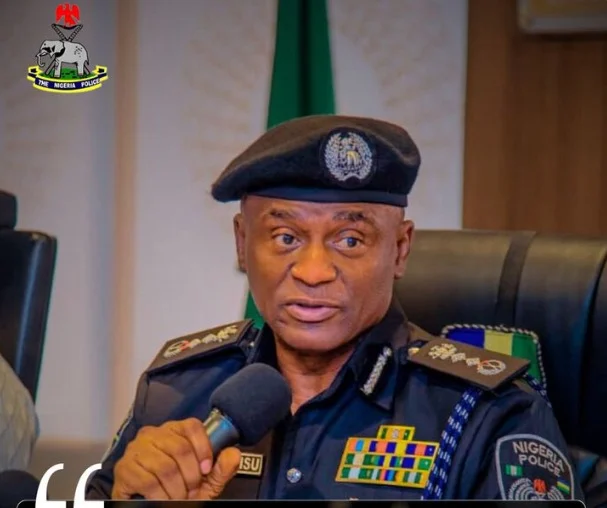
The Inspector-General of Police, Tunji Disu, has issued a sweeping directive to police commands nationwide, ordering an immediate halt to illegal detention, extortion, and other forms of misconduct by officers.
The directive, communicated through an internal police signal and circulated across formations, is part of efforts to restore professionalism and public trust in the police.
According to the order, officers are strictly prohibited from engaging in unlawful practices, such as detaining individuals without due process, interfering in civil disputes, and extorting money from members of the public.

The directive also specifically condemned the practice of forcing victims to withdraw money from Automated Teller Machines (ATMs) under intimidation, an act described as unacceptable and punishable.
Additionally, personnel have been warned against setting up illegal or unauthorized checkpoints, as well as soliciting money from motorists and commuters on highways.
Beyond operational misconduct, the Disu also addressed issues of discipline and appearance within the police.
Police officers were cautioned against shabby dressing, use of unapproved uniforms, and what was described as “uncivilised conduct.”
The directive further includes restrictions on certain forms of appearance, including the wearing of beards, as part of broader efforts to enforce uniform standards and discipline.
Commissioners of police and unit heads have been directed to ensure strict compliance through proper briefing and supervision of personnel.
Tactical units, including special squads, have also been mandated to intensify monitoring and enforcement.
The order warns that any officer found violating these directives will face severe disciplinary action, including possible arrest.
Read also:
- IGP Disu commends FCT Journalists, seeks stronger Police–Media partnership
- Disu commends FCT journalists, seeks stronger police–media partnership
- IGP Olatunji Disu vows neutrality ahead of 2027 elections, warns officers against partisanship
Supervisory units have been tasked with identifying and sanctioning erring officers, as authorities stress that the reforms must be implemented without delay.
The latest move is seen as part of ongoing reforms aimed at improving accountability within the police, which has faced repeated public criticism over allegations of abuse, corruption, and rights violations.
Officials say the directive underscores a renewed commitment by the police leadership to uphold professionalism, protect citizens’ rights, and rebuild confidence in law enforcement across the country.