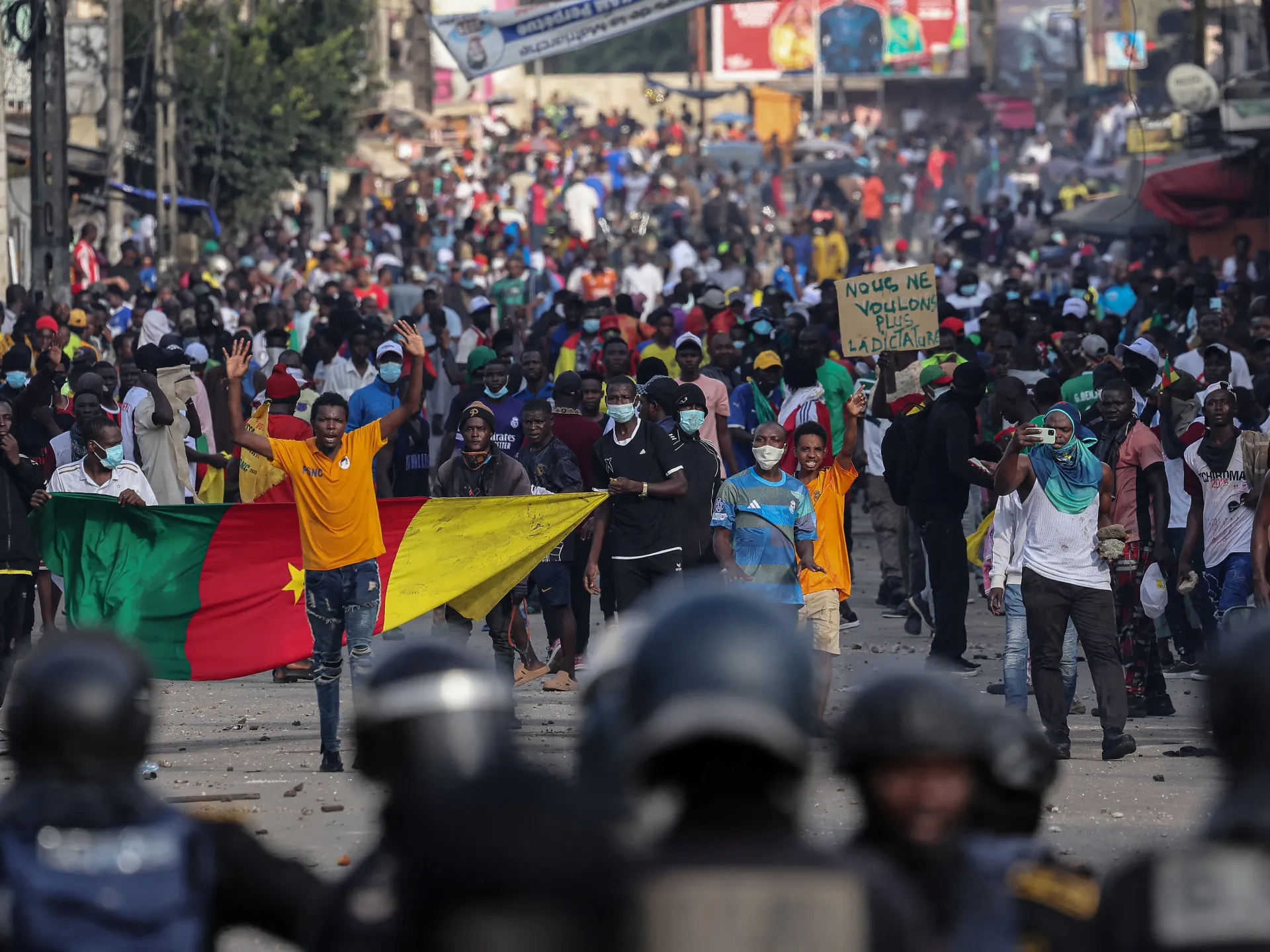
Cameroon’s post-election crisis has entered its fourth day with mounting chaos, loss, and fear as citizens protest the controversial re-election of 92-year-old President Paul Biya. Streets in Yaoundé, Douala, and Garoua have turned into battlegrounds, leaving families in mourning, businesses in ruins, and the government scrambling to restore order.
Key Highlights:
- At least 10 confirmed dead, opposition claims more than 20 killed
- Over 200 protesters arrested amid nationwide crackdown
- Businesses, markets, and government buildings vandalised
- UN, EU, and human rights groups condemn excessive force
- Opposition leader Issa Tchiroma Bakary vows to resist Biya’s “stolen mandate”
The crisis erupted following the October 12 presidential election, declared in favour of Biya on October 28 by the Constitutional Council, giving him 53.66% of the votes. His main challenger, Issa Tchiroma Bakary, who polled 35.19%, dismissed the results as “a fictitious victory built on electoral manipulation.”

Protests that began as peaceful demonstrations for transparency quickly spiraled into violent clashes after the announcement. In Douala and Garoua, angry mobs blocked roads, set tires ablaze, and chanted “Biya Must Go!” Security forces responded with tear gas, water cannons, and live ammunition, resulting in multiple casualties.
Counting the Cost of Unrest
Deaths: 10 confirmed, though opposition figures claim over 20 fatalities, mostly in Douala and Garoua.
Injuries: Dozens of civilians and security officers have sustained gunshot wounds and injuries from beatings.
Arrests: More than 200 people detained nationwide, including key opposition supporters.
Property Damage: Public offices, markets, and private shops have been vandalised and looted.
Economic Impact: Major cities report halted commercial activities, blocked highways, and suspended tourism operations.
In Douala’s Nkongsamba district, 45-year-old Marie Ngo mourned her son, one of the first casualties. “He just wanted a fair vote. Now we bury him while Biya celebrates,” she said, her grief reflecting a growing national despair.
Government Crackdown vs. Opposition Defiance
Interior Minister Paul Atanga Nji accused protesters of being “drug-fueled criminals” and vowed to prosecute Tchiroma for inciting rebellion. Meanwhile, President Biya called for calm, expressing condolences to the bereaved families.
Read Also:
- Cameroon opposition leader to face legal action over election unrest, government says
- Interpol arrests 11 suspected terrorists in Nigeria during global crackdown on terror financing
- Two dead, hundreds injured as anniversary protest turns violent in Kenya
In response, Tchiroma declared, “We will not yield to fear. The people’s will has been stolen.” Other opposition leaders, including Tomaino Ndam Njoya, labelled the election a “confiscation of democracy.”
Global Eyes on Cameroon
International bodies have reacted sharply to the violence. The United Nations, European Union, Human Rights Watch, and Amnesty International condemned the government’s use of force and demanded transparent investigations.
The African Union, while congratulating Biya, urged him to open dialogue with the opposition. The U.S. Embassy has also advised its citizens to avoid protest-prone areas.
Women’s International League for Peace and Freedom (WILPF Cameroon) documented more than 350 violent incidents across eight regions, describing the situation as a “red alert for peace and democracy.”
With Biya’s inauguration set for two weeks from now, Cameroonians remain torn between defiance and despair. Protesters vow to continue their demonstrations, though fatigue and fear are beginning to weigh heavily.
As the nation counts its losses, one question hangs over the chaos: Can dialogue save Cameroon from deeper unrest?