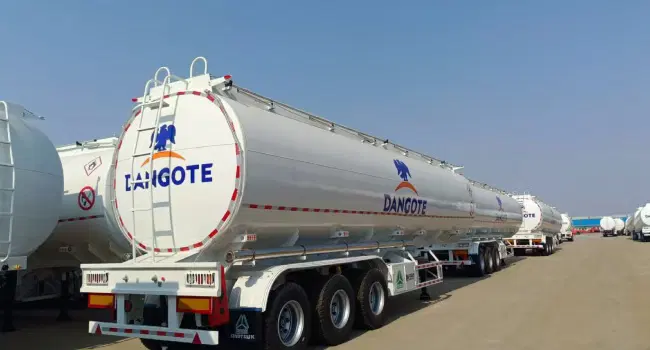
Nigeria’s domestic fuel market has received a welcome boost as Dangote Refinery announced a fresh reduction in petrol prices, effective December 11, 2025. This marks the 20th adjustment in fuel tariffs this year and comes barely five days after the refinery’s Chairman, Aliko Dangote, reaffirmed his commitment to keeping prices “reasonable and competitive” despite global market fluctuations and ongoing cross-border smuggling.
Following a private meeting with President Bola Tinubu on December 6, Dangote assured stakeholders that domestic fuel prices would continue to fall as the refinery increases output and competes directly with imported products. “Prices are going down. The reason why prices have to go down is that we have to also compete with imports,” Dangote said, adding that smuggling, while still significant, has begun to decline as Nigerian fuel remains about 55 percent cheaper than in neighbouring countries.

Read Also:
- Dangote Refinery strikes landmark deal with US Giant Honeywell as firm plans 1.4 Million barrels
- Dangote Refinery assures Nigerians of steady fuel supply during festive season
- Dangote Refinery expansion to hit 1.4 Million barrels per day, set to become world’s largest
The billionaire industrialist emphasized that diesel and petrol will be sold at sustainable rates, noting that the $20 billion refinery project is a long-term investment rather than a scheme for immediate returns. “We are not here to make our $20 billion back quickly; it’s a long-term investment,” he said.
The market quickly responded to the new pricing template, with Petroleumprice.ng reporting reductions across several private depots. Sigmund Depot lowered its ex-depot price by N4 to N824 per litre, Bulk Strategic cut prices by N3, and TechnoOil implemented one of the sharpest decreases at N15. Other depots, including A.A. Rano, NIPCO, and Aiteo, also adjusted their rates in alignment with Dangote Refinery’s new price guide.
The latest cuts are expected to ease pressure on consumers while reinforcing the refinery’s competitive edge in the local market, signalling a new phase in Nigeria’s push for self-sufficient, affordable petroleum supply.