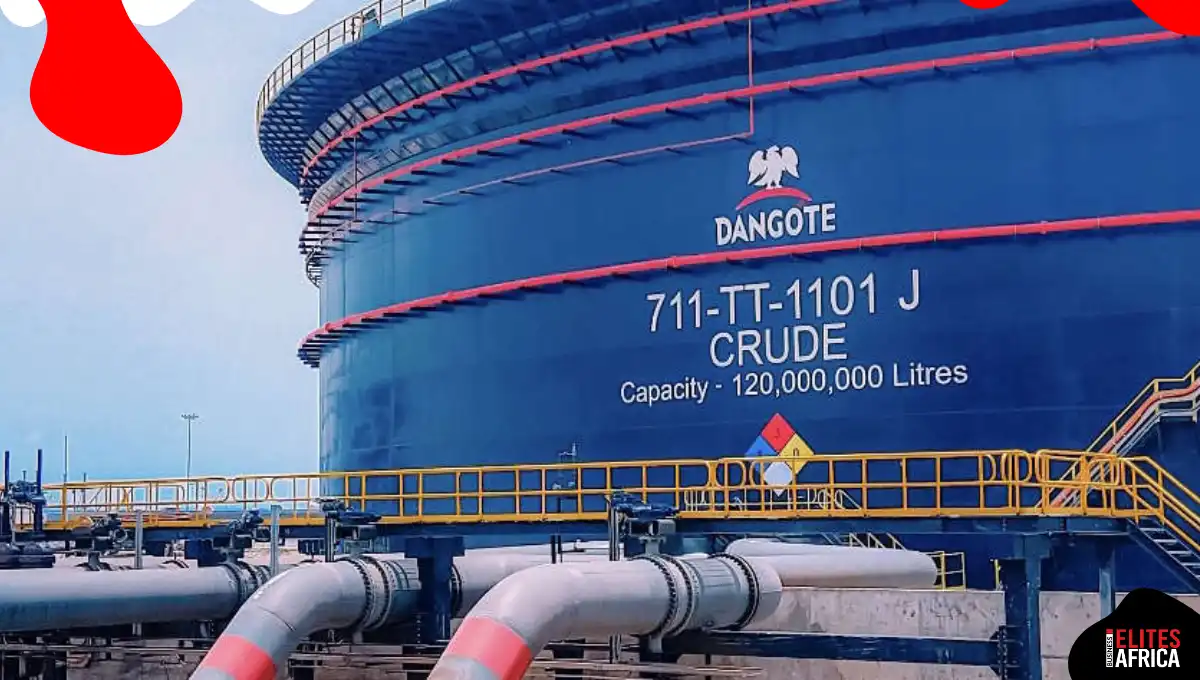
In a continent long starved of homegrown industrial titans, Aliko Dangote, Africa’s richest man, is rewriting the rules of economic destiny. Yesterday, in a landmark unveiling at the group’s Lagos headquarters, the Dangote Group, Nigeria’s behemoth conglomerate spanning cement to petrochemicals, laid bare its 2030 Vision: a sweeping strategy to catapult the company from its current $30 billion valuation to a staggering $100 billion enterprise within five years.
This isn’t mere ambition; it’s a clarion call for Africa’s industrial renaissance, promising to slash import dependencies, ignite job creation, and fuel self-sufficiency across energy, manufacturing, and beyond.
The announcement, attended by top African business leaders and policymakers, comes at a pivotal moment. With the Dangote Refinery, the world’s largest single-train facility, now humming at partial capacity, the group is poised to leverage its momentum.
“Our ambition is not just to build factories, but to build Africa’s capacity to feed, power, and industrialise itself,” Dangote declared during the event, his voice echoing the resolve of a man whose net worth hovers at $30.2 billion. “By 2030, the Dangote Group will be a $100 billion organisation driven by innovation, integration, and impact.”
Founded in 1977 as a modest trading firm, Dangote Industries Limited has evolved into Sub-Saharan Africa’s leading provider of essential goods, dominating markets in cement, sugar refining, salt, and port operations. Its mission, to “touch the lives of people by providing their basic needs”, has long underpinned a vision of becoming a “world-class enterprise passionate about the quality of life of the general populace and high returns to stakeholders.” Yet, the 2030 Vision marks a seismic shift, transforming these aspirations into quantifiable, continent-spanning imperatives.
At its core, the plan hinges on three pillars: consolidation, industrial expansion, and cross-border investments. The group aims to double production capacity across all segments, a move projected to create tens of thousands of jobs and position Nigeria and by extension, Africa as a net exporter in critical sectors. “We must challenge ourselves to set lofty goals,” Dangote emphasized earlier this year at the Afreximbank Legacy Conference in Cairo. “We can no longer afford to export raw materials and import finished goods. Africa must become a continent that produces, processes, and prospers.”
This ethos of local value addition is no abstract ideal. By processing raw materials on-site and bolstering intra-African trade, Dangote seeks to stem the “export of jobs and import of poverty” that has plagued the continent for decades.
The 2030 Vision drills down into targeted expansions, with energy and manufacturing as the twin engines.
The crown jewel remains the 650,000-barrels-per-day Dangote Refinery in Lagos, a $19 billion behemoth that began operations earlier this year. Under the new blueprint, output will double, enabling the group to flood regional markets with affordable petroleum products like Premium Motor Spirit (PMS). Dangote projects price cuts of up to 50%, a game-changer for energy affordability amid global volatility.
“Expanding output at the refinery would allow the group to cut petroleum product prices by as much as 50 percent, boosting regional competitiveness and reducing Africa’s dependence on imported fuels,” he noted.
This isn’t isolated; petrochemicals and fertilizers will integrate vertically, creating a self-sustaining ecosystem that exports surplus to neighbors, fostering energy self-reliance.
Dangote’s cement arm, already Africa’s largest producer, will ramp up to achieve continent-wide self-sufficiency, reducing the $2 billion annual import bill. Sugar milling and refining, key to food security, will see similar doublings, alongside salt and packaging expansions.
In agriculture and telecoms, the group eyes self-reliance in Nigeria while scaling fertilizer production to greenlight a “Green Revolution” across West Africa.Cross-sector synergies abound: Waste from refineries will feed cement kilns, slashing costs and emissions. This integrated approach, Dangote insists, will generate “socioeconomic value for all key stakeholders,” aligning with the group’s seven sustainability pillars; cultural, economic, operational, social, environmental, financial, and institutional that embed ESG principles into every operation.
Beyond bricks and barrels, the Vision weaves in human capital. Dangote announced a N1 trillion ($600 million) education fund to support 1.3 million Nigerian students, with metrics tracking retention and post-graduation impact.
“This is not only charity. This is a strategic investment in Nigeria’s future,” he said, tying it explicitly to the 2030 goals. By 2030, progress will be benchmarked against the group’s broader strategy, ensuring that industrial growth uplifts communities.
No vision of this scale succeeds in silos. Dangote’s longstanding alliance with the African Export-Import Bank (Afreximbank) is the linchpin. At Elombi’s inauguration in October, Dangote hailed the bank’s new president: “Our Vision 2030 strategic plan was to become a $100 billion organisation in the next five years, but I’m sure we will meet that target much sooner. Based on our existing great partnership… we will surpass it before that time.”
Afreximbank’s financing has already bankrolled mega-projects; expect deeper ties to fuel cross-border ventures.
Skeptics might point to headwinds: regulatory hurdles in Nigeria, currency fluctuations, and geopolitical strains on global supply chains. Yet, Dangote’s track record, from surviving the 2008 crash to commissioning the refinery amid naira woes, suggests resilience. The Vision’s emphasis on innovation, like AI-driven efficiencies in plants, positions the group to outpace rivals.
As Africa grapples with youth bulges and climate threats, Dangote’s 2030 Vision isn’t just corporate strategy—it’s continental manifesto. By fostering “industrial sovereignty,” as insiders dub it, the group could catalyze a multiplier effect: cheaper energy sparking manufacturing booms, fortified supply chains curbing poverty, and empowered workforces driving GDP surges.In Dangote’s words, delivered with characteristic gravitas yesterday: “The Dangote 2030 Vision is a clear signal: Africa is moving from potential to production.”
If executed, this blueprint won’t merely mint billionaires; it will birth an era where Africa’s resources stay home, its people prosper, and its voice roars on the global stage. The countdown to 2030 has begun and the world is watching.

ADVERTISEMENT