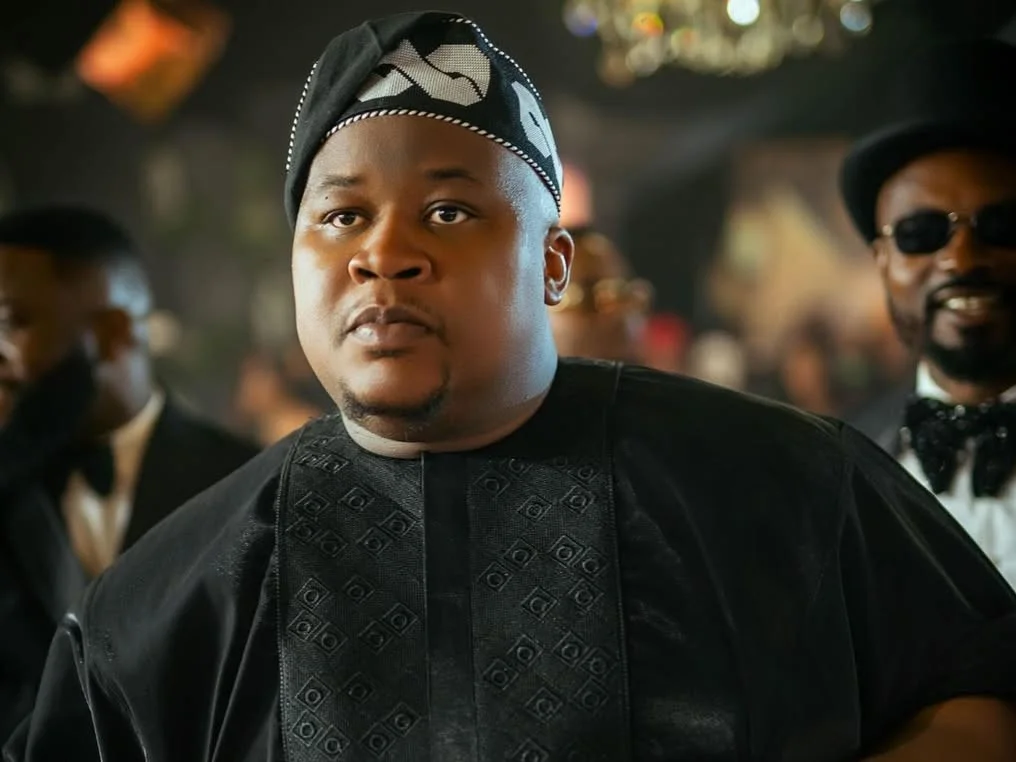
Popular Nigerian socialite and nightlife entrepreneur Cubana Chief Priest has responded to critics who accused him of betraying his ethnic roots over his open support for President Bola Ahmed Tinubu ahead of the 2027 general elections.
The celebrity barman, known for his influence on social media, took to Instagram to challenge what he described as ethnic double standards in Nigeria’s political discourse. His remarks have since sparked fresh debate around tribal loyalty, political alignment and the evolving dynamics of the 2027 elections.

“If an Igbo man supporting Tinubu is seen as betrayal, then what does that make a Yoruba man supporting Obi? We need to unite as Nigerians to thrive in this country,” he wrote.
Cubana Chief Priest’s comments come at a time when conversations about ethnicity and political allegiance are again dominating public discussion. His statement referenced the cross-regional support enjoyed by former Labour Party presidential candidate Peter Obi, particularly among some Yoruba voters, as a counterpoint to accusations directed at Igbo supporters of Tinubu.
The socialite argued that political decisions should not be reduced to tribal identity. He stressed that alliances and long-term strategy, rather than ethnic sentiment, often shape successful political outcomes in Nigeria.
Defending President Tinubu’s political journey, he pointed to the president’s role in supporting former President Muhammadu Buhari before eventually securing the presidency himself. According to Cubana Chief Priest, that patience reflects calculated leadership.
“Tinubu served. Supporting anyone other than Tinubu is like crossing the street without looking both ways. Follow those who know the way and stick with those who have a solid plan so you can benefit too,” he added.
Read also:
- I will campaign against Obi in 2027, declares Cubana Chief Priest
- Backlash trails Obi Cubana’s over City Boy Movement alignment
- Reno Omokri calls for El-Rufai prosecution over alleged human rights violations
His remarks followed the circulation of a video he shared online showing buses he claimed were donated by Igbo businessmen in support of Tinubu’s re-election bid. The video fueled reactions across political lines, with supporters praising his stance and critics questioning his motives.
Cubana Chief Priest also weighed in on protest movements and sit-at-home orders in the South-East, suggesting that such approaches have not yielded tangible political gains. He implied that engagement with power structures may be more effective than resistance from the sidelines.
The controversy builds on a recent online exchange between the nightlife figure and socialite Isaac Fayose, during which Cubana accused some South-East political elites of prioritizing personal interests over collective progress.
He maintained that his goal is to rally support for Tinubu in the South-East and position the president as the preferred candidate in the region ahead of 2027. According to him, discussions about unseating Tinubu are unrealistic given the current political structure.
As Nigeria gradually moves toward another election cycle, the debate triggered by Cubana Chief Priest highlights broader tensions surrounding ethnicity, loyalty and strategy in national politics. His comments have placed him at the center of a heated conversation that reflects the complex landscape shaping the 2027 presidential race.