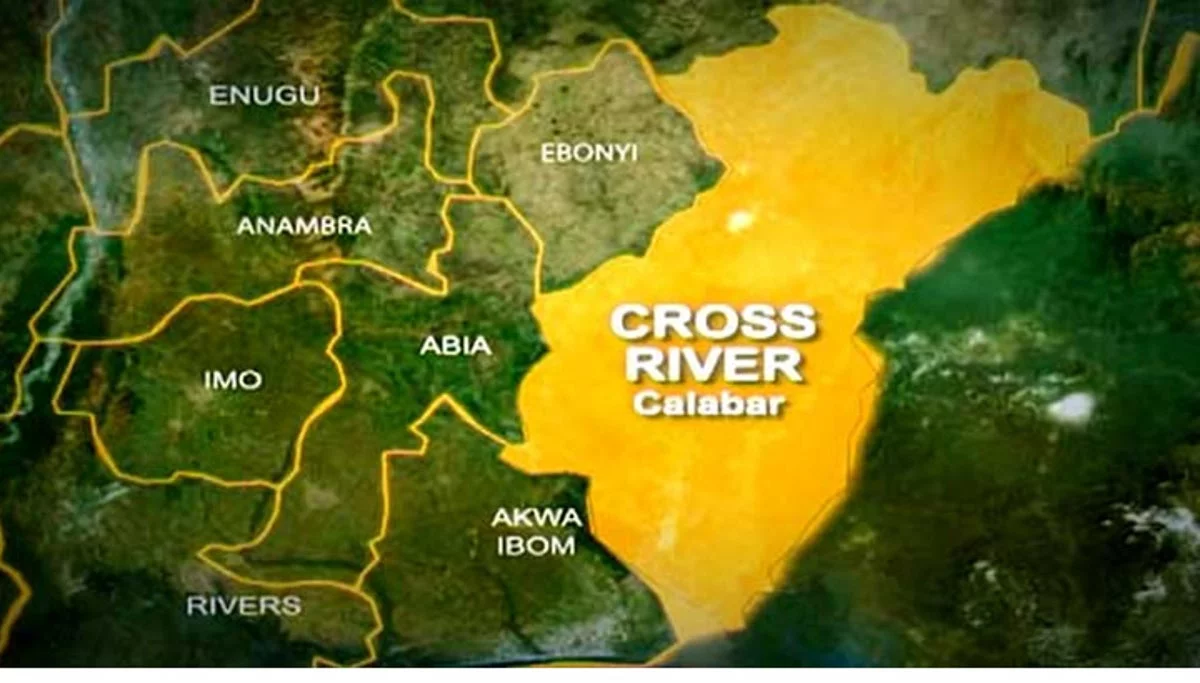
In 2002, the International Court of Justice, (ICJ) in what many observers described as a profoundly distressing judgement ceded the Bakassi Peninsula in Nigeria to Cameroon, hence altering Nigeria’s coastal configuration to a reasonable degree within the Cross River area. That singular pronouncement by the ICJ has since erected a kind of wedge between two brother states in Nigeria, Cross River and Akwa Ibom States as they remain perpetually in dispute over ownership of 76 oil wells arising from the boundary recalibration.
Cross River State has maintained that despite the ICJ judgment, it retained coastal and littoral access to the sea through the Cross River Estuary, and therefore remained entitled to offshore derivation benefits. Akwa Ibom State on the other hand opposed this position, relying largely on administrative boundary interpretations. In a move to douse tension between the two states following the ICJ judgement, it was learnt that the then President, Olusegun Obasanjo brokered a political settlement in 2006 among Cross River, Akwa Ibom, and Rivers States to cushion the economic consequences of the ICJ ruling on Nigeria’s coastal configuration.

The allocation of oil wells under that political solution according to observers was a pragmatic federal intervention intended to preserve stability and equity pending scientific demarcation. The legitimacy of the political solution lies in its equitable intent and its interim character, designed to prevent economic dislocation while technical boundaries remained unresolved”, some observers pushed.
Nonetheless, following the exit of President Obasanjo from office, it was gathered that the National Boundary Commission, in collaboration with Akwa Ibom State, allegedly unilaterally adjusted land and maritime representations using the 2008 oil dichotomy implementation map. This administrative act effectively reversed the earlier political allocation of oil wells to Cross River State without hydrographic demarcation or basin geology analysis.
Read Also:
- Cross River suspends scrap-related businesses to curb vandalism, theft
- Police confirm arrest of ex-presidential aide Obono-Obla in Cross River
- Police discover 8 corpses in Cross River, arrest suspect
Cross River State has insisted that such a unilateral administrative reconfiguration, lacking scientific foundation, cannot find legitimate entitlement as it offends the principle that no right can arise from a wrongful foundation .
Yet in 2012, the Supreme Court in it’s judgement on the matter ruled that by virtue of the ICJ decision, Cross River State no longer maintained a seaward coastline contiguous or close to the open sea extending to the 200-metre isobath/ a connecting line below the surface of water and therefore could not claim automatic offshore entitlement based solely on littoral status.
Even so, Cross River State maintained that the Supreme Court made no order transferring, awarding, or reallocating the 76 oil wells to Akwa Ibom State. Instead, it argues that the Court expressly stated that the responsibility for oil well attribution lay with the constitutionally designated federal agencies—the National Boundary Commission (NBC), the Office of the Surveyor-General of the Federation (OSGOF), and the Revenue Mobilisation, Allocation and Fiscal Commission (RMAFC)—and that the wells should be ascribed to the offshore boundary between Cross River State and Akwa Ibom State where they are physically located, based on proper technical determination.
Referencing earlier Supreme Court decisions in similar situations, Cross River cited Rivers State v. Akwa Ibom State, where 86 oil wells were awarded to Rivers State, where the Court expressly identified the applicable maps, coordinates, and wells. Similarly, in Rivers State v. Imo State, where oil wells were reassigned from Imo State to Rivers State, the judgment clearly listed the wells, their locations, coordinates, and host communities.
By contrast, in Cross River State v. Akwa Ibom State, no such orders exist. “The judgment contains no list of the 76 oil wells, no coordinates, no Oil Mining Lease (OML) numbers, and no host communities. This omission is decisive and confirms that the Supreme Court did not intend to allocate or reallocate the oil wells, but deliberately left the matter to technical determination by federal agencies”, it maintained.
Cross River further asserts that despite this clear limitation of the judgment, since 2012, the NBC, RMAFC, and OSGOF have consistently ascribed derivation from the 76 oil wells to Akwa Ibom State, relying on an assumed interpretation of the Supreme Court judgment. According to Cross River’s Economic Intelligence Team, (CREIT)”This administrative practice is significant because the Supreme Court never issued any directive awarding the oil wells to Akwa Ibom State,including wells located within the mouth of the Cross River and Abana field.
“Equally important is the fact that no scientific, geological, hydrographic, or geodetic survey has ever been carried out by these agencies to verify the actual coordinates and locations of the wellheads relative to the offshore boundaries of both states.
“No coordinate-based mapping, seabed analysis, or boundary overlay exercise was undertaken to establish factual entitlement”
Determined to correct the anomaly, the Governor Bassey Otu led administration in 2025 petitioned President Bola Tinubu with detailed technical dossiers, including 245 surface and reservoir coordinates across OML 114, 123, and 115. According to CREIT, “The submissions demonstrated that reliance on the 2008 NBC map excluded significant estuarine waters within the Cross River Estuary and ignored multiple transboundary reservoir continuity straddles”
Acting on the petition by Governor Otu, President Tinubu had set up the Inter Agency Technical Committee (IATC) on the verification of crude oil and gas well coordinates between oil producing states headed by the chairman of the Revenue Mobilization Allocation and Fiscal Commission (RMAFC) Dr MB Shehu.
The committee has concluded it’s field investigation round the oil producing states awaiting submission of it’s report to the president. However, Cross River is urging immediate transmission of the committee’s report to the presidency, warning that no aspect of the report should be doctored.
“The credibility of Nigeria’s inter-agency governance architecture depends on protecting technical truth from administrative dilution. The IATC Report represents a rare moment of evidence based clarity in a historically contentious domain and must be preserved and transmitted in it’s full technical integrity, ” the state contended.