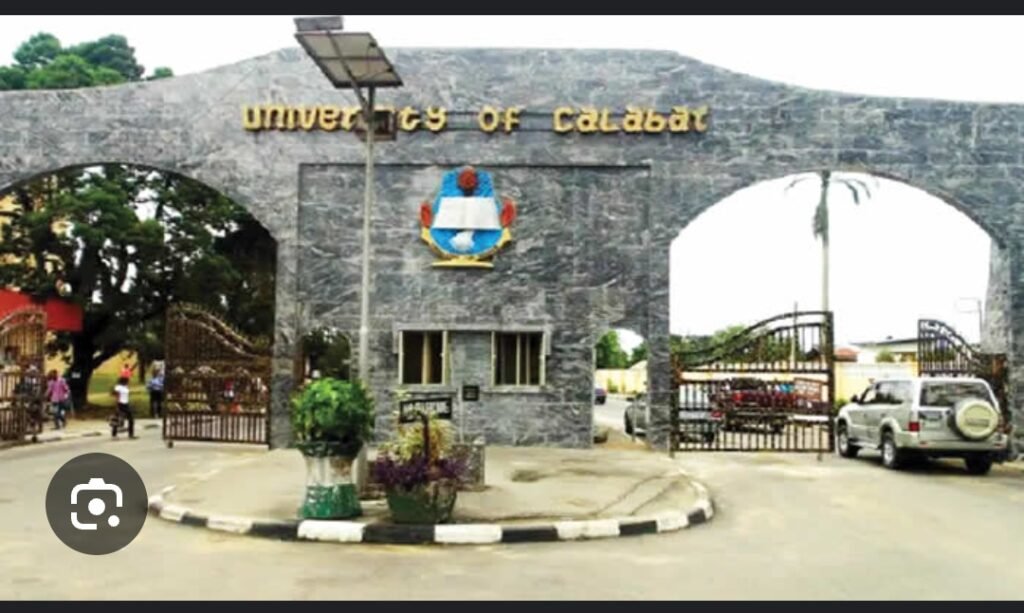
The Federal High Court sitting in Calabar has ruled against the management of the University of Calabar over the admission of students into engineering programmes that were not accredited by regulatory authorities.
In a judgment delivered on March 4, Justice R. O. Dugbo-Oghoghorie described the actions of the institution as fraudulent, reckless and deceitful, bringing to a close a five year legal dispute between the university and eight affected students widely known as the “UNICAL 8.”
The suit, marked FHC/CA/CS/117/21, was filed in 2021 by Idiong Ekpedeme Godwin and seven other students who accused the university of admitting them into engineering programmes that lacked accreditation from the National Universities Commission and the Council for the Regulation of Engineering in Nigeria.

The students told the court that they enrolled in the programmes after the university presented them as fully operational through faculty handbooks and official communications. However, the situation changed dramatically when the students reached their 300 and 400 levels.
During a resource verification exercise conducted by the National Universities Commission, the students said they were informed that the programmes had not been authorised. As a result, they were instructed to step down to 200 level despite already spending years studying and paying school fees.
Some departments within the engineering faculty were later scrapped entirely, leaving several students stranded without a clear path to graduation.
In its defence, the university argued that accreditation is a multi stage process and maintained that the students were aware of the circumstances surrounding the programmes before enrolling.
Justice Dugbo Oghoghorie rejected the argument and held that the institution failed in its responsibility to protect students.
The judge stated that the university allowed innocent students to become victims of its actions and ruled that the conduct of the institution showed clear bad faith.
She emphasised that no university should operate an academic programme without obtaining prior approval from the National Universities Commission. According to the court, the university had a duty of care to disclose the true accreditation status of the programmes to prospective students.
Evidence presented before the court showed that full accreditation for the engineering programmes was only secured during the 2024 and 2025 academic cycle, several years after the affected students were expected to have completed their studies.
Justice Dugbo Oghoghorie consequently awarded the plaintiffs N50 million in general damages and N5.247 million in special damages for the psychological distress and academic setbacks they suffered.
The court, however, declined the request to shut down the Faculty of Engineering, noting that recent evidence confirmed the programmes had now secured proper accreditation.
It also ruled that the request for the students to be returned to their original departments had been overtaken by events because some of the departments had already been scrapped.
Reacting to the judgment, counsel to the plaintiffs, Barrister Ozinko Ozinko, praised the determination of the students in pursuing the case despite the challenges.
Read also:
- Court remands 6 suspects over kidnap, murder of UNICAL don, others
- No more admission racketeering, fraudulent NYSC mobilization, UniCal vice chancellor vows
- Conviction of randy UNICAL’s lecturer triggers national war on sexual harassment on campuses
He said taking on a major institution was not easy but stressed that justice had eventually prevailed. According to him, the financial compensation offers some relief but cannot fully make up for the years lost by students whose academic programmes were disrupted.
One of the plaintiffs, Ekpedeme Godwin, said the affected students endured significant hardship during the dispute with the university.
He recalled that the students were once told that the authorities had the power to shut down the faculty and send everyone home, a situation that compelled him to pursue legal redress.
Counsel to the university, Barrister Jonas Abuo, also expressed appreciation to the court after the judgment.