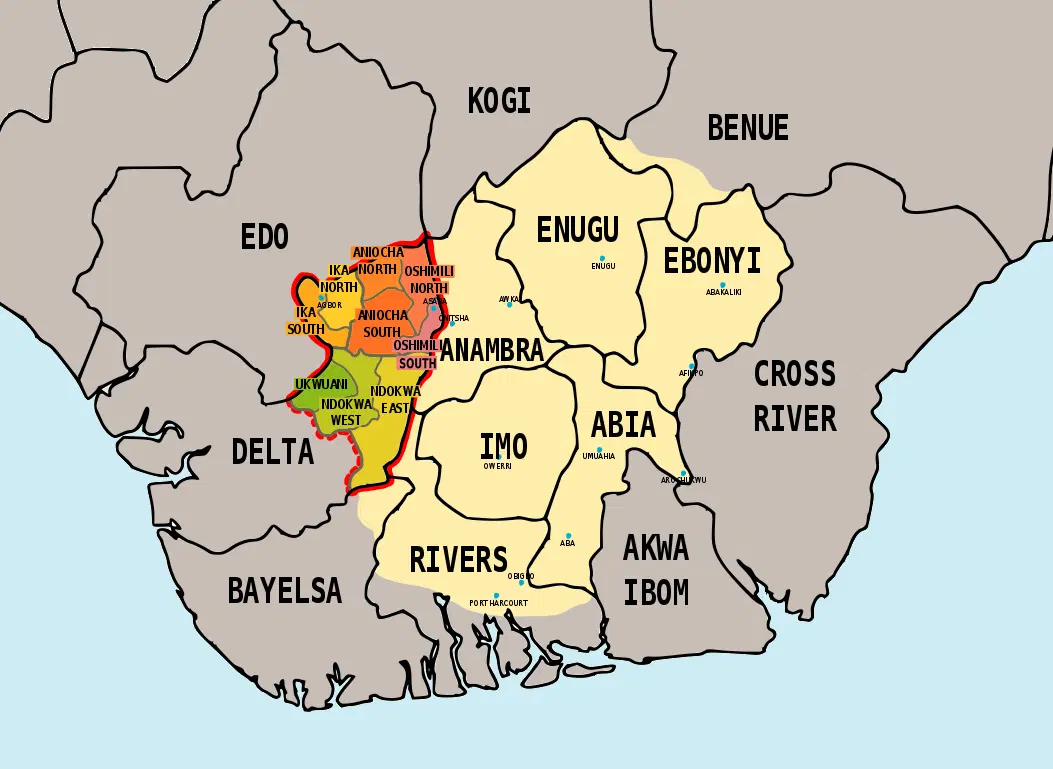
As discussions over new states in the South East gather pace, emerging details show that regional leaders may have settled on Anim Oma as their preferred option after a private meeting in Abuja last Thursday. The session took place at the residence of Deputy Speaker of the House of Representatives Benjamin Kalu and drew representatives from several state creation movements.
Key Highlights:

- Stakeholders from Anioma State in Delta State, the old Orlu zone in Imo State and Ihiala in Anambra formed a joint front under the proposed Anioma State, with Orlu chosen as capital.
- Delta North political leaders immediately rejected any plan to classify Anioma within the South East, insisting the area belongs strictly to the South South.
- Concerns were raised over compliance with constitutional requirements for state creation and fears that the arrangement could weaken the South East’s exclusive claim to the new state.
- The meeting is set to reconvene for a formal vote on the Anim Oma proposal.
Participants explained that the Deputy Speaker’s aim was to gather all South East state creation groups, streamline overlapping demands and produce a single proposal for onward transmission. Although attendance was meant for South East agitators, Senator Ned Nwoko and a delegation from Anioma in Delta were allowed to join, prompting some debate but not halting proceedings.
After several presentations, the Osita Izunaso-led Anim movement agreed to merge with the Anioma group and representatives from Ihiala. Reports from the session indicated that the Anioma side accepted Orlu as capital, a position Senator Nwoko confirmed.
The move triggered objections from some attendees who questioned whether the plan met the constitutional requirement that two thirds of elected representatives in the affected areas must endorse any proposal. According to those present, the Deputy Speaker assured them that the necessary documentation had been filed and that the Anim Oma draft would be forwarded as the collective submission of the region.
Read also:
- Protest rocks Asaba over status as capital of proposed Anioma State
- 2023: Omo-Agege wins APC ticket for Delta governorship election
- Saudi Arabia confirms sight of Dhul Hijjah Crescent Moon, Hajj, Eid-el-Adha dates announced
While the South East prepares for a final vote, reaction from Delta North has been swift and firm. All elected representatives and the nine council chairmen in the district issued a joint statement rejecting any attempt to attach Anioma to the South East. They supported the creation of Anioma State but insisted that the state must remain within the South South zone.
The leaders explained that national conversations on state creation required them to restate their position to avoid any misrepresentation. They described the push for Anioma State as a mission rooted in history and identity, traceable to the vision of earlier leaders who first championed the idea.
They restated that the proposed Anioma State consists of the nine local government areas of Delta North with Asaba as capital. Any configuration outside this, they said, works against the long-established goals of the movement.
The most direct part of their communiqué was the refusal to consider any merger with the South East. They acknowledged linguistic links between parts of Anioma and the Igbo region but argued that administrative history and geopolitical evolution place Anioma firmly within the South South.
They warned that shifting Anioma to the South East would distort historical records and hinder the district’s political and developmental path. They noted that identity within the federation rests not only on ethnic ties but also on administrative structure over time.
Beyond rejecting the South East plan, the leaders committed to lobbying for recognition of Anioma State within the South South. They described the quest as a matter of fairness, explaining that other ethnic groups in the region already have their own states. They reaffirmed that the people of Anioma deserve similar recognition.
They concluded that the creation of Anioma State remains central to the region’s aspirations and promised to apply their political influence and institutional support to achieving it.