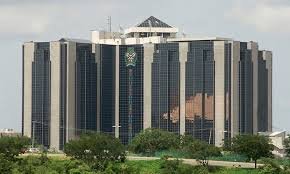
In what appears to be its first major enforcement step following the controversial overhaul of the foreign exchange market, the Central Bank of Nigeria (CBN) has officially granted final operating licences to just 82 Bureaux De Change (BDC) operators across the country, effective November 27, 2025.
The apex bank, invoking its powers under the Banks and Other Financial Institutions Act (BOFIA) 2020, confirmed that only the listed operators on its website are now legally permitted to buy and sell foreign currency to members of the public.
In a statement signed by the acting Director of Corporate Communications, Hakama Sidi Ali, the CBN issued a blunt warning to Nigerians to steer clear of unlicensed currency dealers, stressing that engaging in any transaction with them amounts to breaching federal law.
Read also:
- CBN moves to raise record N4.72 Trillion through Treasury Bills as Nigeria’s 2025 borrowing plan accelerates
- CBN’s promises to exporters, importers and matters arising
- I’m Holding Insignificant Shares in Titan Trust Bank – Ex-CBN Deputy Gov.
“Only Bureaux De Change listed on the bank’s website are authorised to operate from the effective date,” the statement read, adding that the CBN will continue to update the list for public verification.
The apex bank reminded the public that operating a forex business without approval is a criminal offence punishable under Section 57(1) of BOFIA, a provision that includes sanctions ranging from fines to imprisonment.
This latest move marks a decisive push in the CBN’s clampdown on what it previously described as a chaotic, corruption-ridden forex ecosystem dominated by street hawkers, shadow operators, round-trippers, and politically linked “briefcase dealers.”
Analysts say the drastic reduction of licensed BDCs from thousands to just 82 signals a sweeping consolidation designed to centralise control, force out informal networks and rebuild confidence in a market shaken by naira volatility, insider racketeering and regulatory flip-flops.
But the decision is expected to trigger fresh backlash from operators already accusing the CBN of engineering a monopoly favouring a handful of politically connected players, while strangling small-scale dealers who have dominated retail forex trade for two decades.
“Members of the public are hereby advised to note and be guided accordingly,” the statement added.