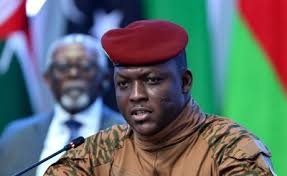
Burkina Faso’s military-led government has dissolved all political parties and abolished the legal framework regulating their operations, marking one of the most sweeping political crackdowns since the September 2022 coup.
The decision was approved by the country’s council of ministers on Thursday and formalised through a government decree, further tightening the grip of the junta on political life in the West African nation.

Interior Minister Emile Zerbo said the move was part of a broader effort to “rebuild the state,” citing what he described as years of abuse, fragmentation, and dysfunction under the multiparty system. According to him, a government review concluded that the proliferation of political parties had deepened divisions and weakened national cohesion.
Before the military takeover, Burkina Faso had more than 100 registered political parties, with 15 represented in parliament following the 2020 general election. Under the new decree, all political parties and formations are immediately disbanded, and their activities outlawed.
Read also:
- WAFU B Tourney: Flying Eagles to grab semi-final ticket against Etalons
- Military detains popular Nollywood Actor over alleged coup plot against Tinubu administration
- Nicki Minaj declares she’s Trump’s biggest fan, vows to defend him against bullying
The government also announced plans to repeal existing laws governing party financing and the official status of the opposition leader. These measures will be submitted to the current transitional legislative council for consideration, according to the official minutes of the cabinet meeting.
In addition, all assets belonging to the dissolved political parties are to be transferred to the state, effectively erasing their institutional presence from the country’s political landscape.
The move places Burkina Faso alongside fellow Sahel nations Mali and Niger, where military governments have similarly restricted political activities since seizing power. All three countries continue to battle Islamist insurgencies linked to al Qaeda and Islamic State, conflicts that have killed thousands and displaced millions across the region over the past decade.
The dissolution of political parties is likely to draw criticism from regional bodies and international partners, even as the junta insists the measures are necessary to stabilise the country and reset its governance structure.